
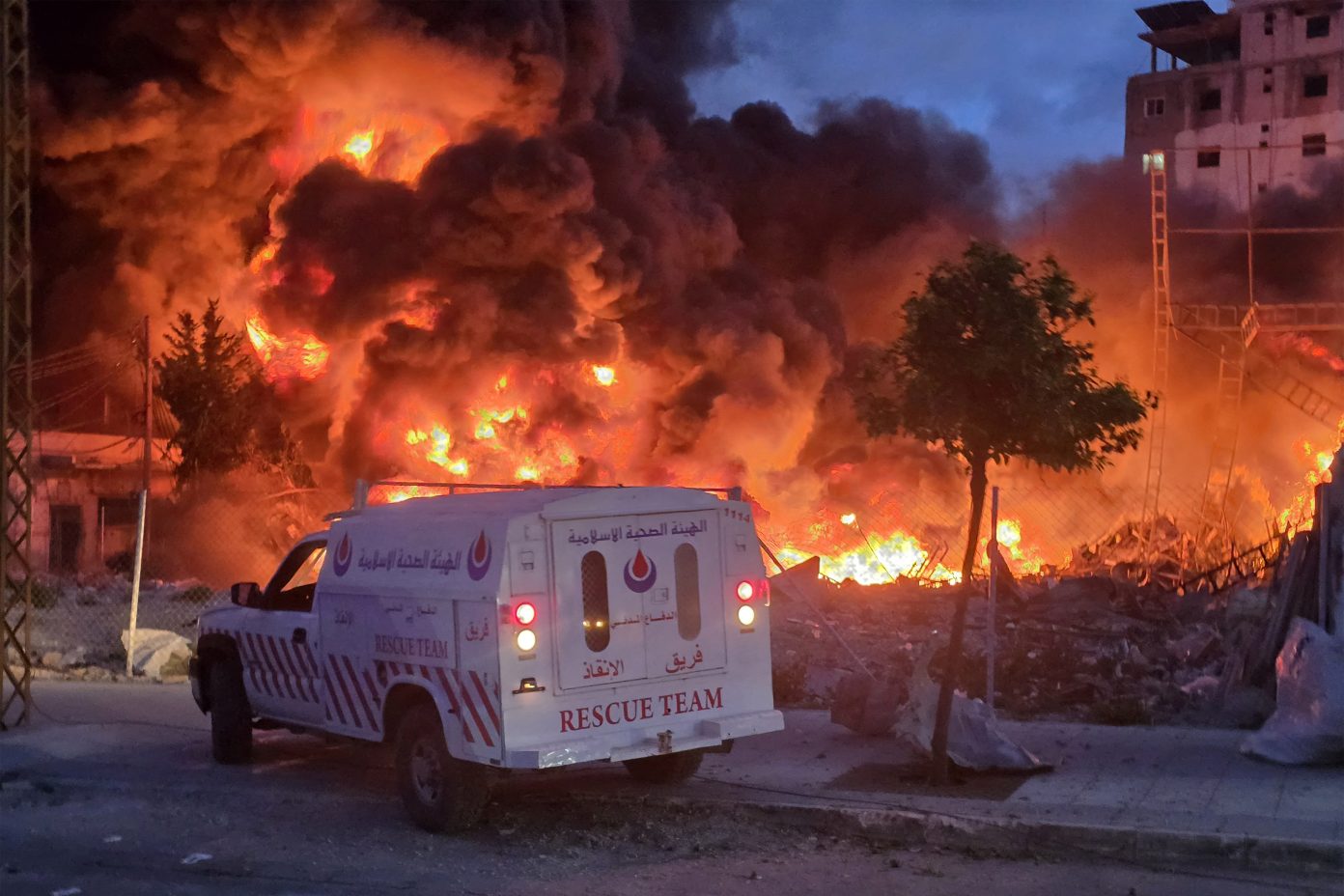
Caritas Philippines warned that escalating conflict in the Middle East highlights the dangers of global dependence on fossil fuels and urged governments to accelerate the transition to renewable energy as part of a broader pursuit of peace and economic justice.
In a pastoral statement issued on March 4, the Philippine Catholic Church’s social action arm expressed “grave concern over the escalating violence in the Middle East, particularly the military strikes involving the United States and Israel against Iran,” warning that the confrontation risks widening instability across the region.
The organization said the war threatens to deepen humanitarian suffering in a region already marked by decades of conflict, describing it as “an unjust assault on human dignity”.
Caritas Philippines warned that such violence “weakens the moral foundations of the international order and undermines the primacy of diplomacy and dialogue.”
The group also raised concern about the possible impact on migrant workers and their families, noting that overseas Filipino workers “now face uncertainty, fear, and possible displacement.”
Beyond the immediate security crisis, Caritas Philippines said the conflict reflects deeper structural problems tied to the global fossil fuel economy.
“Yet this crisis also reveals a deeper and often ignored reality: the fossil fuel economy continues to shape geopolitical conflict,” the group said.
Strategic energy corridors such as the Strait of Hormuz have become flashpoints where military power, economic interests, and dependence on oil intersect, it added.
“When oil becomes entangled with war, the consequences ripple across the world—especially for vulnerable economies like the Philippines.”
Caritas Philippines warned that rising oil prices quickly translate into hardship for ordinary Filipinos.
“For Filipino families, rising oil prices mean immediate hardship: higher transport fares, rising food costs, increasing electricity bills, and deeper economic insecurity,” the group said.
The group added that the country’s dependence on imported fossil fuels leaves the Philippines exposed to geopolitical tensions and volatile global markets.
“The Philippines remains dangerously dependent on imported coal, oil, and gas,” the statement said, noting that such reliance “ties our national stability to conflicts beyond our control and exposes our people to the shocks of volatile global energy markets.”
Caritas Philippines said the crisis should serve as a wake-up call for policymakers to accelerate the country’s transition toward renewable energy.
“Renewable energy is a peace strategy, a justice strategy, and a national survival strategy and not simply a solution to the climate crisis,” it added.
The organization also cautioned against expanding domestic oil and gas exploration, citing global energy analyses showing that new fossil fuel projects now take significantly longer to develop and may carry financial risks as the world shifts toward cleaner energy.
Calling for political leaders to prioritize diplomacy and energy reform, the group said the current crisis demands a decisive change in direction.
“We cannot continue investing in a system that fuels both climate destruction and conflict,” Caritas Philippines said. “Peace is built on justice. And justice today demands an energy conversion.”