Pakistan’s Christian community has cautiously backed government austerity measures introduced to address a fuel crisis triggered by the war in neighboring Iran.
The government announced a nationwide fuel-saving plan on March 9 after a sharp surge in global oil prices pushed petrol costs in Pakistan up by about 20 percent within a week, forcing authorities to introduce emergency conservation measures, including school closures, remote work, and cuts in official fuel use.
Prime Minister Shehbaz Sharif announced the austerity plan, describing it as a “difficult decision” necessitated by rapidly rising global oil prices.
“Global oil prices are not in Pakistan’s hands,” the prime minister said during a televised address to the nation.
The crisis in Iran has triggered an energy shock in the region, with fuel prices in Pakistan reportedly increasing by about 20 percent within a week.
A Christian schoolteacher said the situation requires urgent and decisive action. “Handling the crisis is essential, so the government has to take some drastic measures,” he said.
Under the new plan, public sector offices will operate four days a week. Essential services such as banks, hospitals and certain other sectors will continue normal operations. Fifty percent of staff in both public and private organizations will work from home.
Educational institutions will remain closed for two weeks, with some shifting to online classes. The government will also suspend the use of nearly 60 percent of official vehicles for the next two months.
Many Christians say they understand the need for these measures. Christian schools have already closed temporarily, and many people are reducing travel as petrol prices continue to rise.
Sohail Alam, a Christian member of Punjab’s Minority Advisory Council, supported the government’s decisions and encouraged others to cooperate with the government and follow the measures.
However, Ashiknaz Khokhar, a Christian social activist, said the fuel crisis is hitting poor families particularly hard.
“Daily wage laborers are facing serious difficulties,” he said. “Because of the Islamic holy month of Ramadan, their income was already limited due to reduced economic activity.”
He added that the increase in petrol and diesel prices has also pushed up the cost of essential food items such as milk, wheat, rice, and vegetables.
“Christians are among the most affected communities because many of them already live in poverty and work as labourers,” Khokhar said.
He welcomed the government’s steps but said more support for poor people is needed.
“It would be helpful if the government introduced food subsidies and transport vouchers for poor people, including Christians,” he said.
Provincial governments are also taking additional measures to cope with the crisis.
In Punjab, the country’s most populous province, Chief Minister Maryam Nawaz Sharif announced a suspension of government-provided fuel for provincial ministers and a 50 percent reduction in fuel allowances for government officials until the crisis ends.
Official protocol vehicles have also been banned, and government events and festivals have been suspended.
Authorities are encouraging people to conduct business online and hold virtual meetings. Petrol monitoring committees have also been established across the province to oversee the fuel situation.
The federal government has also ordered that official meetings be held online whenever possible. In addition, nearly 60 percent of government vehicles will remain off the roads for two months, and all official foreign trips have been suspended.
Meanwhile, church leaders in Pakistan have responded to the broader Iran war mainly by calling for peace rather than commenting directly on economic policy.
They publicly expressed deep concern about the conflict in the Middle East and its consequences, describing the ongoing violence as dangerous for human beings.
Various church leaders stressed that war cannot solve problems and urged dialogue, reconciliation, and mutual respect among nations.
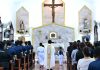
Prayer gatherings have also been organized in several places where Christians lit candles and prayed for peace and for people suffering from the economic hardship caused by the conflict.