
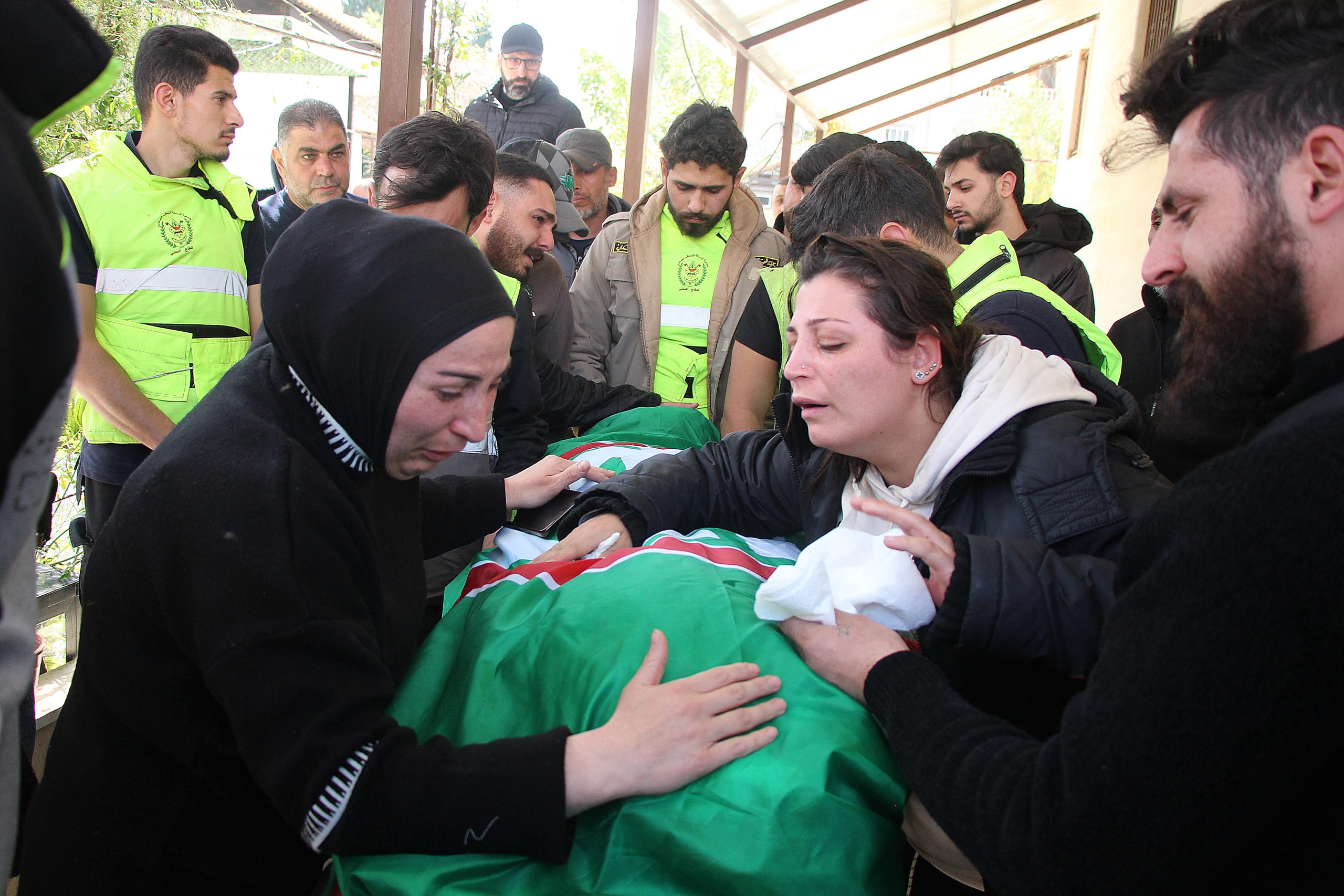
The Catholic Church in Lebanon is struggling to respond to growing humanitarian needs as renewed fighting displaces communities and deepens a crisis already worsened by years of economic and political instability.
The crisis in Lebanon worsens as the wider Middle East conflict intensifies following U.S. and Israeli military operations in Iran, widening the war across the region, according to Aid to the Church in Need.
According to Lebanon’s Ministry of Public Health, more than 500 Israeli strikes have hit the country, leaving more than 400 people dead and 1,200 injured. Twenty-two percent of the casualties are children.
More than 50 villages in southern Lebanon, as well as areas south of Beirut, have been placed under evacuation warnings, with estimates of up to one million internally displaced persons.
Marielle Boutros, project coordinator and representative for Lebanon, Syria, and Egypt at Aid to the Church in Need (ACN), said the scale of the crisis has overwhelmed communities and humanitarian institutions.
“We are overwhelmed, we are tired, we are really underwater with this war,” Boutros said. “After six years of barely surviving, we are done. Whenever we think things are getting better, there is a new thing that happens that brings us back to square one, even square zero with this war.”
Across the country, about 550 shelters have opened for displaced families, including around 300 in public schools. However, many internally displaced persons have been forced to sleep on the streets as facilities reach capacity.
The fighting has also forced the closure of five hospitals and 40 healthcare centers. Government hospitals are treating patients without insurance, while Catholic hospitals are receiving overflow patients.
Despite strained resources, the Church remains central to community life, particularly for Lebanon’s Christian population.
“The Church in Lebanon is really a rock for Christians,” Boutros said. “The fall of the Church and its institutions will lead to an exodus of all Christians. The fall of the Church will be the fall of all Christians in the Middle East. Christians in Syria really depend on the Church in Lebanon, for example. They say, ‘You stand firm, and we will be okay.’”
Aid groups, including ACN, are providing emergency assistance such as food, medicine, water, and hygiene kits. But Boutros said the Church’s role goes beyond distributing material aid.
“Especially in the Middle East, it is a community-building program. We want people to stay rooted here,” she said. “It’s important to give food and fuel and everything to the people, but the support is the Church standing next to the faithful, with the Church opening its doors, to let everyone know that the Church is here to support, to accompany, to pray together, to live the mission of Christ together.”
Catholic schools remain a crucial pillar for communities during the crisis. Many are operating online or have suspended classes, but they must continue paying teachers to avoid losing staff.
She warned that the closure of Catholic schools could leave space for institutions promoting more radical messages.
“If a Catholic school closes, the vacuum could be filled by schools with a ‘radical’ message,” Boutros said.
The conflict has also claimed the life of Fr. Pierre El-Rahi, a Maronite priest from the southern Christian village of Qlayaa, who was killed while responding to parishioners injured in a bombing.
Speaking in Rome, Pope Leo XIV described the priest as a faithful pastor who remained close to his people.
“Father Pierre was a true shepherd, who always stayed beside his people, with the love and sacrifice of Jesus the Good Shepherd,” the pope said.
The pope said the villages of southern Lebanon are “once again experiencing the tragedy of war” and expressed solidarity with the Lebanese people during what he called a “grave trial.”









