Chinese authorities have barred relatives of victims of the 1989 Tiananmen Square crackdown from holding annual cemetery rites, marking the first known prohibition on the commemoration in more than three decades.
Members of the Tiananmen Mothers, a group representing families of those killed during the military suppression of pro-democracy protests on June 4, 1989, told Radio Free Asia that they were informed by the Beijing Municipal Public Security Bureau that they would not be allowed to enter Wan’an Cemetery this year or conduct their customary memorial ceremonies there.
The move represents a new restriction on one of the few remaining public acts of remembrance carried out by families seeking truth and accountability for those killed during the crackdown.
“They won’t let us go to Wan’an Cemetery now, nor will they let us read sacrificial texts or eulogies,” Tiananmen Mothers member Zhang Xianling told RFA. “These actions, which used to be routine, are no longer permitted. Now we aren’t even allowed to go there, which is something that has never happened before.”
Zhang, 89, is the mother of Wang Nan, a 19-year-old student who was shot and killed by martial law troops during the crackdown. His remains were later interred at Wan’an Cemetery.
The Tiananmen Mothers said they submitted a protest letter urging authorities to lift what they described as an “unreasonable” ban on the annual cemetery visit.
In a statement released on June 4, the group said authorities had informed them that relatives wishing to pay respects must avoid June 4, apply individually for permission, and, if approved, visit the cemetery under police escort. Collective acts of remembrance would not be permitted.
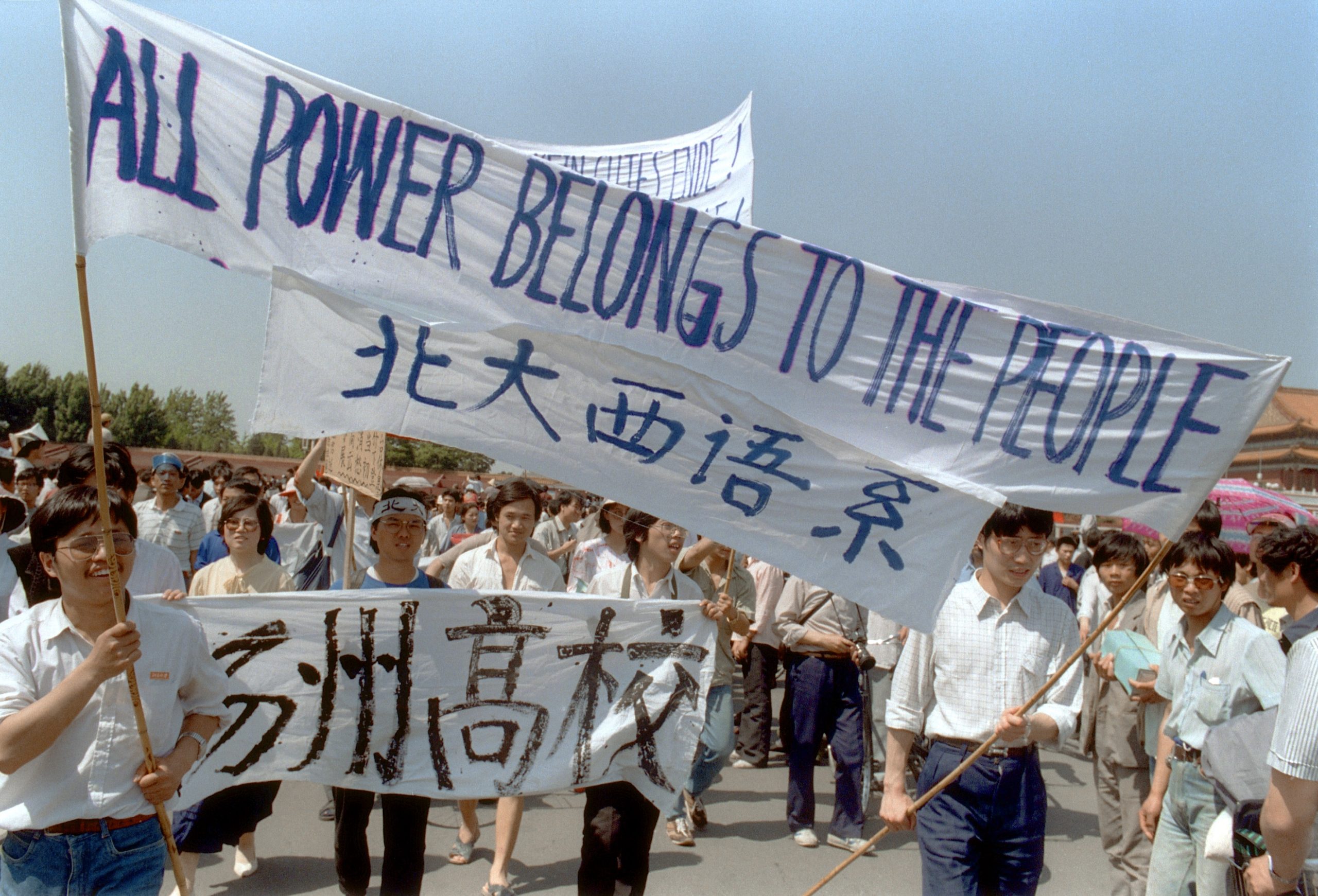
The restrictions come as China marks the 37th anniversary of the military crackdown that ended weeks of student-led demonstrations calling for political reform. Hundreds, if not thousands, of people died when troops moved into central Beijing and around Tiananmen Square. The Chinese government has never released a full accounting of the deaths and continues to censor public discussion of the events.
For decades, members of the Tiananmen Mothers have traveled to Wan’an Cemetery each June 4 under police supervision to honor those killed. The group has consistently called for an official investigation into the crackdown, accountability for those responsible, and compensation for victims’ families.
Zhang said security measures around her home intensified days before the anniversary.
“Now there are three people on my post. When I go out, three people follow me. That’s the highest level of security. They have informed us that we cannot go to the memorial on the 4th. It’s not allowed for one person, one family, or a group. If we want to go to the memorial, we have to wait until after the 6th. We need their approval before we can go,” she said.
According to Zhang, police have maintained a visible presence near her residence since May 28.
“There are two security guards at the community entrance, two police officers downstairs, and two cars—one police car and one civilian police car,” she said. “The precautions are so strict, not to mention phone calls from foreign journalists.”
Human rights advocates have long documented the surveillance and movement restrictions imposed on members of the Tiananmen Mothers in the days leading up to the anniversary. This year’s prohibition on cemetery visits goes beyond the restrictions traditionally imposed on the group, preventing families from carrying out a memorial practice they have observed for decades.
A Beijing dissident identified only by the surname Wu described the ban as particularly cruel.
“Their loved ones were shot dead for no reason, but at least they were still able to mourn them,” Wu told RFA. “It has been over 30 years, and now even their right to go to the cemetery has been stripped away. This is all so sudden.”