In an increasingly digital world, the centuries-old task of passing on the Catholic faith is encountering new tools.
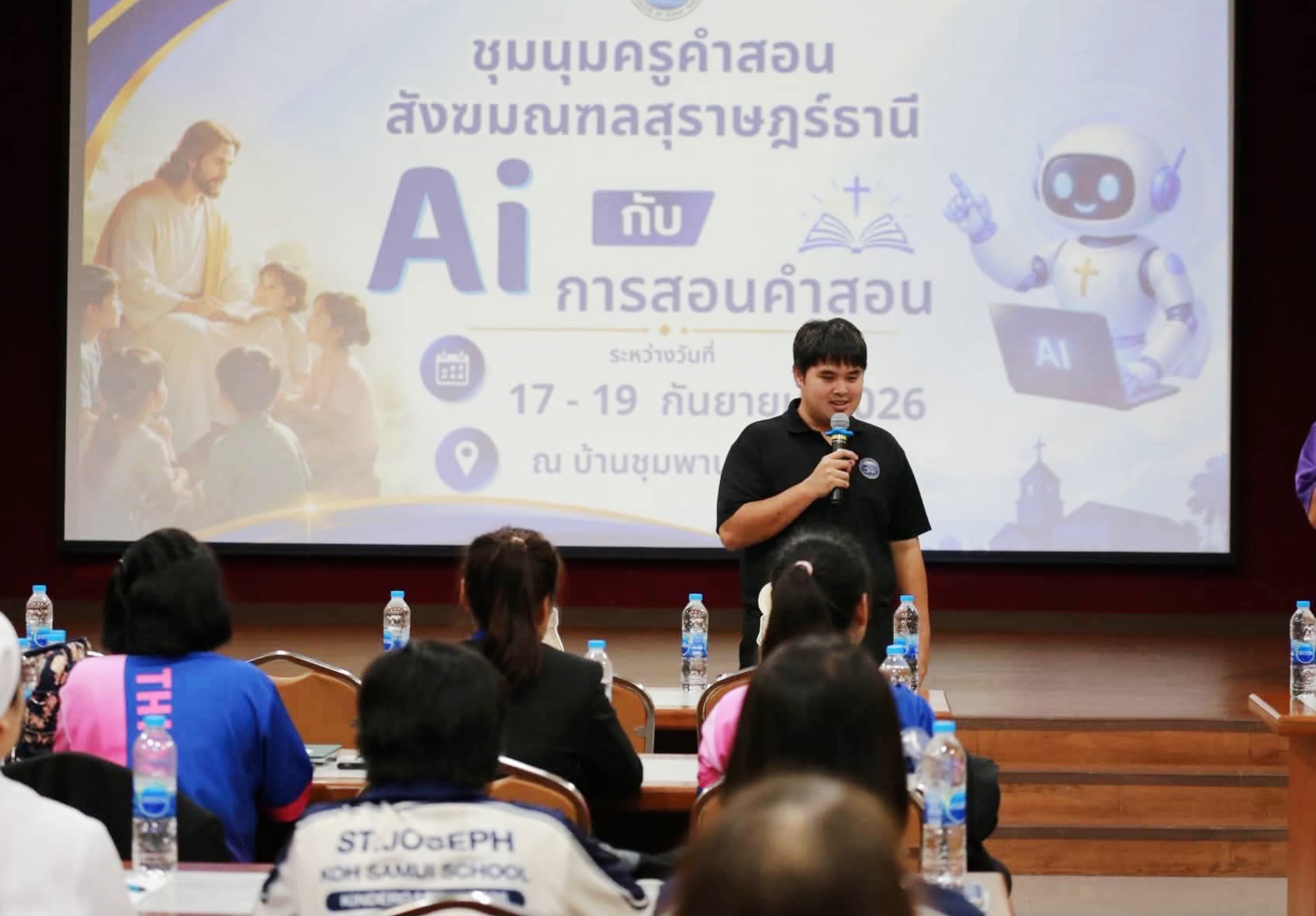
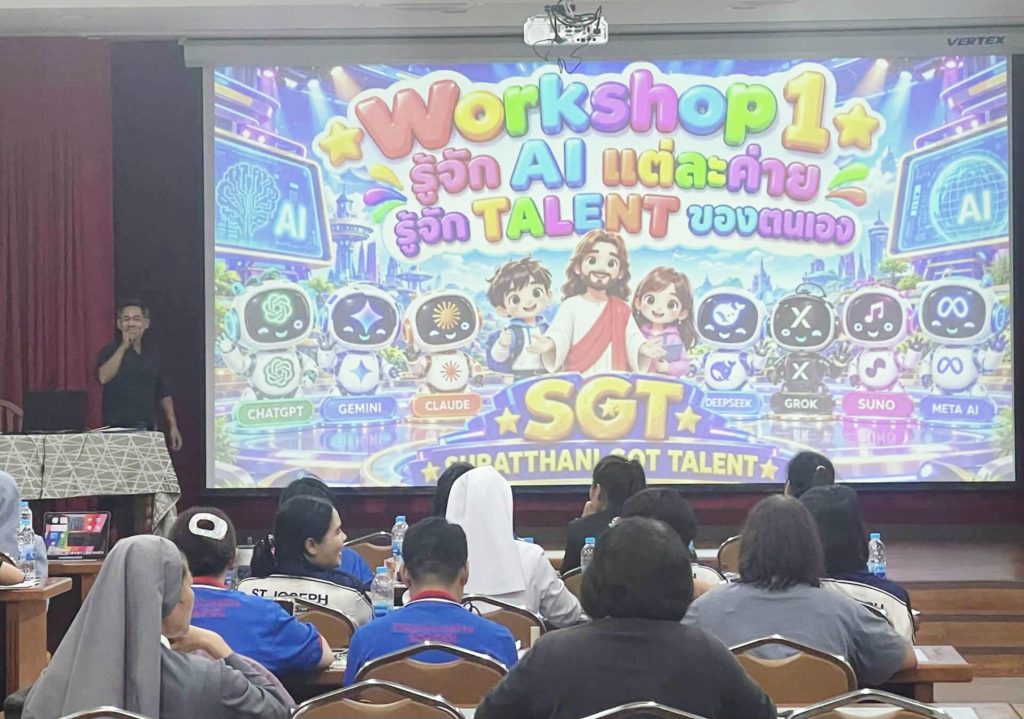
From Sept. 17 to 19, 38 catechists, including religious sisters and lay educators from across the Diocese of Surat Thani, gathered at the Pastoral Center in Surat Thani for a seminar on “AI and Catechesis.”
Organized by the diocese’s Catechetical Department, the three-day gathering combined hands-on training in artificial intelligence with discussions on ethical discernment, doctrinal accuracy, and the role of technology in pastoral ministry.
Rooted in the Word, Open to Innovation
The gathering opened with a Liturgy of the Word before participants began their sessions on artificial intelligence.
Rev. Fr. Yuttakarn Kobwattanakun, head of the Catechetical Department, described the initiative as a way of bringing technology into evangelization without abandoning the foundations of the faith.
“This initiative marks a notable advance in merging faith and technology, equipping catechists with essential knowledge and tools to enrich your teaching without compromising your core beliefs,” Fr. Yuttakarn reflected.
He said artificial intelligence could assist catechists in preparing lesson outlines and study materials and in analyzing verified Church texts when addressing complex doctrinal questions.
At the same time, he stressed that Church teaching should guide how artificial intelligence is developed and used.
“The wisdom of the Church and its teaching provide a clear framework that can guide anyone involved with artificial intelligence—be they creator or user—in using AI in an ethical and human-centered manner,” he noted.
Learning to Use AI in Catechesis
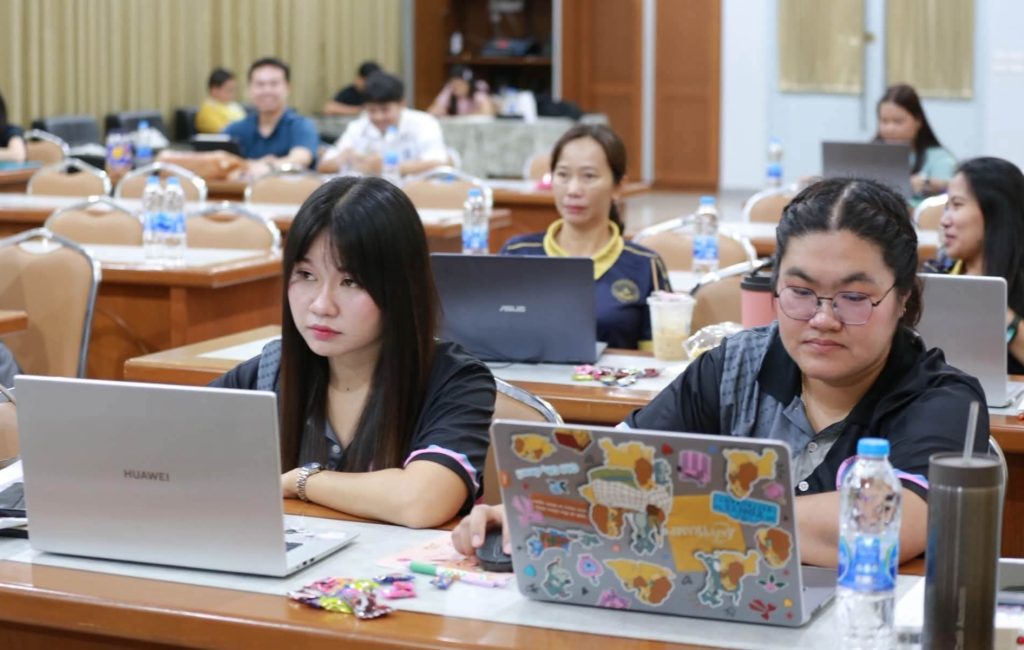
Monsingh Kraisomsuk, a technology expert from Saengtham Major Seminary and College, guided participants through practical exercises using laptops and classroom scenarios.
The sessions focused on three areas: developing lesson plans and activities based on liturgical readings and sacraments; simplifying theological concepts and Church dogma for different age groups; and producing images and short videos to help communicate biblical narratives.
“AI-generated images are immensely beneficial for catechists, as visual aids play a crucial role in conveying biblical messages,” noted one participant during a collaborative reflection session. “Creative illustrations help us connect with young people and children in dynamic, captivating ways.”
Discernment over Automation
The gathering also focused on the limitations and risks of artificial intelligence, particularly when it is used to handle theological material.
Participants noted that the quality of AI-generated material depends in part on the theological knowledge of the person using the technology.
“Catechists must rely on their doctrinal foundation to formulate precise prompts and carefully evaluate the output,” observed a participant, pointing out that an image or text generated by someone deeply formed in the faith will inevitably reflect greater accuracy and reverence.
Participants discussed the problem of AI “hallucinations,” including misattributed papal documents and the loss of theological nuances. They agreed that material generated by artificial intelligence should be cross-referenced with primary and authoritative Church texts.
The discussions also underscored a distinction between tasks that technology can perform and aspects of ministry that depend on human relationships.
“AI works best when analyzing data or automating mundane tasks, but human persons must never be reduced to mere data points or statistics,” a catechist reflected. “Every person has a unique story that must be respected, heard, and valued.”
A Community Walking Together
Beyond the training sessions, participants joined evening recreation, group sports and shared meals. The activities provided opportunities for catechists working in different parishes and diocesan schools to spend time together.
The conference ended with an evaluation session in which participants affirmed that artificial intelligence could assist their work but could not replace human wisdom or the personal encounter between teacher and student.
The gathering concluded with a Eucharistic celebration with the local parish community at St. Michael the Archangel Church in Som Hwang, bringing participants from the classroom to the shared life of the Church.