
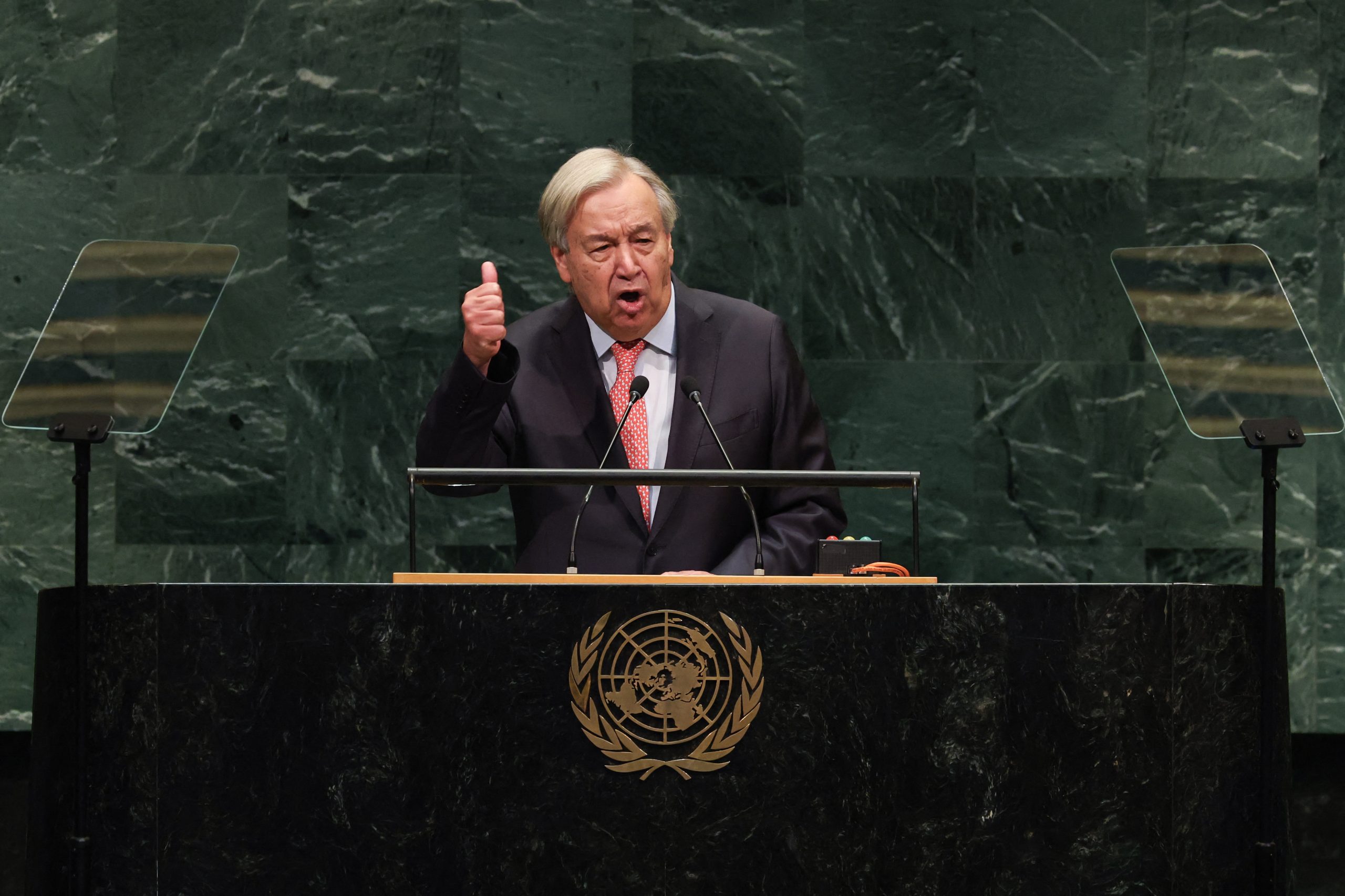
United Nations Secretary-General António Guterres used his final climate address to call for major polluters to pay for climate damage.
His appeal came a day after campaigners delivered more than two million signatures to the United Nations demanding financial accountability from fossil-fuel companies.
“Those who polluted the most – and profited the most – must do far more to repair the damage they caused. Polluters must pay,” Guterres said.
He also encouraged governments, cities, civil society groups and citizens seeking to hold major polluters accountable.
“And to the leaders, cities, civil society and citizens working to hold them accountable: you are on the right side of history. Keep going,” he said.
Members of the Make Polluters Pay International coalition, together with frontline campaigners and communities affected by climate change, presented petitions carrying more than 2 million signatures to the United Nations earlier this week.
The petitions called on governments to adopt binding measures requiring fossil-fuel companies to contribute to the costs of climate damage.
Campaigners are seeking climate-damages taxes, permanent surtaxes on fossil-fuel profits and fines, with revenues directed toward adaptation, recovery, loss and damage, and a just transition to renewable energy.
The coalition includes 350.org, Greenpeace International, Fossil Free Media and Oxfam International.
Throughout his tenure, Guterres has called for greater financial accountability from the fossil-fuel industry, including windfall taxes on oil and gas profits and solidarity levies aimed at closing the international climate finance gap owed to Global South countries.
Louise Hutchins, co-convenor of the Make Polluters Pay International Coalition, said Guterres’ remarks showed that calls for fossil-fuel companies to pay for climate damage were gaining attention.
“When the UN Secretary-General calls for fossil-fuel companies to pay, you know this demand has become impossible to ignore. Millions of people around the world are calling for it and governments are starting to listen,” Hutchins said.
“After months of super-profits from the oil and gas industry, finance ministers are putting windfall taxes back on the agenda. This is a sign of how quickly the politics are changing. The movement is growing, the public is behind it, and governments need to catch up,” she said.
Anne Jellema, executive director of 350.org, said communities on the front lines of the climate crisis had long demanded that fossil-fuel companies shoulder a greater share of the costs.
“For years, campaigners and communities on the frontlines have been saying the same thing: the companies that profited from fossil fuels must pay their fair share of the costs of the crisis they helped create,” Jellema said.
She said the more than 2 million signatures were now bringing that demand to the United Nations.
“We have watched homes burn, communities flood and families struggle with the costs of climate and energy crises, while fossil-fuel companies continue to make extraordinary profits. We pay. They profit. It’s time to change that,” she said.
Mads Christensen, executive director of Greenpeace International, called for permanent surtaxes on fossil-fuel profits and rules requiring governments to align their taxes and spending with global climate goals.
“New rules forcing governments to align their taxes and spending with global climate goals would raise hundreds of billions of dollars to support the countries and communities least responsible, while incentivising money out of fossil fuels and into secure, renewable energy that actually protects people,” Christensen said.
Amitabh Behar, executive director of Oxfam International, said communities that contributed least to the climate crisis were bearing much of its impact.
“The people who have contributed least to the climate crisis are paying the highest price. They are losing homes, livelihoods and access to food and facing an increasingly uncertain future, while fossil-fuel corporations and their billionaire backers continue to profit,” Behar said.
“The call to Make Rich Polluters Pay is about justice. It is about ensuring that those who have benefited most from the fossil-fuel economy pay for the damage it has caused,” he said.
Campaigners also called on governments to direct revenues from taxes and penalties toward affected communities, including funding for adaptation, recovery and loss and damage.
They urged governments to accelerate the transition away from fossil fuels toward clean, affordable and secure energy, arguing that continued dependence on oil and gas leaves economies exposed to volatile global markets while worsening climate disruption.