The Catholic Diocese of Hong Kong is bringing its synodal process into parish life as it prepares for a diocesan assembly in February 2027.
Eight pilot parishes are testing Conversations in the Spirit and must submit three-year pastoral plans before Advent, while the diocese widens participation among women, youth, migrants and other lay communities.
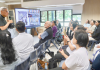
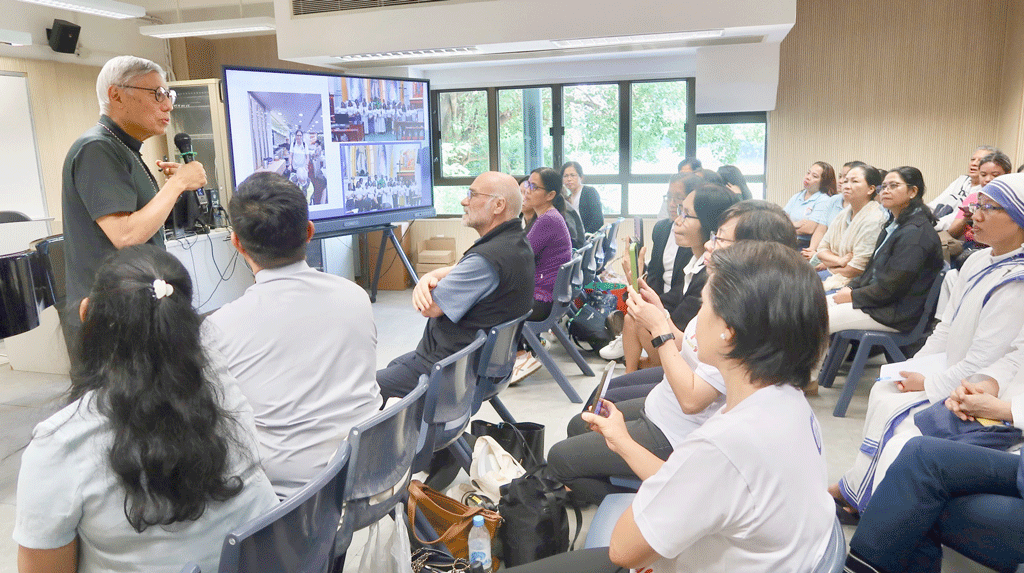
More than 300 representatives from parishes, schools, religious institutes, migrant communities and youth groups gathered at Wah Yan College in Kowloon on Sept. 19 for the launch of “Journeying Together in Synodality.”
The initiative, organized by the Diocesan Ad Hoc Committee for Synodal Development, is laying the groundwork for the February assembly, according to a report by Sunday Examiner.
Cardinal Stephen Chow, S.J., said synodality is rooted in the shared baptismal dignity and mission of laypeople, religious and clergy.
“And based on this foundation, this identity, we come together to learn to listen to each other, learn to share and learn to discern,” Chow said.
He said synodality is neither secular democratic voting nor political lobbying, but a process of deep listening and discerning the guidance of the Holy Spirit.
While final decisions remain with hierarchical leadership, Chow said leaders must respect communal discernment and remain mutually accountable.
The diocese has been developing its local synodal process since Pope Francis convened the Synod on Synodality in October 2021.
After submitting an initial synthesis report to the Holy See in 2022, it organized 16 focus groups in 2024 involving clergy, school leaders, pastoral councils and migrant worker ministries.
A further report in May 2024 identified three priorities for local implementation: fostering synodal experience and understanding, expanding women’s roles in the Church’s mission and advancing formation in synodal practices.
The process is now being tested at the parish level.
Father Timothy Wan Kwok-kwong said eight pilot parishes, one in each deanery, were selected in June.
Formation workshops held from July to September introduced Conversations in the Spirit into parish meetings as a way of discerning God’s will.
The program will be assessed in December. The participating parishes must submit three-year pastoral plans before Advent on Nov. 28.
Representatives of St. Jude’s Parish said introducing spiritual conversations into its advisory council helped members listen more attentively than in larger meetings.
A representative of Holy Cross Parish said the method also gave quieter members a voice despite initial unfamiliarity with the process.
Other parishes have widened consultation by involving Caritas, schools, hospital pastoral care teams and district councillors.
Wan said spiritual conversation is not an instant remedy, but can transform participants through prayerful discernment, respect and patient listening.
Auxiliary Bishop Joseph Ha Chi-shing described synodality as a communal spirituality aimed at discovering God’s call.
He said communities must analyze their context and gather data before prayerful decision-making, followed by transparent execution and continuous evaluation.
The diocese is also extending synodal formation into Catholic schools.
Sister Christina Cheung Shuk-yuen, a Precious Blood Sister and educator, outlined a three-stage plan from 2026 to 2029 to cultivate a synodal culture through cognition, attitude and action.
The first phase focuses on awareness through briefings, common materials and spiritual activities. The second centers on implementation in pilot schools, while the third will refine practices through continuing review.
Cheung said synodality could be introduced among non-Catholic staff through shared values such as school mottos and student care, rather than by beginning with formal Church terminology.
Youth ministry representative Paulette Fong said young people have been producing social media content on synodality.
Youth leaders also plan to integrate Conversations in the Spirit into secondary school leadership camps, student fellowship workshops and parish group training, preparing peers to facilitate dialogue.
Migrant communities are likewise part of the process.
Divine Word Father Jay Flandez, chaplain for Filipino communities, outlined ministries involving street evangelization, online Bible studies and home enthronements.
The Chaplaincy Evangelisation Team shares scripture and testimonies and distributes rosaries in streets and boarding houses, while the Thursday Liturgical Bible Study Group holds weekly online meetings on Sunday Mass readings and their connection to daily life.
Chow expressed appreciation for migrants in Hong Kong who have become “missionary disciples” and spoke of forthcoming collaborations to provide medical services for migrant workers.
During a question-and-answer session, Chow acknowledged that it is impossible to hear everyone in one or two sessions.
He stressed that synodality is a long-term undertaking rather than a one-off event, with further opportunities, assemblies and initiatives expected to sustain participation.
The February assembly forms part of the wider implementation phase of the global synodal process following the Vatican assemblies in October 2023 and October 2024.
Ha said the Working Team for the Diocesan Assembly, formed in August under Chow and himself, is finalizing discussion topics and the criteria for selecting representatives.
He invited participants to begin reflecting on what they considered the most critical topic for the local Church to address at the assembly.