

A veteran Catholic educator has called on Thailand’s incoming coalition government to place education reform at the heart of national priorities.
He stressed that true progress must combine academic excellence with the principles of human dignity, equity, integrity, and dialogue.
Chainarong Monthienvichienchai, who has dedicated decades to education and leadership in Catholic education, made the appeal as Thailand faces political uncertainty.
Prime Minister Paetongtarn Shinawatra was recently removed from office by the Constitutional Court, triggering a scramble among political parties to form a new coalition government.

“In this moment of transition, education reform cannot wait,” Chainarong told LiCAS News. “The next government must see education not only as an economic tool but as a moral foundation for society.”
Chainarong, chancellor of St. John’s University and director of St. John’s group of schools, urged policymakers to move away from rote learning and adopt a competency-based curriculum that builds critical thinking, digital literacy, and creativity.
Teachers, he added, must be empowered and encouraged to guide student-centered, active learning.
“Our classrooms should be communities of dialogue where students learn to listen, reflect, and act together,” he said. “This is synodality in practice—walking together and discerning together for the common good.”
Chainarong stressed that reforms must address the stark divide between urban and rural schools, with a school in Thabom village serving rural students in northeast Thailand and showing how children in rural areas still face limited access to qualified teachers, technology, and resources, while dropout rates remain high among the poor.
“No child should be left behind because of poverty or geography,” he said. “Catholic teaching reminds us that every person has equal worth and the right to education.”
Chainarong pointed out that he had stressed these principles just two weeks ago during his keynote address at the annual seminar of the Catholic Education Council of Thailand (CECT) in Pattaya.
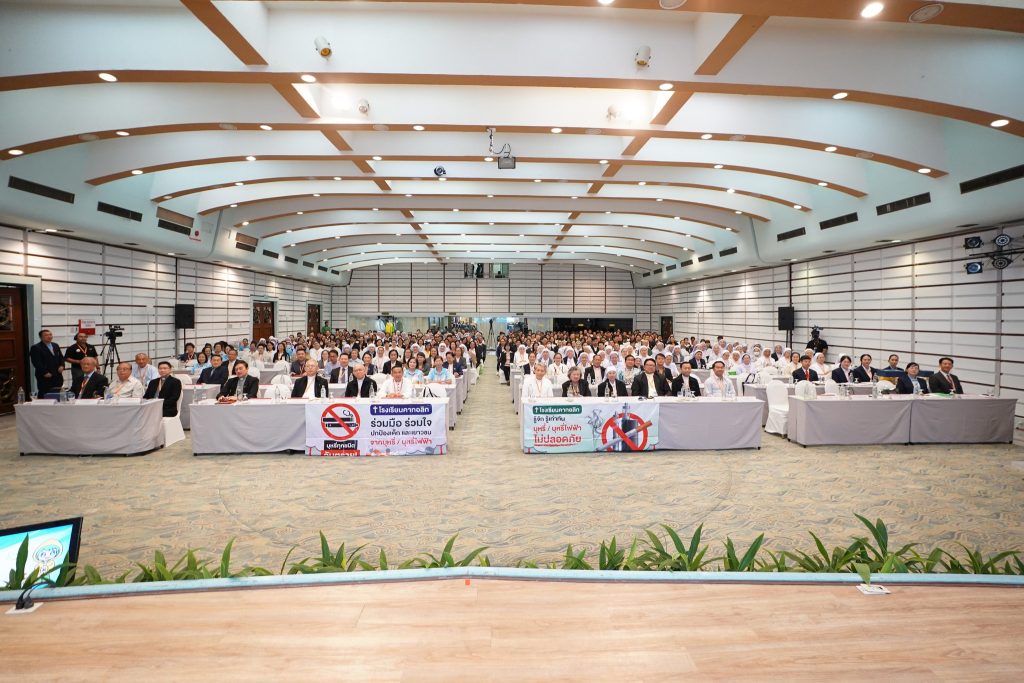
During his talk, he highlighted the significance of the Jubilee 2025, noting that Catholic education leaders should reset their mindset and form students holistically—mind, heart, and spirit—by instilling values of service, compassion, and ethical responsibility.
“The heart of Catholic education is an ethic rooted in Gospel values, which seek to form the whole person—mind, heart, and spirit—instilling core values of service, compassion, and ethical responsibility,” he said.
“Teachers in Catholic schools, inspired by Pope Francis’s teaching, should strive to educate with love for both knowledge and fraternity. This model can inspire national education reform,” said Chainarong, who is also the vice president of the CECT Association.
“Thailand must prepare its youth for the industries of the future—technology, healthcare, and green innovation,” he said. “But they must also be formed in values that put people before profit.”
Chainarong said the country’s political transition offers an opportunity for transformation.
He stressed that modernizing the curriculum, ensuring equity, and placing ethics and human dignity at the center of education would strengthen the workforce and build a more compassionate society—the true measure of progress.