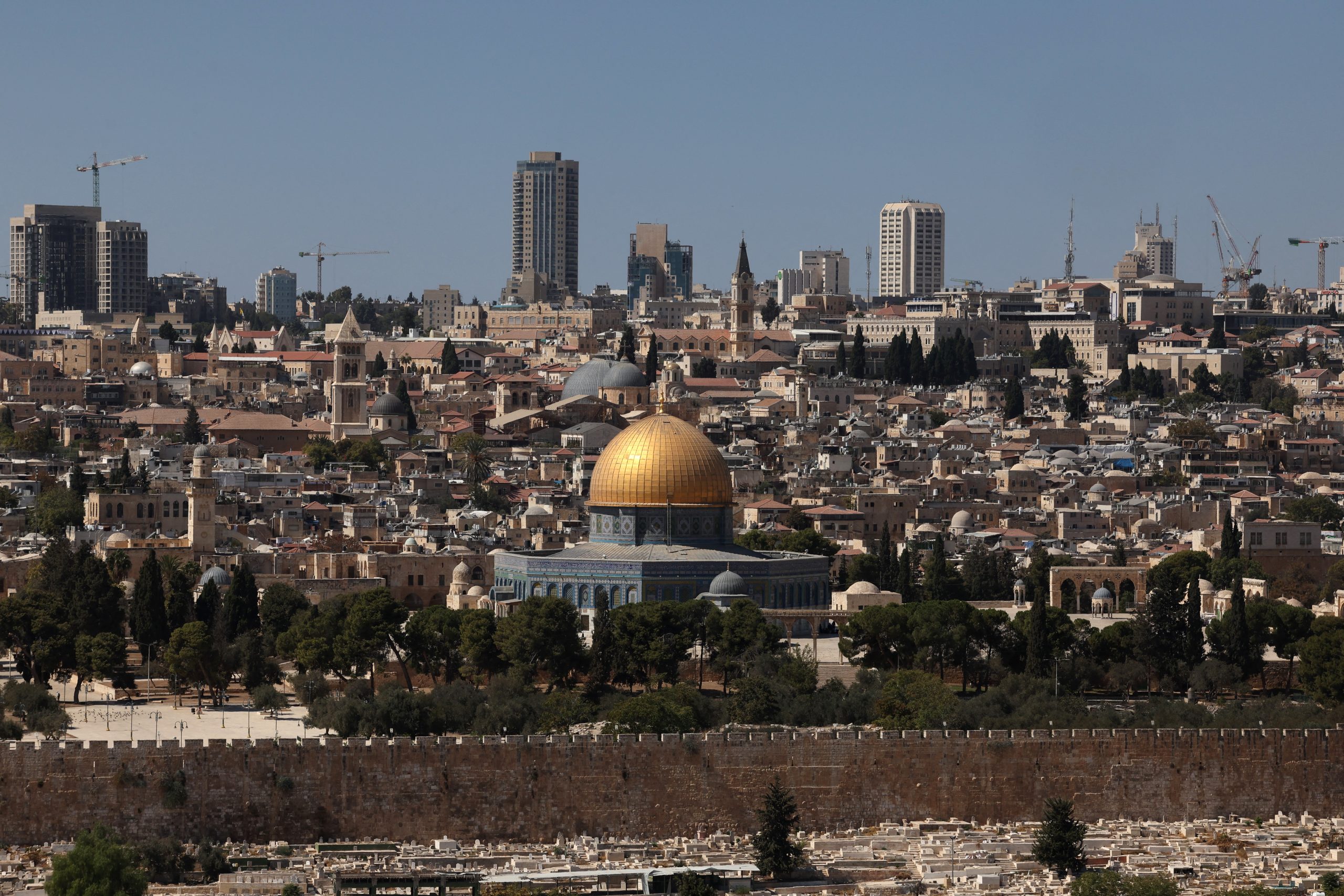
A veteran missionary currently on retreat in Jerusalem described living “in a kind of bubble” amid the ongoing conflict between Israel and Gaza, as violence continues to impact daily life in the Holy Land.
“I quickly realized that I could not report anything specific about the current situation and the conflict with Gaza, since we live in a kind of bubble in the Old City of Jerusalem, where we have no contact with the Arabic- and Hebrew-speaking inhabitants, nor with the media that use the same languages,” said Father Antonio Porcellato, former Superior General of the Society of African Missions, in an interview with Fides News Agency.
Father Porcellato, who arrived in Jerusalem on Sept. 8 for a three-month retreat and study program, said he is staying at the house of the Missionaries of Africa—also known as the White Fathers—next to the Basilica of St. Anne in East Jerusalem.
The missionary is participating in the Bethesda program—named after the ancient pool mentioned in the Gospel of John—organized annually by the White Fathers for missionaries around the world.
“There are 12 of us participating in total,” he said. “All the buildings from that period were destroyed, as was much of Jerusalem. These three months are a privileged opportunity to delve deeper into the biblical narratives and visit the places described. They are also an opportunity to take stock of one’s own life for those, like me, who have completed a demanding task and are preparing for the next phase of life.”
He added that the program combines visits to holy sites with prayer, group reflection, and time for solitude. “In addition to the visits, there is also plenty of time for personal reflection, group discussions, and prayer,” he said.
While the retreat has offered a space for spiritual renewal, Father Porcellato noted that the broader reality of conflict has brought visible changes to Jerusalem’s religious life.
“It’s still too early to express an opinion on the conflict between Israel and Palestine, and especially on Gaza,” he said. “The one thing that’s quite obvious in Jerusalem is the sharp decline in both Christian and Muslim pilgrims.”
He described a haunting quiet in sacred places that were once filled with visitors. “For example, I visited the Church of the Holy Sepulchre several times and was able to spend many minutes alone praying in the small grotto where Jesus’ body was laid out, as there wasn’t the usual line of pilgrims waiting to enter,” he said.
“This situation has dramatic economic and social consequences for everyone, especially for the Palestinians. The crisis that began with the coronavirus epidemic continued with the war that followed the Hamas massacre on Oct. 7, 2023,” he added.
Reflecting on his time in Jerusalem, Father Porcellato said the experience has been deeply prayerful. “I came here with a head and a heart full of faces, people, encounters, affection, situations of suffering, and prayer intentions. In quiet moments and in all the places we have visited, I have the opportunity to remember and pray, especially for those experiencing grief or illness,” he said.
In a development that could reshape the conflict Father Porcellato described as “too early to comment on,” Israel’s government has approved the first phase of a ceasefire agreement with Hamas. The deal includes the exchange of captives and a partial withdrawal of Israeli forces from Gaza, though questions remain about how it fits into a broader plan for lasting peace.
Khalil al-Hayya, head of Hamas’s negotiating team, said the group received assurances from the United States and mediators that the agreement’s first phase signifies the war in Gaza “has ended completely.” The Israeli Cabinet’s ratification of the plan early Friday morning opens the way for fighting to halt within 24 hours, with Hamas given 72 hours to release Israeli captives.
However, the vote revealed deep divisions within Israel’s leadership. Far-right factions opposed the deal, and National Security Minister Itamar Ben-Gvir warned Prime Minister Benjamin Netanyahu that he would not remain in a government “that will allow Hamas rule to continue in Gaza.”
Since the war erupted following the Hamas attacks on October 7, 2023—when 1,139 people were killed in Israel and about 200 taken captive—Israel’s offensive has killed at least 67,194 people and wounded 169,890 in Gaza. Thousands more remain buried under the rubble of destroyed buildings.