
Religious freedom across Asia has deteriorated sharply amid intensifying authoritarian control, ethno-religious nationalism, and extremist violence, according to the Religious Freedom in the World Report 2025 published by Aid to the Church in Need (ACN).
The biennial study—covering 196 countries—found that persecution in Asia spans “from the ideological subjugation of believers in China and North Korea to the hybrid persecution of minorities in India and Myanmar.”
The report noted that across the continent, “religious expression is increasingly viewed as a threat to state security or national identity,” as governments tighten control and extremist groups expand their reach.
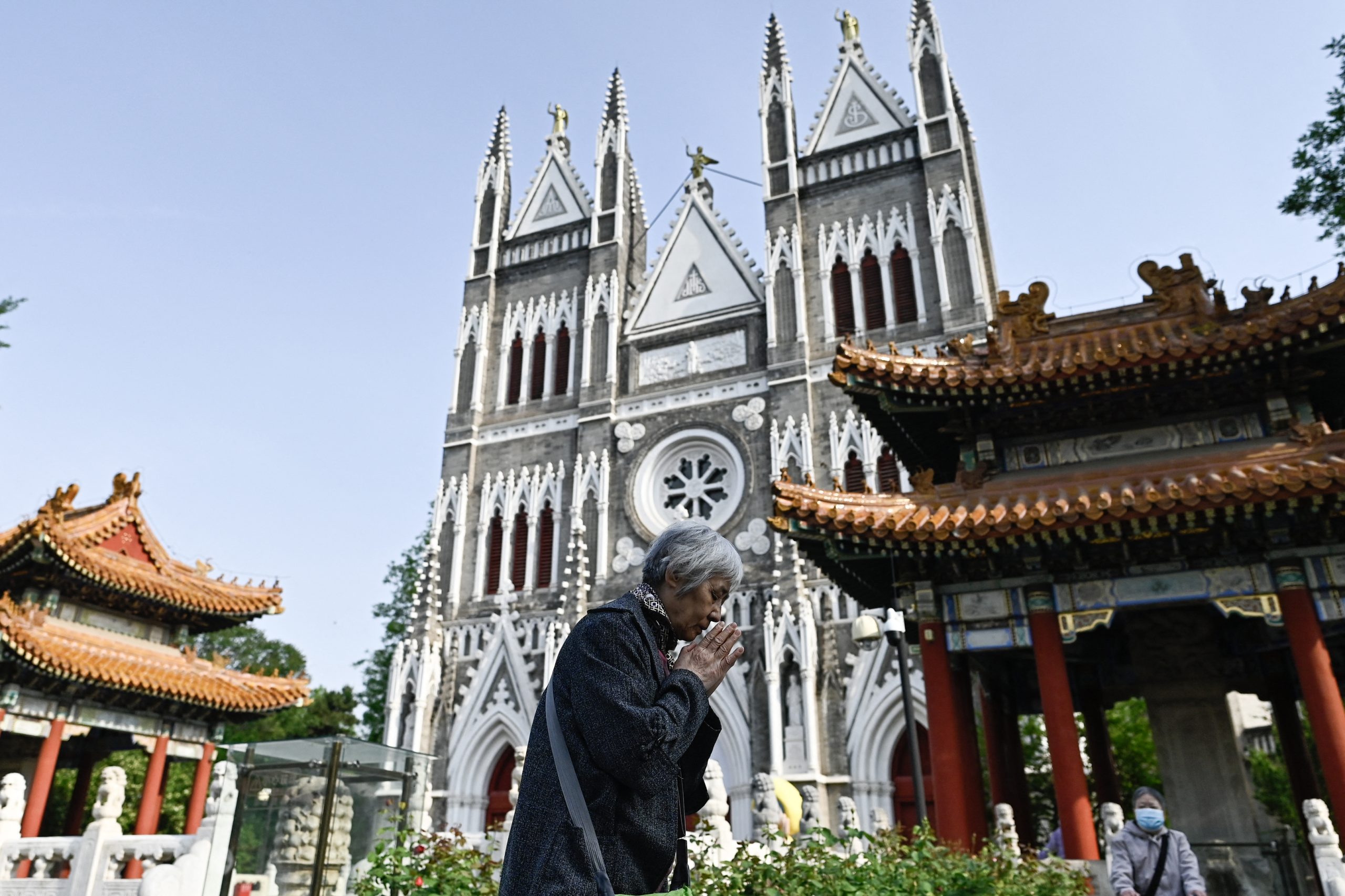
In China, the foundation said, “new 2024 regulations mandate that all religious venues align explicitly with socialist values,” while religious education for minors is prohibited and worship spaces face closure or demolition.
In North Korea, “all forms of religious practice are severely restricted.”
In India, “Hindu nationalist policies under the Bharatiya Janata Party have steadily eroded constitutional protections,” with “Christians suffering 834 attacks in 2024 alone.”
In Myanmar, “a combination of political repression, ethnic identity, and religious affiliation underpins the prevailing forms of persecution,” while “the State’s Bamar-Buddhist framework positions itself as the defender of national unity.”
Meanwhile, Pakistan continues to record “abductions, forced conversion, and coerced marriage involving Hindu and Christian girls—some as young as ten—carried out with impunity.”
ACN warned that Asia has become “a crucial theatre where authoritarianism and extremism intersect,” with governments in China, Iran, and Vietnam repressing religious life through “pervasive surveillance, restrictive legislation, and repression of dissenting beliefs.”
Global findings: Freedom under siege
Globally, the 2025 report concludes that “almost two-thirds of humanity—almost 5.4 billion people—live in countries where serious religious freedom violations take place.”
Of 196 countries studied, 62 were identified with grave violations: 24 classified as ‘persecution’ and 38 as ‘discrimination.’
Only Kazakhstan and Sri Lanka showed improvement during the reporting period from January 2023 to December 2024.
ACN described authoritarianism as “the greatest threat to religious freedom,” noting that “in countries such as China, Eritrea, Iran, and Nicaragua, the government represses religion through pervasive surveillance, restrictive legislation, and the repression of dissenting beliefs.”
The report also found that religious nationalism is “on the increase, fuelling exclusion and repression of minorities,” while religious persecution increasingly fuels forced migration and displacement.
Millions, it said, “have fled violence, discrimination, and the absence of state protection whose causes are rooted in religious intolerance.”
Rising violence and emerging threats
The foundation warned that jihadist violence continues to destabilize large parts of Africa and Asia. “In 15 countries, religious extremism is a main driver of persecution; in 10 others, it contributes to discrimination,” the report said.
It also observed that “AI and digital tools are being weaponized to repress religious groups,” with governments such as China, North Korea, and Pakistan using “digital tools to censor, intimidate, and criminalize believers—transforming religious faith into a perceived security threat.”
Meanwhile, “religious freedom has become a global casualty of war,” as conflicts in Myanmar, Gaza, Ukraine, and Sudan displace millions and devastate worship sites.
Despite persecution, faith communities endure
Amid the growing crisis, ACN highlighted the resilience of religious communities “as agents of peace as well as emergency and pastoral aid.”
“Despite persecution, religious communities continue to demonstrate remarkable resilience, actively engaging in peacebuilding and delivering essential humanitarian assistance,” it said.
The report urged global solidarity: “Exposing the truth about violations is the first step toward change. It is not enough to lament injustice; we must bring it to light.”
“Religious freedom is not a privilege—it is a fundamental human right,” ACN emphasized.









