
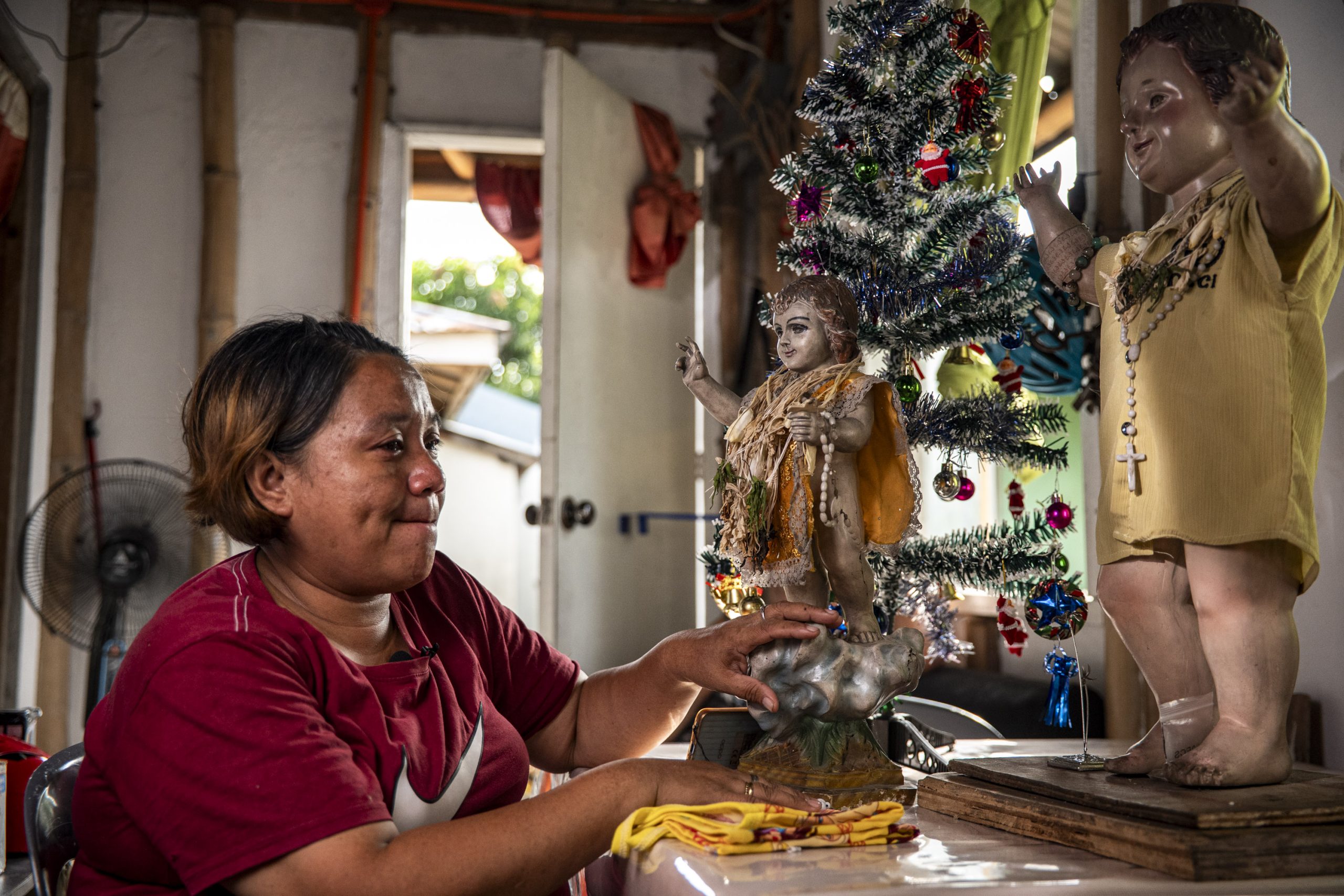
For most of her life, Norian “Ging” Rodriguez watched Christmas from the outside.
This year, a small Christmas tree stands beside two Santo Niño images inside her home in Barangay Bagong Silangan in Quezon City, Philippines.
It is the first time Rodriguez will spend Christmas in a decent house of her own, after years of living under a bridge where floodwater rose through the night and celebration was never an option.
“This is our first Christmas tree. Our first Christmas in a house,” she said.
Rodriguez is a beneficiary of the Onward Home Program of the Vincentian Missionaries Social Development Foundation Inc. (VMSDFI), a housing initiative implemented with Depaul International.
Before moving to Bagong Silangan, Rodriguez and her family lived in a makeshift shelter beside a bridge, built from salvaged materials and reinforced by her husband. The structure offered little protection from the elements.
“When it rained, floodwater would rise,” she recalled, forcing the family to move their belongings higher to keep them from getting soaked. During the dry season, the shelter became almost unlivable.
Rodriguez described the heat inside as “like hell,” while early mornings were bitterly cold because of thin walls and damaged wood.
Her experience reflects a wider homelessness crisis in Metro Manila. An estimated 4.5 million people in the Philippines are experiencing homelessness, with about two-thirds concentrated in the capital region, where families live under bridges and along riverbanks in fragile shelters without basic services.
In a country ranked as the world’s most disaster-risk prone, these informal settlements face growing danger from flooding, typhoons, and extreme weather, while long-term housing options within the city remain scarce.
For Rodriguez, the risks extended beyond weather. Their shelter opened directly onto a busy road where large trucks passed at close range. Beneath the bridge, the ground was unstable, and she feared the structure could collapse, especially during heavy rains or earthquakes.
“The place wasn’t safe. We were afraid the house might collapse. There were supports, but the wood in the middle broke, so our floor tilted,” she said.
Rodriguez’s connection with the Vincentians began in 2018 through a small livelihood effort. She and her husband joined an “online market” project called Entengdahan, helping prepare and deliver vegetable orders to customers.
The work provided modest income and brought her into contact with priests who would later play a decisive role in her family’s life.
That relationship became critical during the COVID-19 pandemic, when food shortages worsened across informal settlements.
“That was a big help,” Rodriguez said, referring to food packs distributed by the Vincentians. She recalled lining up with neighbors, styrofoam containers in hand, waiting when there was no rice and no money.
Support extended beyond food. Some priests of the Congregation of the Mission (CM) pooled monthly allowances so Rodriguez’s eldest child could continue college.
When her child needed a quiet place and a stable internet connection, he was allowed to study at the priests’ office, something impossible under the bridge.
Her son graduated magna cum laude from the Philippine Normal University, passed the licensure examination on his first attempt, and is now a teacher pursuing a master’s degree at the University of the Philippines.
Rodriguez did not expect housing assistance to follow.
“I thought he was just a priest,” she said of Fr. Geowen Porcincula, executive director of VMSDFI. “I didn’t know there were projects like that,” she added.
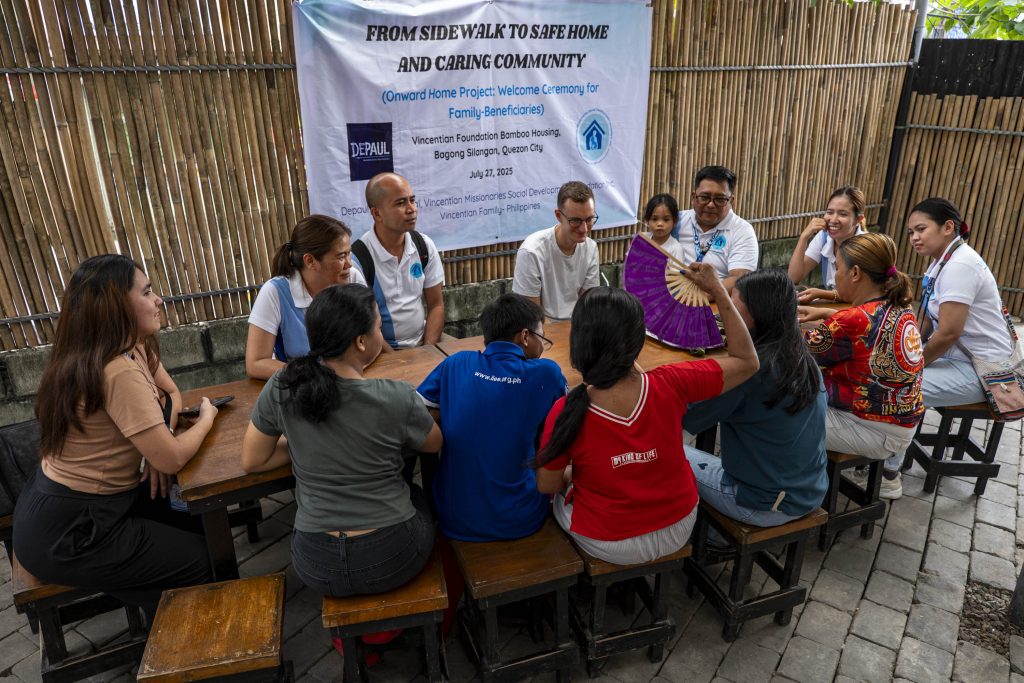
When she was told to come to Bagong Silangan, Rodriguez did not immediately believe it would happen. After renovations and months of waiting, the family was handed the key.
“He gave us the key,” she said. “I cried.”
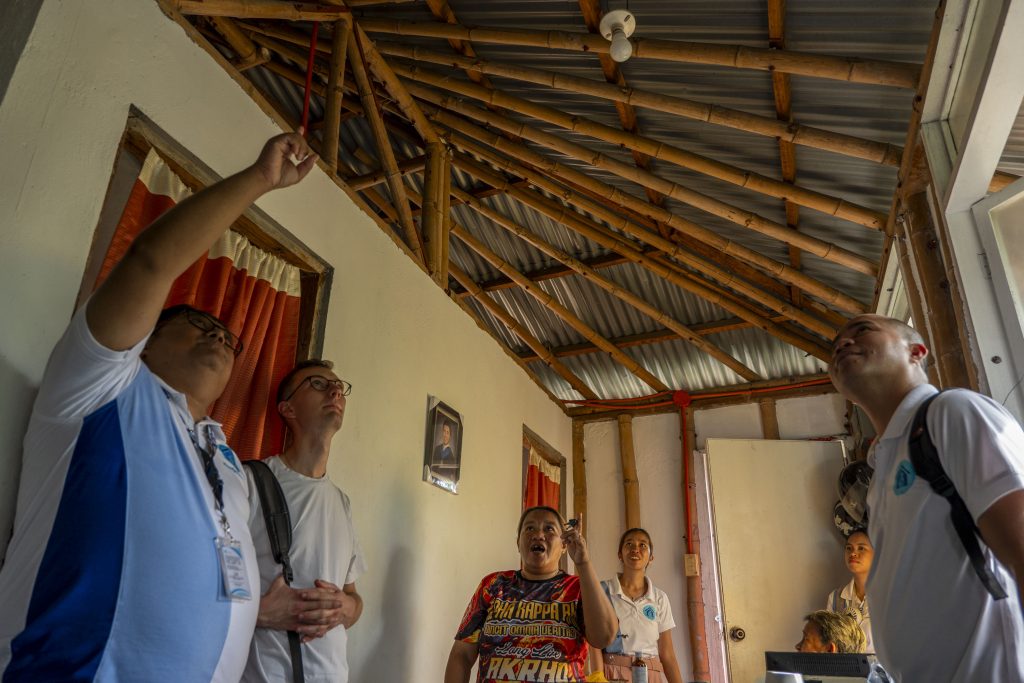
The move brought immediate changes. The house has windows, a door that locks, and a private toilet. When it rains now, Rodriguez said she can sleep through the night. Her grandchild can play outside without stepping directly into traffic.
“We are not afraid like before. Before, we ate separately. Now we eat together,” she said.
The Christmas tree near the Santo Niño images brings those changes into focus. For years, Rodriguez said, decorations were not an option, as any extra money went to food.
This year, she allowed herself that symbol.
“This is our first Christmas tree inside a house we can call our own,” she said.