
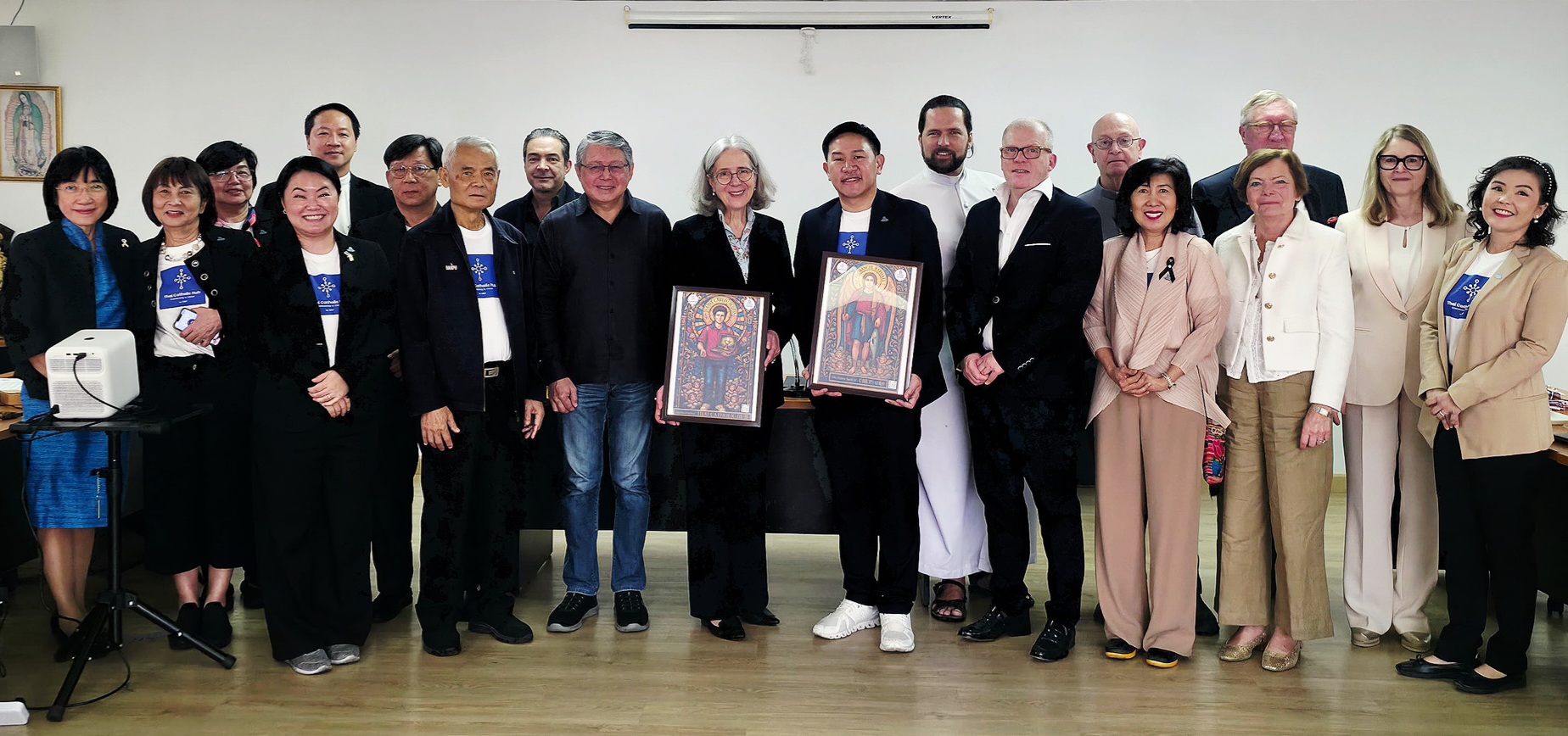
In an era where rapid economic acceleration often masks deep-seated social disparities, the International Christian Union of Business Executives (UNIAPAC) has launched its 2026 Asia Tour, positioning the marketplace as a primary frontier for the Gospel.
The tour commenced in Thailand on February 2, signaling a strategic effort to fortify a regional economy anchored in human dignity and the common good.
The landmark gathering brought together international delegates and members of the Catholic Business Executives and Professionals of Thailand (CBEP), marking a convergence of global vision and local apostolic action.
The Magisterium Anchor: A Century of Social Thought
Addressing the assembly in Bangkok, Sigrid Marz, world president of UNIAPAC, framed the organization’s mission not as a modern corporate trend, but as a direct lineage of the Church’s social magisterium.
Founded in 1931, UNIAPAC’s origins are rooted in Quadragesimo Anno, the landmark encyclical written to address the social exigencies of the industrial age.
“I often say that UNIAPAC is the Body of Christ among business leaders,” Marz told the CBEP members. “Our roots lie in Rerum Novarum, written in response to the misery of early industrialization. Today, we federate 40,000 leaders globally, ensuring the voice of faith-based business is heard within the United Nations, the ILO, and the World Economic Forum.”
A Noble Vocation in a Complex Landscape
As Asia grapples with the intersection of unprecedented growth and cultural diversity, UNIAPAC’s presence underscores a shift in how entrepreneurship is defined.
The organization advocates for business as a “noble vocation,” a concept that transcends mere profit-seeking to prioritize human development and ethical leadership.
Marz introduced a simplified triptych to define the organization’s essence for a new generation of leaders:
• It works.
• It calls for fraternity, prosperity, justice, and peace.
• Christian social thinking is our mission and our vocation.
“What would lead anyone to hold on to power only to be remembered for their inability to act when action was urgent and necessary?” Marz asked, echoing the poignant inquiry of Pope Francis. “Action is within our power. And action is urgent.”
The Emergence of the Lay Apostle
The central theme of the Bangkok summit was the evolving role of the laity. Citing a conversation with a Dominican sister in Rome, Marz noted that religious congregations, once the primary providers of social services, are no longer numerous enough to carry the burden alone.
“Lay communities are now called to take responsibility for the issues of our time,” she said. “This is the spirit of Vatican II. We, the lay people, must take greater responsibility for society.”
In Thailand, this call is already being answered. George Varakorn Techamontrikul, chairman of CBEP, detailed how Thai executives are acting as “everyday ministers of the faith.” Through the CBEP Academy, a collaborative formation program with the Philippines’ Brotherhood of Christian Businessmen and Professionals (BCBP), and the Thai Catholic Hub, local leaders are creating a robust ecosystem where commerce and discipleship intersect.
Ecumenical Breadth and Diplomatic Bridges
While deeply Catholic in its foundation, the UNIAPAC Asia Tour emphasizes an ecumenical and interreligious reach. Inspired by Fratelli Tutti, the delegation highlighted its engagement with the World Council of Churches and its participation in interreligious dialogues with Muslim and Jewish business leaders, seeking a “global fraternity” that addresses ecological responsibility and social justice.
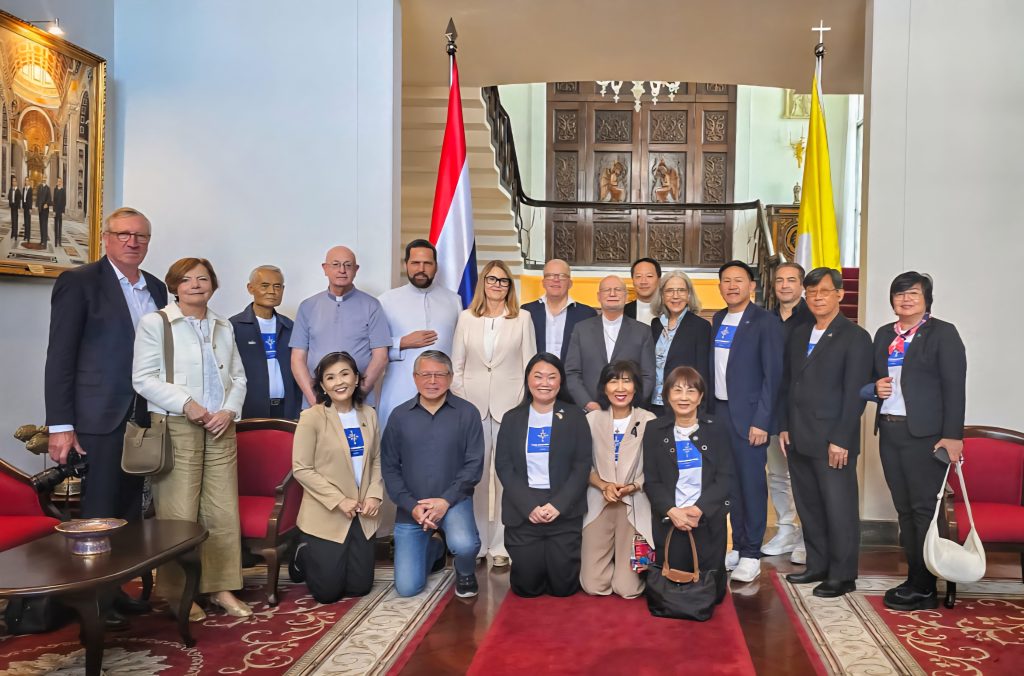
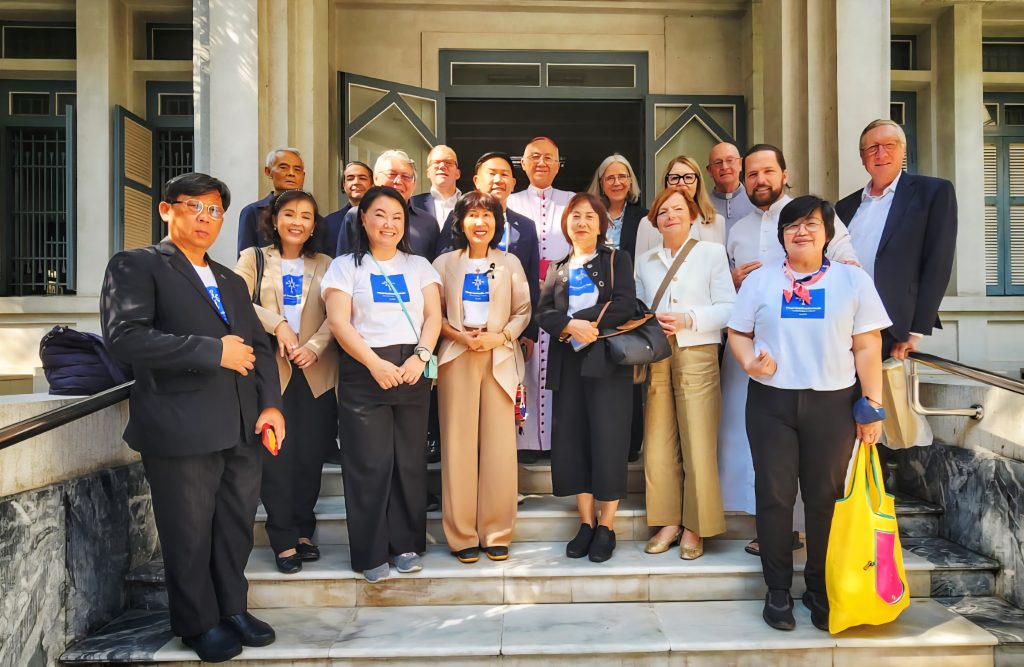
Following the conference, the delegation sought the blessing and counsel of the Church hierarchy, paying courtesy visits to the Apostolic Nuncio to Thailand, Archbishop Peter B. Wells, and the president of the Catholic Bishops’ Conference of Thailand, Archbishop Francis Xavier Vira Arpondratana.
As the delegation moves forward to Singapore, Indonesia, and Vietnam, the echoes of the Bangkok meeting serve as a roadmap for the modern executive. By integrating the “Good Goods” of Catholic Social Teaching into the realities of energy, real estate, and finance, these leaders are proving that the pursuit of prosperity is most fruitful when it paves the path toward peace.









