
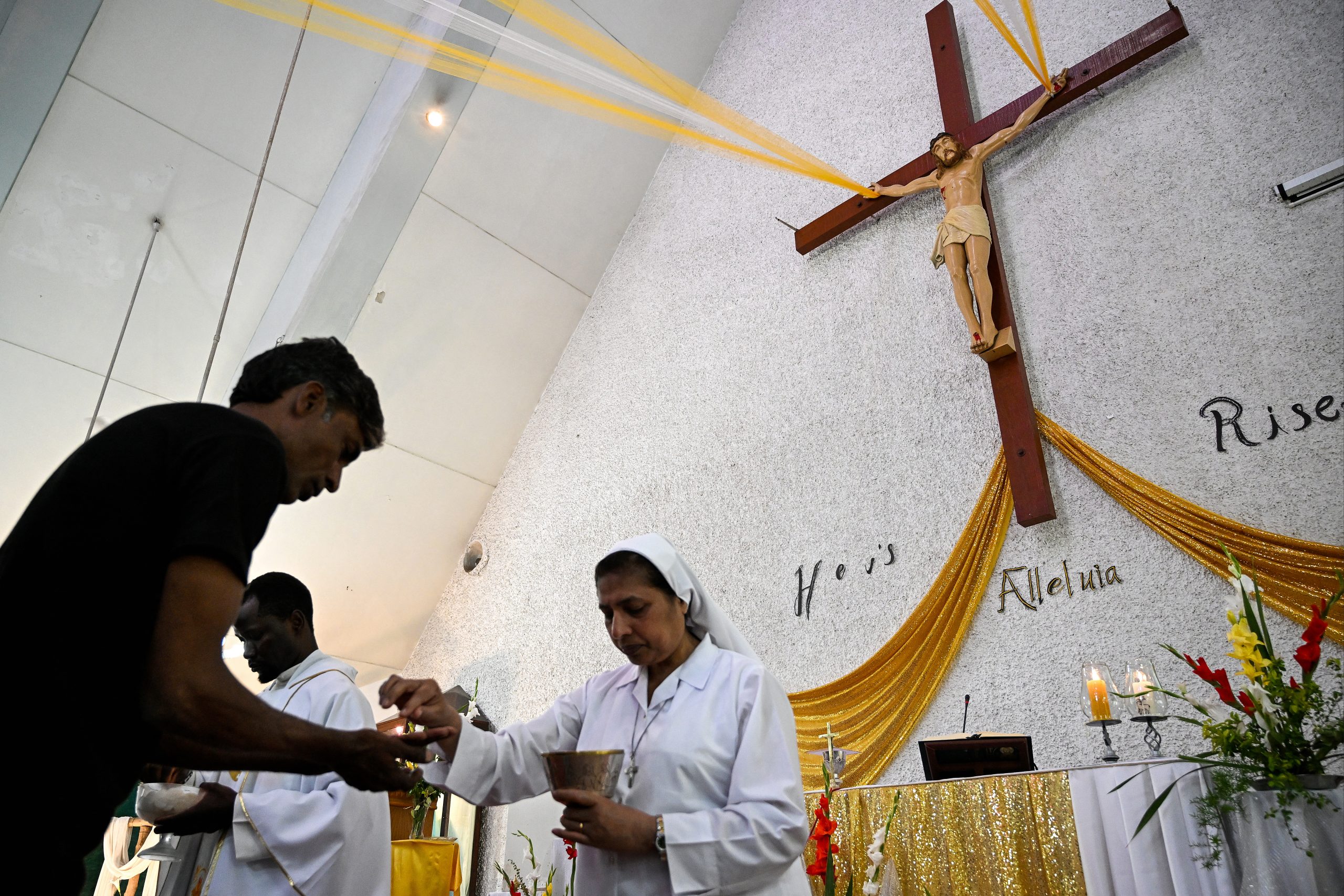
After the 40-day season of Lent, Christians around the world celebrate Easter on Sunday, April 5. Each year, Easter falls on a Sunday between late March and late April. The date changes annually because it is determined by the first full moon after the spring equinox. Easter commemorates the resurrection of Jesus Christ following his crucifixion by Pontius Pilate under the Roman Empire nearly 2,000 years ago.
The week leading up to Easter is known as Holy Week. It begins with Palm Sunday, which commemorates Jesus’ entry into Jerusalem, followed by Good Friday, which marks his crucifixion, and culminates in Easter Sunday, celebrating his resurrection.
Christians observe Easter by attending church services where they pray, sing hymns, and read Scripture. One of the traditional readings is John 20:1–9, which describes Mary Magdalene discovering the empty tomb and the disciples realizing that Jesus has risen.
Across many cultures, Easter is celebrated with various traditions. In Europe and many other parts of the world, the Easter Bunny and chocolate eggs are popular among children and symbolize new life. Over time, these traditions have become widely recognized cultural symbols of Easter. Thus, Easter represents renewal and hope, both in a religious sense through the resurrection of Jesus and through the symbolism of springtime traditions.
For Christians in Pakistan, Holy Week holds great spiritual significance. Many believers attend church services throughout the week, with Good Friday carrying particular importance as they remember the crucifixion through prayers, fasting, and processions. Churches often reenact the Stations of the Cross, reflecting on the suffering of Jesus.
On Easter Sunday, churches hold midnight or early morning services where hymns are sung to celebrate the resurrection of Jesus Christ. Sermons focus on themes of sacrifice, hope, and new life. Major churches such as St. Patrick’s Cathedral in Karachi and Sacred Heart Cathedral in Lahore often hold large public Masses attended by thousands of worshippers.
Many Christians also visit the graves of their loved ones early in the morning, placing flowers and offering prayers. Easter is one of the few major public celebrations for Christians in Pakistan. Families buy new clothes for the occasion, and after church services they visit relatives and friends. Children often receive small gifts, sweets, chocolate eggs, or money. Families prepare special meals at home and invite relatives. Common foods include chicken or mutton curry, rice, and traditional desserts such as sweet rice, custard, or trifle. In many Christian neighborhoods, community meals and celebrations are also organized.
Churches and Christian organizations often arrange charitable activities during the Easter season, including helping poorer families, visiting hospitals, and supporting orphanages, spreading the message of compassion and love. Because Christians are a minority in Pakistan, Easter also becomes a strong community event that brings neighborhoods together around churches and shared meals. In many places, community festivals with music and games are also organized.
Easter is one of the most significant celebrations in the Christian faith. For Pakistani Christians, however, it carries additional meaning as it commemorates the resurrection of Jesus Christ, symbolizing hope, renewal, sacrifice, and the triumph of justice over injustice. Beyond its religious importance, Easter also conveys profound social and ethical messages that inspire believers to uphold human dignity, compassion, equality, and justice in society.
As a minority community, Christians often find strength in the values associated with Easter, such as forgiveness, solidarity with the oppressed, service to humanity, and the pursuit of peace. The life, death, and resurrection of Jesus Christ encourage believers to stand against injustice, support marginalized communities, promote human rights and equality, and foster social harmony among diverse religious and cultural groups.
Easter’s message motivates collective efforts to address challenges such as poverty, discrimination, and social exclusion. In this way, faith-based values can contribute to building a more just and compassionate society in Pakistan.
Church fathers often say that Easter proclaims that love has triumphed over hatred, sin, and death. It calls for an end to violence and conflicts worldwide while advocating for the dignity of the vulnerable, including women, children, and migrants. Easter offers spiritual strength and endurance, reminding believers of the promise of eternal life and divine comfort even in the midst of adversity.
The resurrection of Jesus Christ also conveys a powerful message of victory over injustice. Because Jesus rose after being unjustly executed, believers are encouraged to remain hopeful and resilient even when facing discrimination or social challenges. This hope motivates them to continue advocating for fair treatment. It reminds them that God understands their trials and strengthens them to remain steadfast in the face of fear.
Christian teaching holds that every person is created in the image of God. Therefore, Pakistani Christians believe they are called to defend the dignity of all people, regardless of religion, ethnicity, gender, or social status, and to speak out against oppression and inequality.
Furthermore, the resurrection represents the beginning of a “new life.” Inspired by this message, churches and Christian organizations in Pakistan actively engage in social services such as education, healthcare, and support for marginalized communities. These efforts are seen as practical expressions of Christian teaching, showing that faith is not only a spiritual belief but also a moral motivation. The Easter message continues to inspire believers today to stand for justice even in difficult circumstances. In a society where Christians are a minority, it encourages peaceful advocacy for equal rights and religious freedom.
In 1986, Pope John Paul II famously declared, “We are an Easter people, and Alleluia is our song!” He taught that Easter represents the victory of life over death and good over evil, urging believers not to live in despair but to find joy in the Resurrection and to work toward building a “civilization of love.”
Aftab Alexander Mughal is a British-Pakistani freelance journalist based in the UK and former executive secretary of the Justice and Peace Commission of Major Superiors of the Catholic Church in Pakistan. He can be reached at [email protected].









