
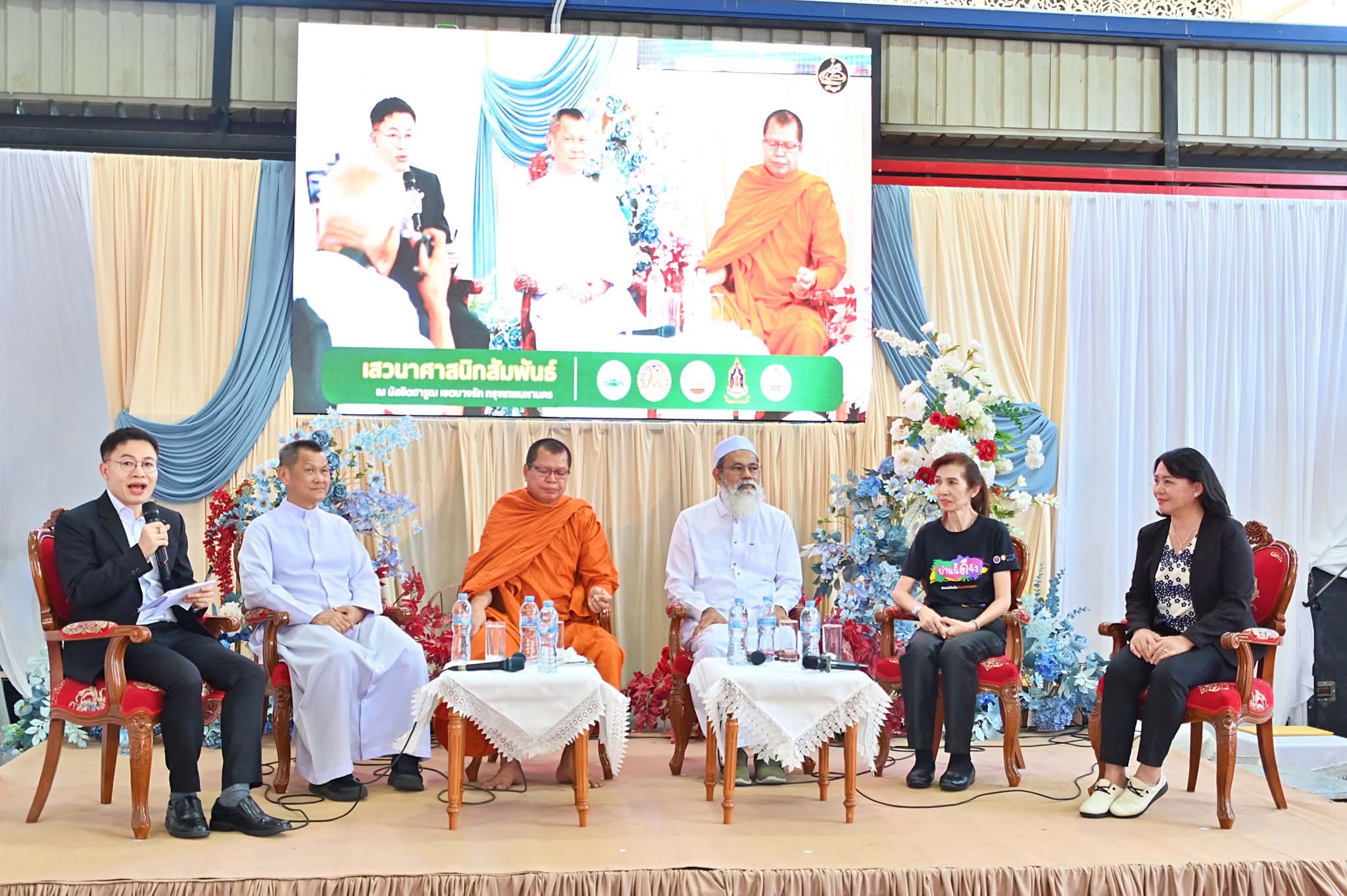
Bangkok’s religious leaders strengthened grassroots peace efforts through interfaith dialogue, bringing together Buddhist, Muslim, and Christian communities to promote unity in one of the city’s most diverse districts.
Thailand has promoted such engagement as part of its broader peacebuilding efforts, with authorities and religious groups encouraging dialogue to counter polarization. The March 26 gathering in Bangkok’s Bang Rak district highlighted how long-standing local cooperation is being used as a practical model for sustaining harmony in an increasingly diverse society.
The Department of Religious Affairs said these initiatives help foster reconciliation by encouraging people of different faiths to share core values and focus on their common humanity, amid divisions often fueled by political or religious differences.
In line with this effort, the department, in collaboration with a network of religious communities in Bangkok’s Bang Rak district, organized an interfaith dialogue on March 26 at Haroon Mosque near Assumption Cathedral.
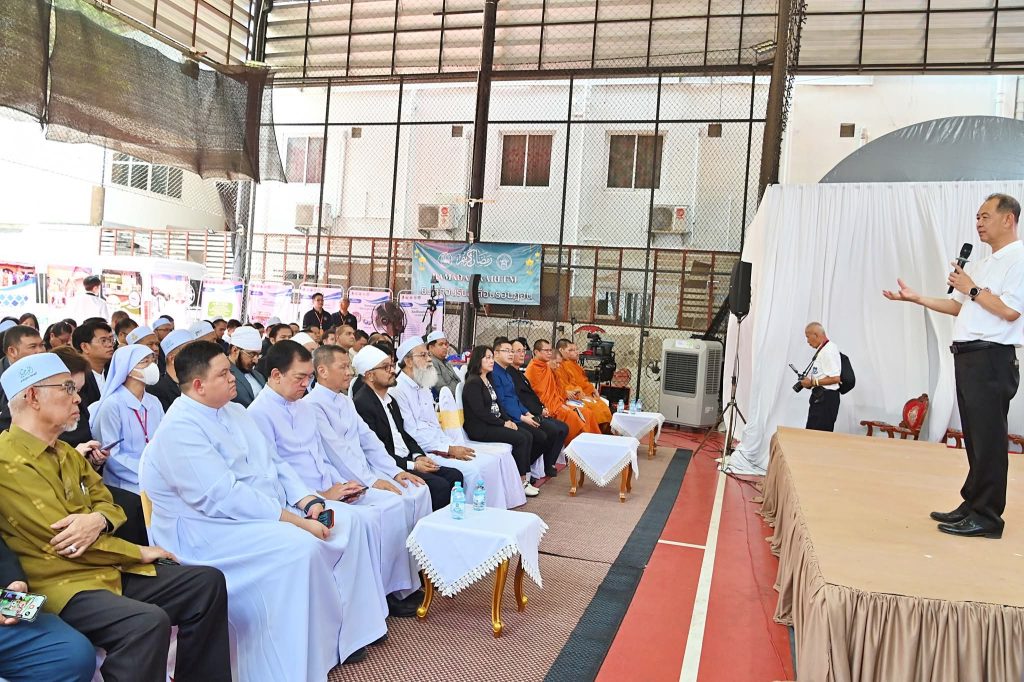
Photo credit: Sr. Kannikar Iamthaison, SHB
The event brought together representatives from Wat Muang Kae (Buddhism), Haroon Mosque (Islam), and Assumption Cathedral (Christianity), reflecting a long-standing model of peaceful coexistence in one of the city’s most culturally diverse neighborhoods.
Presiding over the opening ceremony, Director-General of the Department of Religious Affairs Chaiyaphon Suk-iam said fostering cooperation across religious lines is essential to building what he described as a truly “harmonious multicultural society.”
“Despite our differences, we can live together peacefully through mutual respect, shared ethical values, and a commitment to the teachings of our respective faiths,” he said.
“Faith must not remain abstract. It must be lived out daily. Let us be authentic witnesses to our beliefs in the way we treat one another.”
The event featured a program reflecting Thailand’s religious diversity.
Cultural performances by youth added a celebratory tone, including choral singing from Assumption Cathedral, a contemporary Thai dance by students from a Buddhist school representing multiple nationalities, and anashid, Islamic devotional songs centered on moral and spiritual themes.
A key highlight was the presentation of the “Promoting Harmony Circle Interfaith Work” initiative, followed by a seminar on “Directions for Sustainable Interfaith Community Development.”
The panel brought together religious and civic leaders, including a representative from Wat Muang Kae, the imam of Haroon Mosque, the pastor of Assumption Cathedral, and the director of Bang Rak district, with moderation by an interfaith relations expert from the department.
Speakers agreed that religion, at its core, is a force for virtue and social good.
They said genuine dialogue must begin with understanding, acceptance, and respect for differences, alongside a shared commitment to equality and mutual support. Creating inclusive learning spaces and encouraging active participation, they said, are essential steps toward nurturing lasting peace.
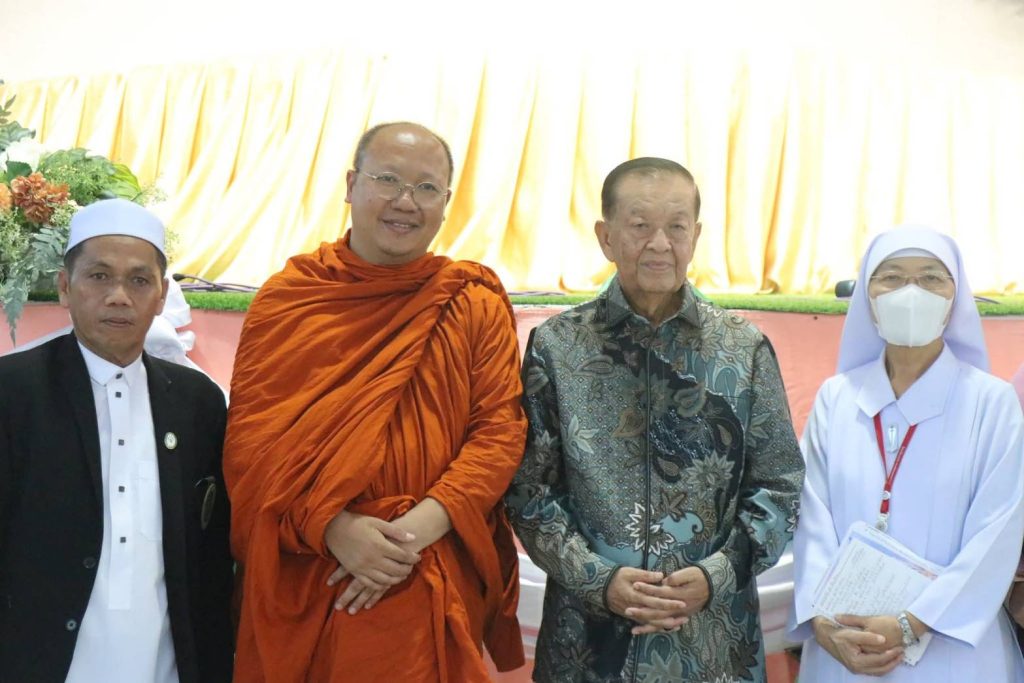
Photo credit: Sr. Kannikar Iamthaison, SHB
Adding a reflective voice, Sr. Kannikar Iamthaison, SHB, described the gathering as a living witness to “the blessing of love and compassion from God, who is love itself and one.”
She said the experience revealed a profound sense of unity, “an image of the Trinity,” within the diverse community.
Sister Kannikar said the dialogue showed how shared values can benefit the wider community, especially for children, who can learn and grow together in an environment grounded in respect and dignity.
Echoing other speakers, she said the language of brotherhood and family remains deeply rooted in Thai society.
“Despite our differences, unity is possible,” she said. “If we place ourselves in others’ shoes, support one another, and recognize each other as fellow human beings, we can move forward together.”
She added that this spirit reflects a deeply ingrained Thai cultural character that fosters harmony, shared responsibility, and the pursuit of what is good and beautiful.
Drawing on her Christian perspective, Sister Kannikar also connected the experience to the Church’s understanding of synodality, “journeying together” in the mission of God’s love.
“This is the path the Church is called to walk in the third millennium,” she said.
The Bang Rak interfaith network has established itself as a model of multicultural cooperation.
Its members regularly organize joint activities such as celebrating major religious festivals, marking Children’s Day, coordinating disaster relief efforts, conducting community visits, and sharing educational and vocational knowledge.
These initiatives strengthen social bonds while contributing to local economic development and community-based tourism.
Observers say such grassroots efforts show how interfaith collaboration can move beyond symbolic dialogue to tangible outcomes, fostering both social cohesion and sustainable growth.
As Thailand navigates the complexities of modern multicultural life, initiatives like the Bang Rak interfaith dialogue show that unity need not come at the expense of diversity, but can be built through respect, shared values, and a collective commitment to peace.









