Catholic leaders in Thailand urged laypeople to take a more active role in the Church and society during a June 5 gathering that advanced the country’s efforts to implement the synodal vision of shared mission and responsibility.
The seminar, hosted by the Institute for Laity Development and Catholic Social Communication Thailand, gathered Church leaders and lay representatives to discuss how Thai Catholics can help shape parish life, engage wider society, and strengthen the Church’s mission as synodal reforms take root across the global Church.
Walking Together: The Synodal Path
Delivering the keynote address, Raphael Chainarong Monthienvichienchai, a lay leader with extensive local and international experience, unpacked the structural and spiritual shift required by a synodal Church.
“Synodality empowers the laity to ‘walk together’ with the entire Church. The nature of walking together is that no one walks alone ahead, and we don’t let anyone fall behind. We walk together as a group,” he said.
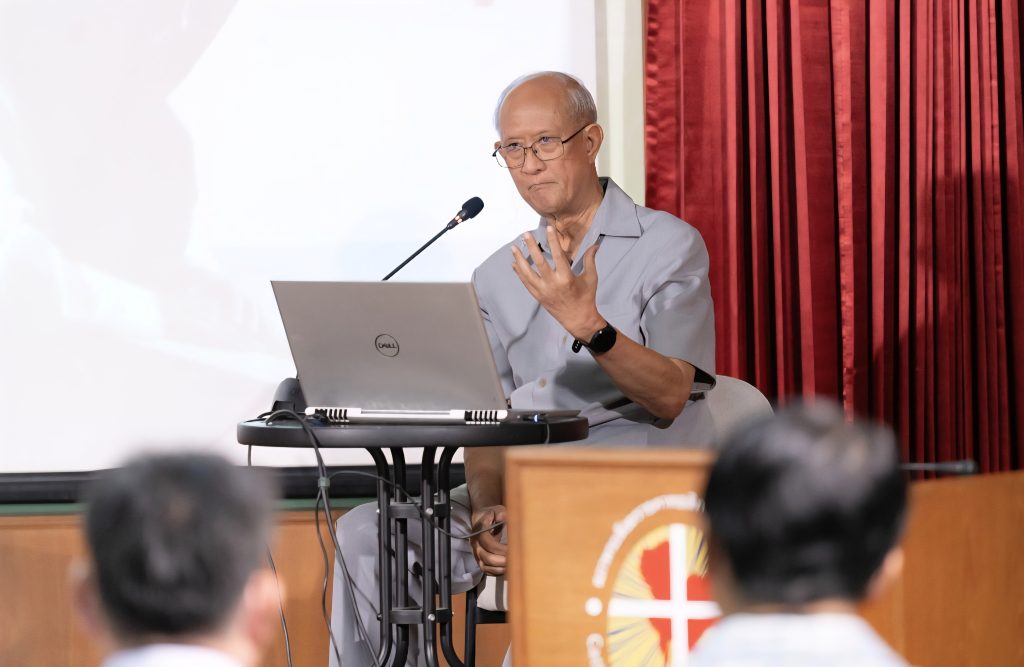
Chainarong emphasized that this journey is inherently dialogical rather than passive.
“We don’t just silently trudge along with our heads down,” he observed. “We talk, consult, ask questions, and share our opinions.”
Through empathetic listening, communal discernment, and shared responsibility, Chainarong argued that lay Catholics naturally become the “leaven” needed to transform secular environments.
By reframing daily life, whether in offices, schools, or neighborhoods, the marketplace ceases to be “outside” the Church and becomes its primary frontier.
“We walk alongside colleagues and friends who are skeptical, wounded, or indifferent to religion,” Chainarong noted, stressing that building authentic trust must always precede the proclamation of dogma.
Shared Co-Responsibility
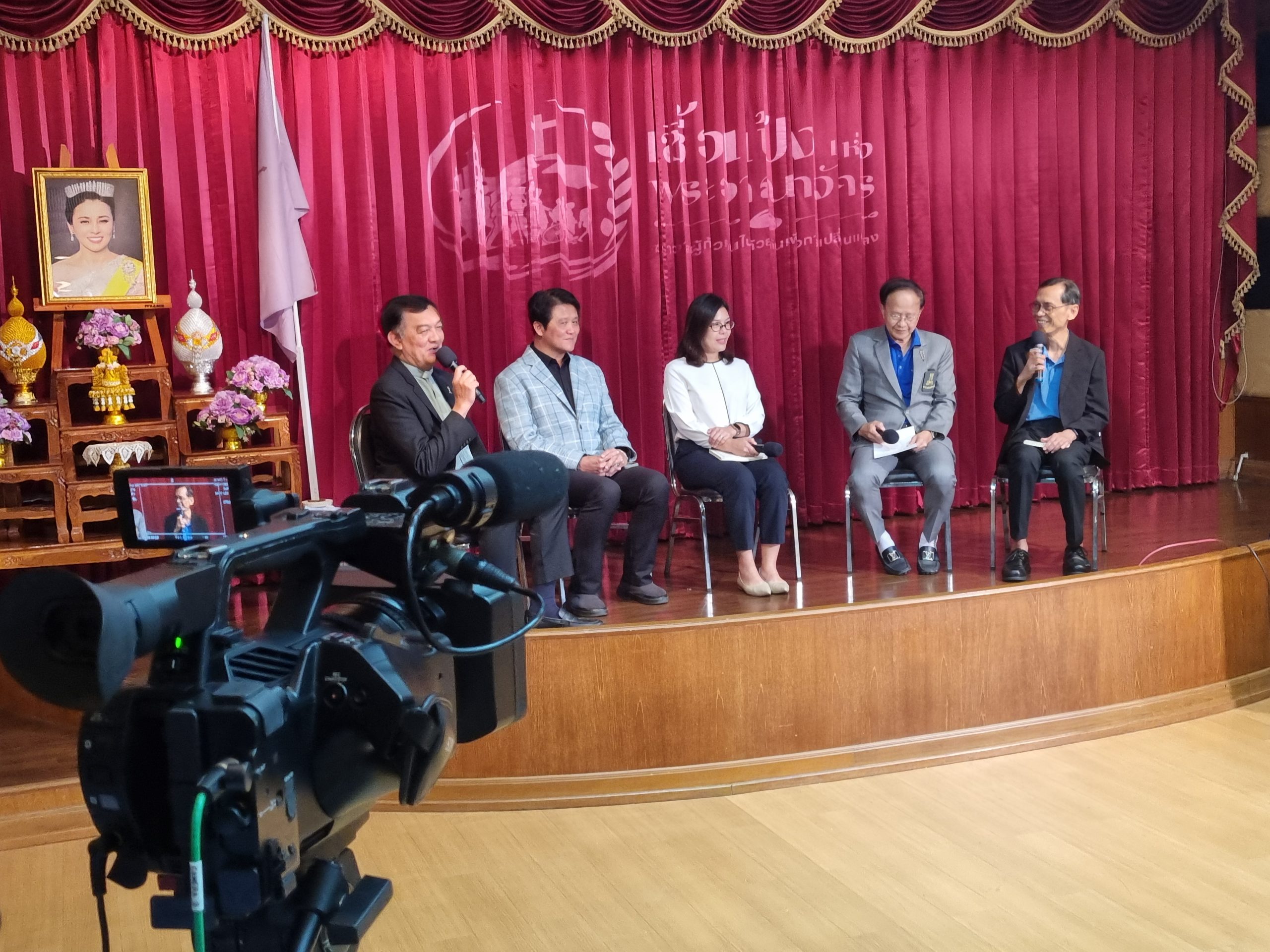
Following the keynote, Fr. Joseph Anucha Chaiyadej, executive director of CSCT, moderated a panel discussion titled “Voices of Transformation: The Laity and Building the Kingdom in the Modern World,” highlighting strategic insights from diverse sectors of the lay faithful.
Dr. Pratheep Chatsuphang, director of the CBCT Desk for the Laity, traced the institutional roots of the current movement back to the landmark Decree of the Plenary Council of the Catholic Church in Thailand 2015.
“The Decree required us to establish an institute for lay development to promote and develop a stronger laity,” Dr. Chatsuphang explained.
He framed the current “Kingdom Leavening Course” as a vital mechanism to ignite evangelistic zeal, particularly as the global Church prepares for the 2,000th anniversary of Christ’s Redemption in the year 2033.
Representing parish councils, Chawalit Siriyongwatana challenged local communities to adopt rigorous, multi-year pastoral plans spanning one, three, and five years, specifically targeting parish councils, youth, and lay movements.
“The laity should be more alert, daring to come out as disciples of Christ,” Chawalit said, advocating for an ecclesial paradigm shift. “Turning the pyramid upside down gives the laity a greater role in pastoral care.”
Healing, Youth, and Interreligious Dialogue
Offering a poignant reflection on the modern human condition, resource specialist Naris Manikhao addressed the isolation felt by the younger generation.
“If one of you disappears, and no one knows, this reflects the loneliness and fragility of today’s youth,” Naris warned.
He identified non-judgmental listening as the essence of synodality.
“Listening with the heart and speaking with love is the key to moving forward. We must be ready to stand by everyone’s side, not only our Christian brothers and sisters, but also our Buddhist and Muslim neighbors. The key to hope lies in understanding the suffering of people today.”
From the perspective of professional life, Dr. Chirasiri K. Vivekmetakorn highlighted the practical fruits of lay formation.
“Studying in this course helps fulfill the spiritual life and provides concrete tools for mutual listening,” she shared, noting that the program has successfully bridged diocesan divides, connecting lay Catholics from dioceses across Thailand.
An Ecclesial Mandate
Archbishop Francis Xavier Vira Arpondratana, president of the Catholic Bishops’ Conference of Thailand, accompanied the seminar from its inception, providing the concluding magisterial synthesis.
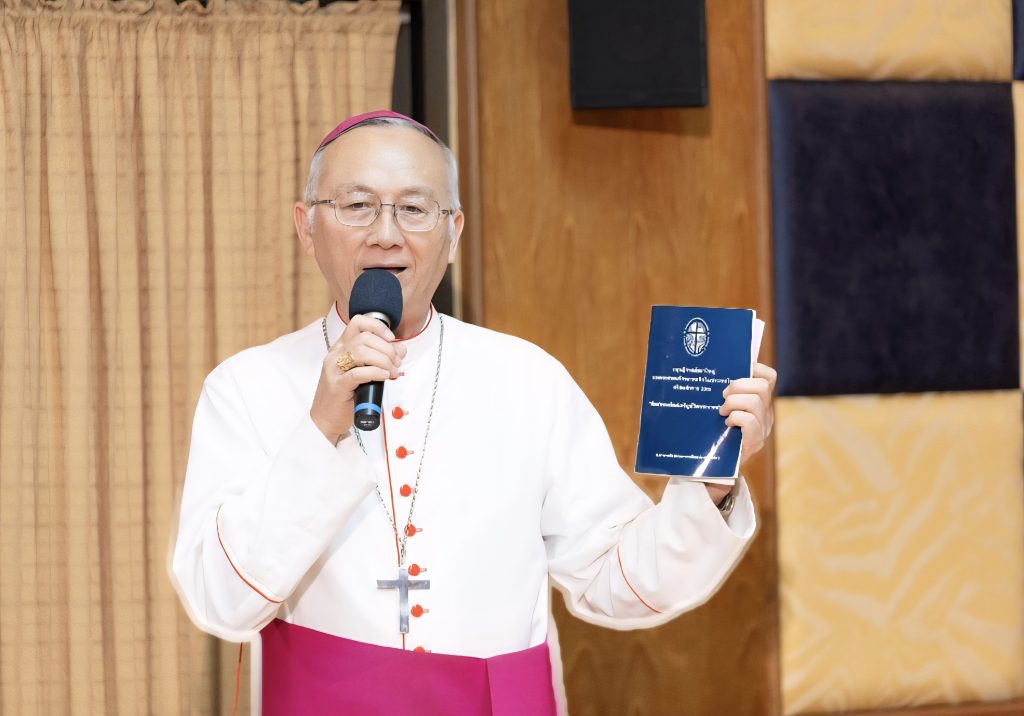
Holding aloft the physical booklet of the 2015 Plenary Council Decree, Archbishop Vira reaffirmed that the institutional Church views lay empowerment not as a modern novelty, but as an ecclesial mandate.
“The decree specifies clearly the role of the laity and defines the laity’s mission. At the same time, formation for the laity must be provided. Establishing the Institute for Laity Development is clearly specified in our decree.”
Archbishop Vira reminded participants, “We don’t need to know everything about Leaven of the Kingdom. Let us rely on God’s word and work together to develop the laity. Then we will have strength like yeast.
“There’s an African proverb that reminds us very well: If you want to go fast, go alone. But if you want to go far, you must go together.”
The Footsteps Conclusion
As the Church in Thailand continues to participate in the global Synodal process, the seminar reflected ongoing efforts to strengthen lay formation and participation in ecclesial life.
Speakers emphasized listening, shared responsibility, pastoral accompaniment, and engagement with wider society as key elements of the initiative. Organizers presented the formation program as a way of equipping lay Catholics to take a more active role in the Church’s mission while responding to the challenges facing contemporary society.