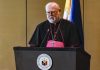

Catholic nurses are called to safeguard human dignity, accompany the suffering, and become agents of peace in an increasingly complex healthcare environment, according to Sister Magdalena Supaporn Daodee, SPC, president of the Catholic Nurses Guild of Thailand.
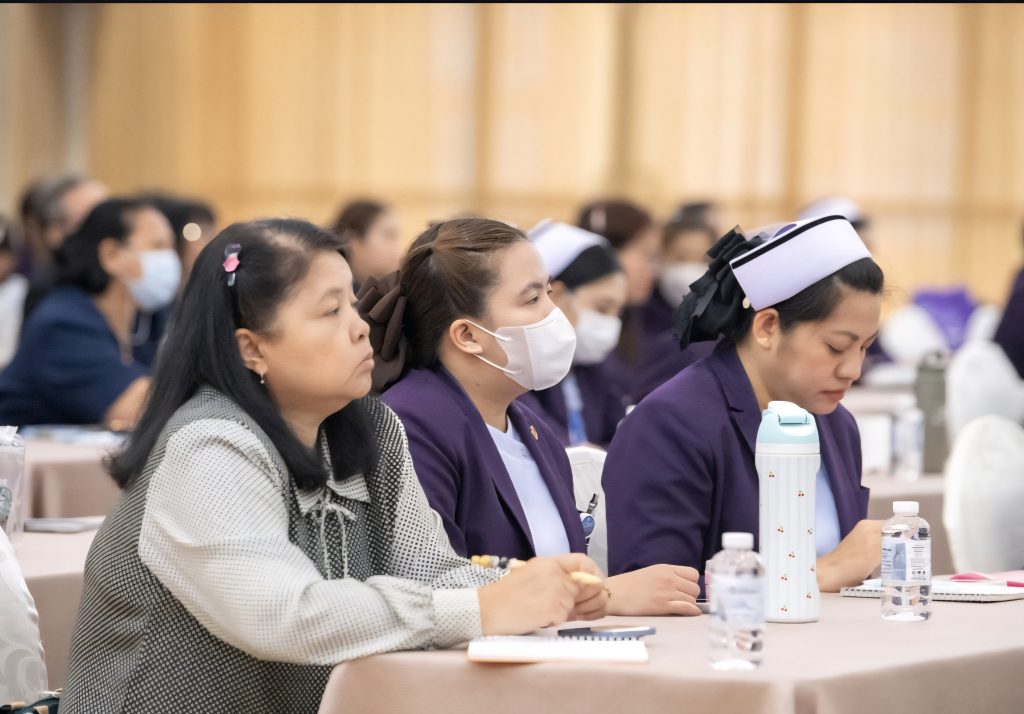
Addressing hundreds of nurses from Catholic hospitals and healthcare institutions across the country at the guild’s annual national conference at St. Louis Hospital on June 23, Sr. Magdalena delivered a keynote address titled “The Role of Catholic Nurses in Promoting, Protecting, and Enhancing Human Dignity and Peace According to the Teachings of the Catholic Church.”
The conference was held under the theme “Human Dignity and Peace: Toward Global Transformation.”
The gathering formed part of Thailand’s preparations for the XXII World Congress of the International Catholic Committee of Nurses and Medico-Social Assistants (CICIAMS), which Bangkok will host in November.
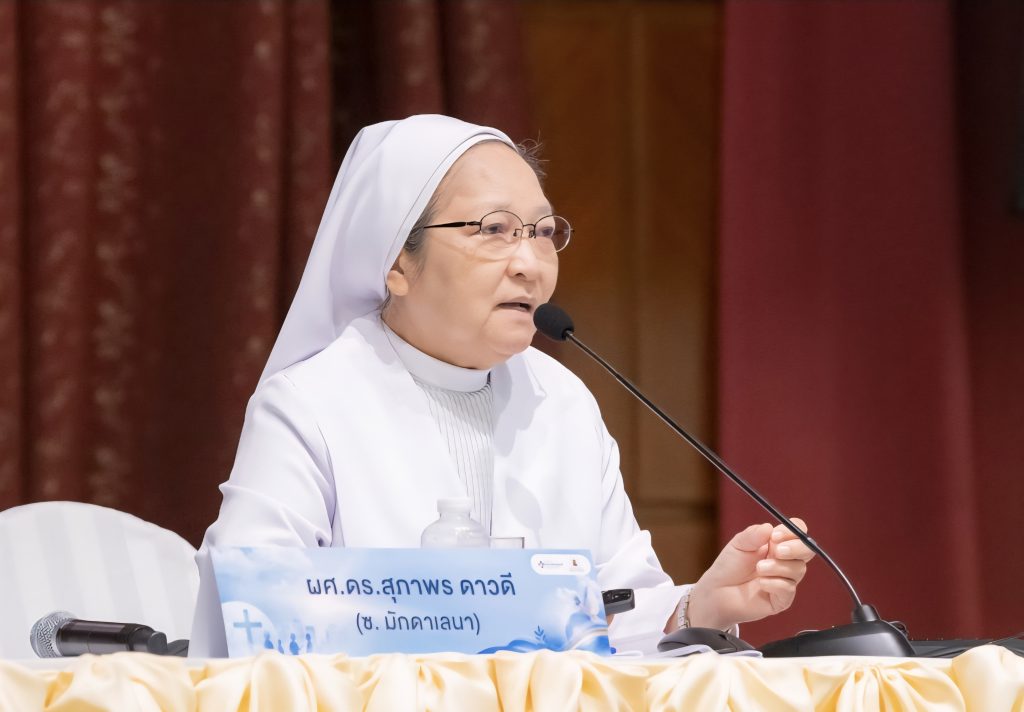
A respected specialist in adult nursing, palliative care, bioethics, and nursing research, Sr. Magdalena emphasized that the Church’s vision of healthcare begins with the conviction that every person is created in the image of God and therefore possesses an inherent and inalienable dignity.
“Human dignity does not depend on health, productivity, social status, age, or ability,” she said. “Every human life remains precious and worthy of respect, especially when people are most vulnerable.”
Drawing on major Church documents, including Gaudium et Spes, Dignitas Infinita, Evangelium Vitae, and Samaritanus Bonus, Sr. Magdalena explained that Catholic healthcare is rooted in a holistic understanding of the human person.
She said Catholic nurses are called not only to treat illness but also to care for patients’ emotional, social, and spiritual needs.
“Patients must never be reduced to medical cases,” she said. “They are persons with stories, hopes, fears, and God-given dignity.”
Sr. Magdalena said Catholic nurses promote human dignity through holistic care, patient advocacy, compassionate service, and a commitment to hope, particularly in their care for children, older persons, people with disabilities, the poor, and those facing terminal illness.
She highlighted the importance of what Pope Francis has called a “culture of encounter,” urging healthcare professionals to care for every patient without discrimination based on race, religion, culture, or economic background.
One of the strongest themes of her address focused on end-of-life care, an area in which she has extensive expertise.
She noted that modern healthcare systems often face difficult ethical questions surrounding suffering, life-sustaining treatments, euthanasia, and assisted suicide.
Catholic teaching, she said, offers a clear moral framework grounded in the sanctity of life and respect for natural death.
“The Church firmly rejects euthanasia and assisted suicide,” Sr. Magdalena said. “True compassion is not expressed by hastening death but by accompanying people with love, presence, and professional care until the natural end of life.”
At the same time, she explained that Catholic moral teaching distinguishes between ordinary treatment, which is morally obligatory, and extraordinary or disproportionate treatment, which may be legitimately refused when it offers little hope of benefit and imposes excessive burdens on the patient.
Central to Catholic end-of-life care is palliative care, which the Church views as an expression of Christian compassion and solidarity.
Sr. Magdalena described palliative care as addressing three essential dimensions: the relief of physical suffering, emotional and social support, and spiritual accompaniment.
“Incurable does not mean uncareable,” she said, emphasizing that the duty to care continues even when a cure is no longer possible.
She also underscored the importance of spiritual preparation for death through the sacraments of Reconciliation, Anointing of the Sick, and the Eucharist as Viaticum.
Within the Christian tradition of Ars Moriendi—the “art of dying well”—patients are encouraged to face death not with fear and abandonment but with faith, peace, and hope.
For Catholic nurses, one of the most important ministries is what Sr. Magdalena called the “ministry of presence.”
“Being physically and emotionally present, listening attentively, reducing fear and loneliness, and accompanying patients on their spiritual journey are among the greatest gifts nurses can offer,” she said.
As Thailand prepares to host the CICIAMS World Congress later this year, Sr. Magdalena challenged Catholic healthcare professionals to become witnesses to the Gospel in a world marked by suffering, inequality, and rapid technological change.
She concluded by reminding participants that authentic healthcare extends beyond clinical treatment.
“Care is not simply about curing disease,” she said. “It is about walking with another human being through suffering, vulnerability, and even death, while affirming that every life possesses immeasurable dignity and remains worthy of love until its natural end.”