
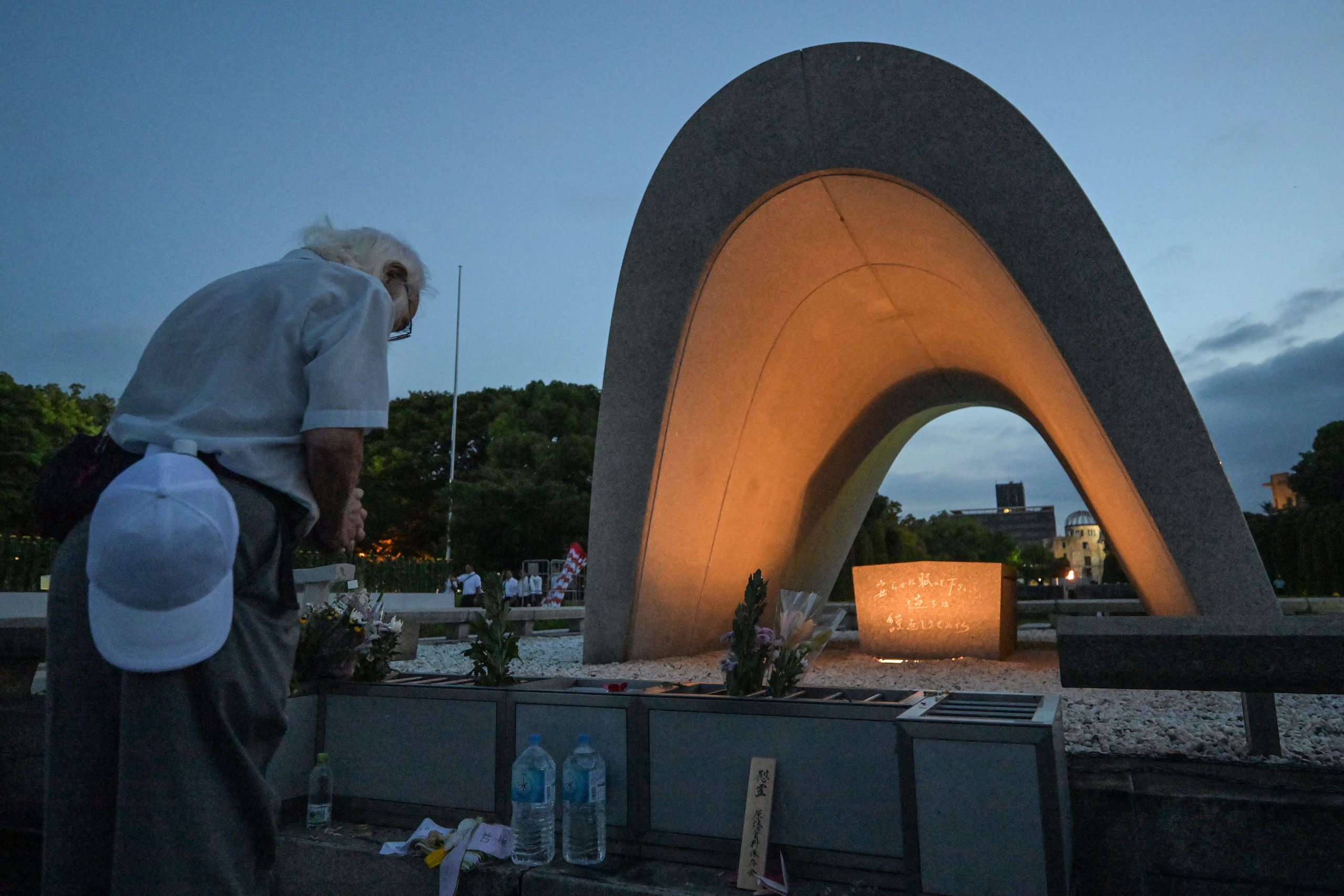
Pax Christi International launched a global campaign marking the anniversaries of the atomic bombings of Hiroshima and Nagasaki, calling on communities worldwide to promote peace and nuclear disarmament through local commemorations.
The campaign, Lanterns for Peace: From Hiroshima to the World, will coincide with the Aug. 6 and Aug. 9 anniversaries of the 1945 bombings that devastated the two Japanese cities and left tens of thousands dead.
Organized with the Hiroshima Coventry Club’s Touro Project, the initiative encourages parishes, schools, faith communities and civic groups to hold lantern ceremonies, prayer services, candlelight vigils and other public events during the anniversary week.
Pax Christi International said the campaign seeks to link remembrance of the bombings with renewed efforts to eliminate nuclear weapons.
“These anniversaries are not only moments of mourning and remembrance; they are also calls to conscience,” the organization said in campaign materials.
“They invite us to renew our commitment to peace, reconciliation, and the abolition of nuclear weapons.”
The campaign draws inspiration from Hiroshima’s annual lantern ceremony, where thousands of lanterns are floated on the Motoyasu River in memory of those killed by the atomic bomb.
Pax Christi International said communities participating in the initiative are encouraged to adapt commemorations to local contexts while sharing common themes of remembrance, solidarity with survivors and commitment to peace.
The organization also warned that the dangers posed by nuclear weapons remain unresolved.
“The threat of nuclear weapons has not disappeared,” it said.
Pax Christi International noted that thousands of nuclear warheads remain worldwide and that geopolitical tensions continue to place humanity at risk. It said the humanitarian and environmental consequences of nuclear weapons extend across borders and generations.
The campaign also highlights the testimonies of Hibakusha, the survivors of the Hiroshima and Nagasaki bombings, whose numbers continue to decline eight decades after the attacks.
“Remembering Hiroshima and Nagasaki is therefore not only about the past. It is about the present and the future,” the organization said.