Seven months after a catastrophic 300-year flood devastated Hat Yai and surrounding districts, a major recovery initiative has been launched to address severe malnutrition and strengthen long-term food security in southern Thailand.
The Catholic Foundation of Surat Thani Diocese, in partnership with civic and educational organizations, has officially launched the “Promoting Nutrition and Sustainable Food Production for Children and the Poor” project.
Funded by Pope Leo XIV through the Apostolic Nuncio to Thailand, the initiative introduces eight localized food innovations across eight pilot schools to help vulnerable communities become more resilient to future climate-related disasters.
The 300-year flood and its nutritional aftermath
In November last year, unprecedented monsoon rains triggered a 10-day deluge that submerged the Hat Yai basin. Water levels reached 4 to 5 meters, paralyzing the regional economy and causing fatalities.
While emergency assistance arrived in the immediate aftermath, the long-term effects of the disaster soon became evident.
The destruction of farms and livelihoods significantly increased the risk of severe acute malnutrition and micronutrient deficiencies. School-aged children and low-income families—many of them from the region’s Muslim communities—have been among those most affected.
As floodwaters receded, the Diocese of Surat Thani recognized that lasting recovery required moving beyond emergency relief and investing in self-sustaining community infrastructure.
A papal mission for local self-reliance
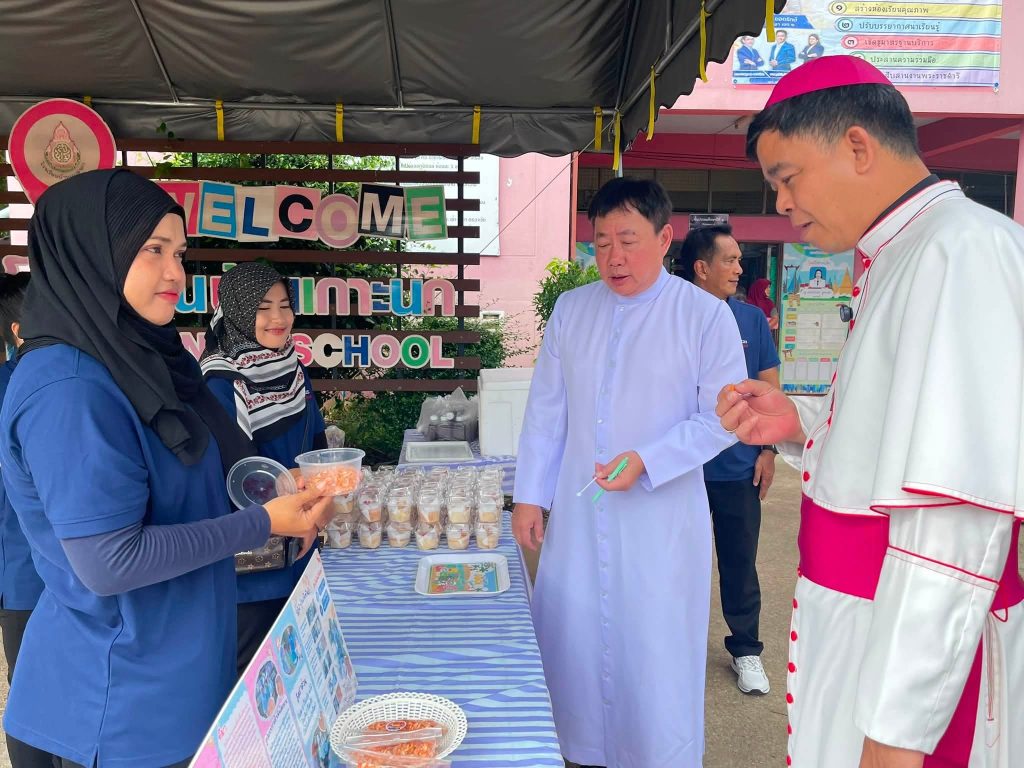
Launched on July 2 at Ban Koh Nok School in Hat Yai, the pilot project aims to improve nutrition among vulnerable students while establishing a revolving community fund to support long-term sustainability.
Bishop Paul Trairong Multree of the Diocese of Surat Thani presided over the opening ceremony alongside government officials, representatives of the Volunteer Foundation for Well-being, and administrators from Thidanukroh Catholic School.
Addressing families, teachers, and students, Bishop Paul emphasized a holistic approach to development.
“Children are a gift from God and the future of our society. Innovating nutritional care through action is not just about food production; it is about instilling responsibility and self-reliance in harmony with the philosophy of the Sufficiency Economy,” he said.
Three-pronged strategy
To ensure measurable and lasting results, the project is built around three strategic pillars, as outlined by Father Suwat Luangngsaard, assistant bishop for social affairs and representative of the Stella Maris Pastoral Care Center.
- Proactive nutrition improvement: The project addresses the limited per-capita food budgets of small rural schools by subsidizing daily meals, ensuring every student receives balanced nutrition from all five food groups.
- Decentralized school food production: School grounds will be transformed into agricultural and production areas that provide reliable food sources while generating a revolving fund to support long-term operations.
- Health monitoring: School administrators and health personnel will use a streamlined monitoring system to track the body mass index (BMI) of vulnerable students, allowing for data-driven health interventions.
Eight locally driven innovations
A key feature of the initiative is a circular food production model tailored to the environmental and economic realities of Songkhla province. Each of the eight pilot schools has adopted a specialized enterprise designed to improve food security while generating local income.
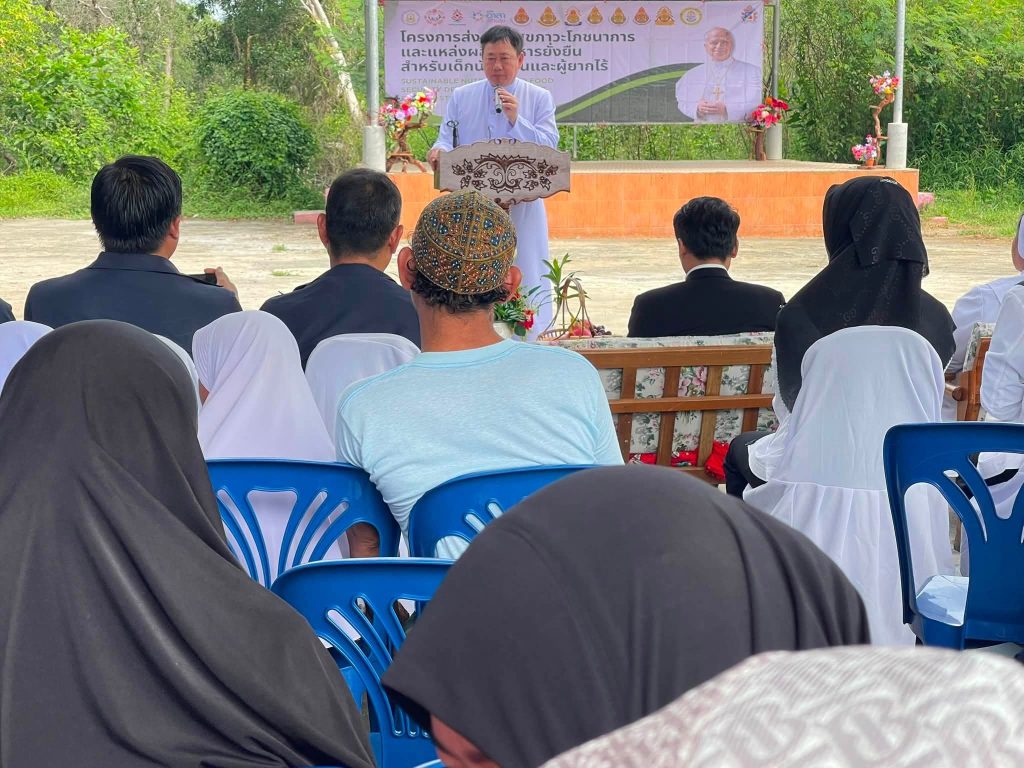
The launch also highlighted the project’s role in strengthening interfaith cooperation in one of Thailand’s most religiously diverse regions.
Mr. Charoenchai Manapattanapong, director of Ban Koh Nok School, recalled how the school became a refuge for both Thai Buddhist and Muslim residents after the Laem Pho and Koh Nok communities were completely submerged during last year’s floods.
“At first, we thought this would be like many temporary relief programs that come and go,” Mr. Charoenchai said.
“But the Catholic Church’s project has addressed our most critical structural needs by securing daily breakfast and milk for every single child,” he added.
The initiative also integrates local industries into the school curriculum to help create sustainable livelihoods.
At Ban Koh Nok School, students participate in the commercial processing of dried shrimp—the primary livelihood of the surrounding coastal community—allowing them to learn sustainable business practices while supporting local food production.
“Our students will learn the complete production process, earn an active income managed through their own Islamic banking accounts, and acquire skills that will translate into stable future careers for the entire community,” Mr. Charoenchai added.
To complement its long-term livelihood goals, the opening ceremony concluded with the distribution of the “Rice of Love” program, which provided 5-kilogram bags of rice to 200 vulnerable families and disaster survivors.
The food assistance will continue every month for the next year, strengthening long-term cooperation among schools, local communities, and the Diocese of Surat Thani.