
The Catholic Church in Thailand urged Christians and media practitioners to defend human dignity, personal identity, and authentic relationships as artificial intelligence and synthetic media increasingly reshape communication.
The appeal was made during the country’s observance of the World Day of Social Communications at the Sacred Heart of Jesus Cathedral in Chiang Mai on Aug. 2.
Centered on the theme “Preserving Human Voices and Faces,” the observance featured a special Sunday Mass followed by an educational media seminar. While dioceses worldwide observe World Communications Day on the Sunday before Pentecost, the Church in Thailand traditionally marks the occasion on the first Sunday of August.
Jointly organized by the Media Office of the Diocese of Chiang Mai and Catholic Social Communications Thailand, or CSCT, the event brought together members of the faithful and media practitioners to examine the ethical challenges posed by rapid technological changes.
Centrality of the human person
The day’s activities included a panel discussion titled “Challenges and Advancements in Media and Human Confrontation.”
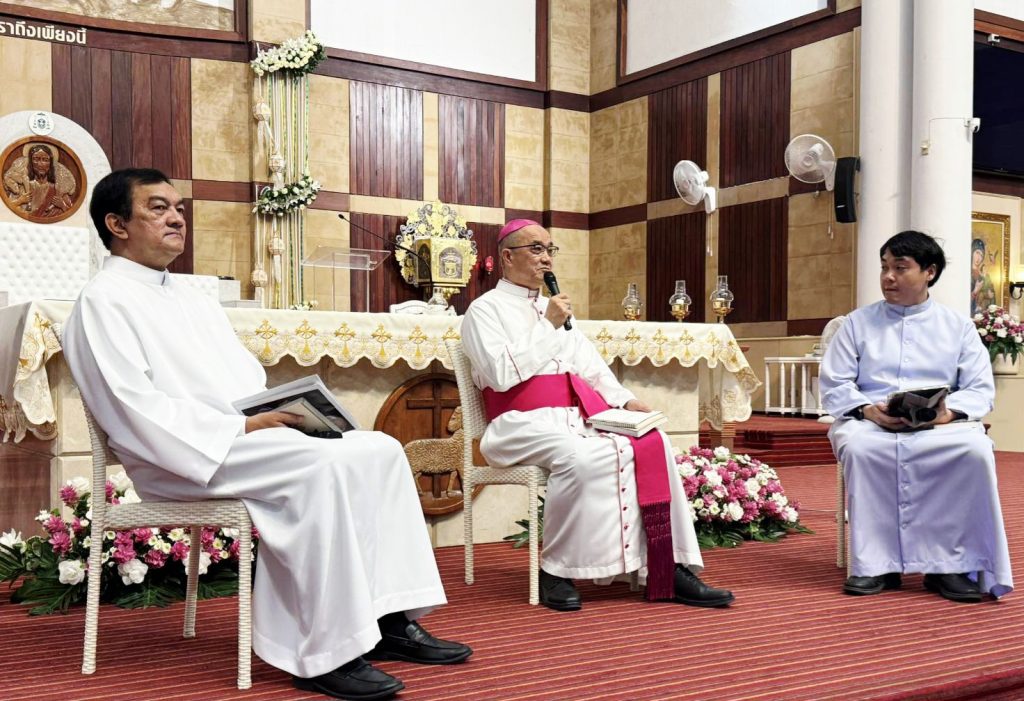
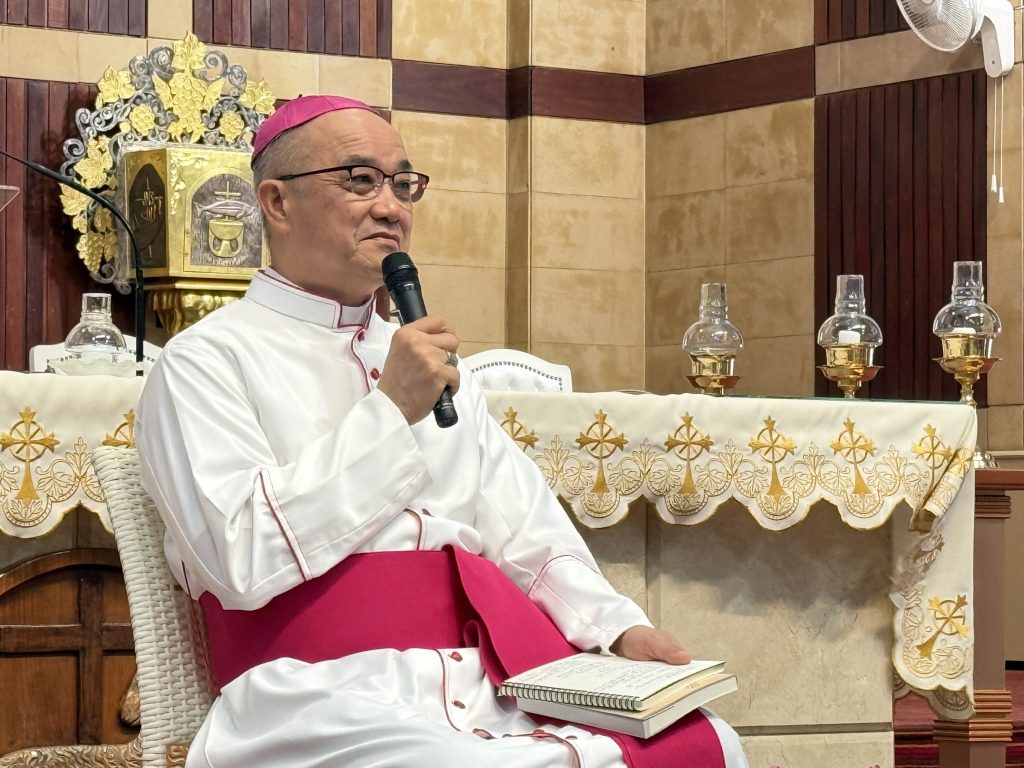
The panel brought together newly ordained Bishop Peter Suphot Roeksujarit, who was ordained on July 29 and has a background in social communications, and Father Joseph Anucha Chaiyadej, executive director of CSCT.
“No matter how advanced communication tools become, humans must remain central, and technology should serve humanity, not place humans under the control of technology,” Bishop Peter Suphot said.
The bishop said the rapid growth of AI and synthetic media should lead people to value what technology cannot truly replicate, including physical presence, vocal nuance, innate creativity, and authentic face-to-face communion.
Communication, he said, must remain an instrument for truth, hope, peace, unity, and love.
His remarks reflected the message of Pope Leo XIV for the 60th World Day of Social Communications, which called on the global community to recognize human “faces and voices” as expressions of personal identity and dignity in an age of deepfakes and automated interaction.
Critical thinking and authentic connection
Father Joseph Anucha warned that data saturation and AI-generated content could blur the line between reality and fabrication.
“Media users therefore need the ability to think critically, analyze, verify sources, and exercise judgment before believing or sharing information,” he said.
Father Joseph Anucha said genuine communication goes beyond the transmission of information and should involve building relationships, active listening, and recognizing the dignity of others.
“This year’s 60th World Day did not focus only on media professionals, but served as an invitation to all Christians to recognize that ‘everyone is a communicator’ through words, actions, social media, and the way we listen to and interact with those around us,” he said.
He added that progress in communication should be measured not by technological reach, but by how deeply technology helps people connect and grow in shared humanity.
Magisterial guidance on the digital frontier
The gathering in Chiang Mai came amid broader papal initiatives addressing the ethical implications of artificial intelligence.
Shortly after his election on May 8, 2025, Pope Leo XIV told the College of Cardinals that his choice of name was inspired by Pope Leo XIII, author of the 1891 encyclical Rerum Novarum, which addressed the social questions arising from the First Industrial Revolution.
“In our own day,” Pope Leo XIV said, “the Church offers to everyone the treasury of her social teaching in response to another industrial revolution and to developments in the field of artificial intelligence that pose new challenges for the defense of human dignity, justice, and labor.”
In a subsequent address to the Second Annual Conference on Artificial Intelligence, Ethics, and Business Governance, the pope said the risks and benefits of AI must be evaluated according to a fundamental ethical standard: “safeguarding the inviolable dignity of each human person and respecting the cultural and spiritual riches and diversity of the world’s peoples.”