

A leading Thai child development expert has urged Catholic educators to replace punitive discipline with deep listening and stronger support systems to prevent youth distress and violence in schools.
Assoc. Prof. Dr. Suriyadeo Tripathi made the call in a keynote address titled “Bridges over Walls: Proactively Building Peace in Schools” on August 18 at the 55th Annual Seminar of the Catholic Education Council of Thailand (CECT).
Drawing from decades of clinical research and extensive field assessments, Tripathi, director of the Center for Morality Promotion, urged school leaders to shift from viewing students through their deficiencies to nurturing their inherent “Life Assets.”
When Society Teaches the Opposite of Classroom Values
Addressing more than 500 bishops, priests, religious, and lay educators gathered at Khao Yai Resort, Tripathi confronted what he described as a fundamental dilemma facing modern schooling: How do we teach children to be good when the adult world around them frequently rewards the opposite?
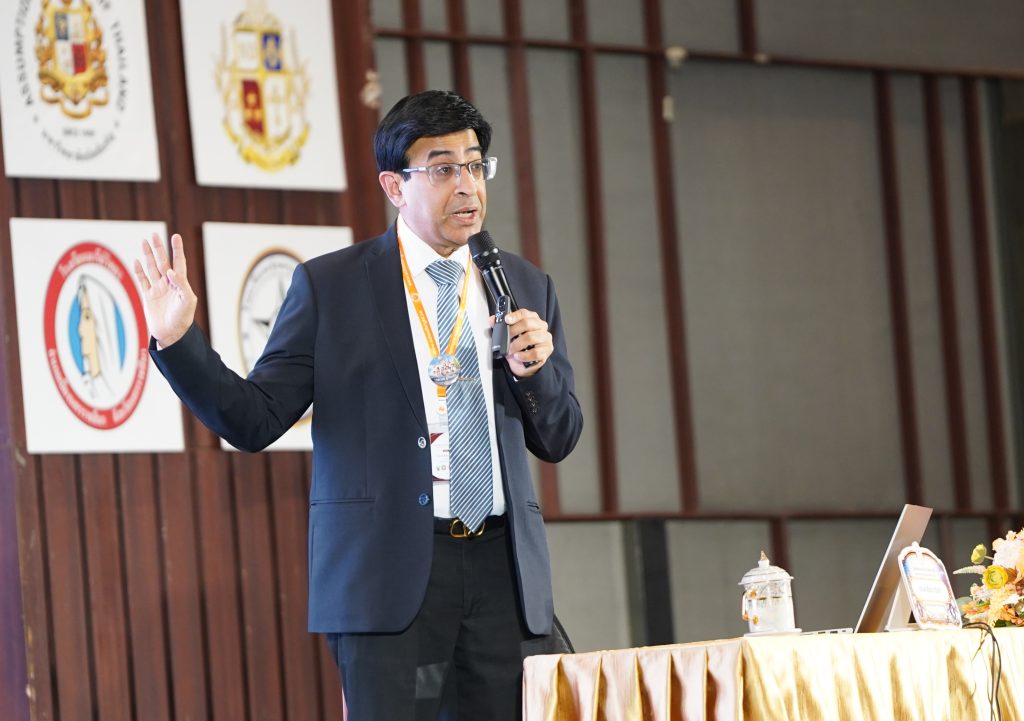
“Today’s youth do not merely learn from classroom lectures or parental instructions,” Tripathi observed. “They observe real-world adult dynamics—corruption, hyper-competition, emotional hostility, and opportunistic survival strategies.
“When those realities contradict the moral principles we preach, children naturally question why they should practice discipline, honesty, or consideration.”
Recalling an incident from a refugee camp where displaced children asked their teacher why adults consistently broke the rules they taught, Tripathi highlighted the power of non-judgmental, reflective questioning.
Rather than delivering a lecture, the teacher asked open-ended questions: How do you feel about this? What are your thoughts? How can we choose a different path?
This reflective inquiry converts negative energy into positive civic action.
“We cannot shield children from every real-world flaw,” he said. “However, we can equip them to analyze, evaluate, and intentionally choose the kind of human beings they wish to become.”
The ‘Miracle of Listening’ Over Rote Lectures
Central to Tripathi’s message was what he termed the “Miracle of Listening.” Pointing to high-profile youth crises and televised juvenile cases, he noted that a primary driver of youth violence is the profound absence of feeling heard.
“When children face severe distress, they do not need lectures, warnings, or comparisons. They need an adult who will listen without interrupting, judging, or rushing to blame. It can begin with a simple question when a child returns home: ‘How was your day?’ or ‘Is there anything bothering you today that I can help with?’ Instead, adults often lead with demands: ‘Have you done your homework? Did you submit your assignment?’ That difference in approach either builds a bridge or erects a wall,” said Tripathi.
Addressing institutional design, Tripathi warned against isolating student well-being within a single department. He cautioned school principals against relying solely on a single guidance counselor or school psychologist to handle hundreds of troubled students—a practice that leads to professional burnout and systemic oversight.
Instead, he advocated for a school-wide mentoring culture where every teacher utilizes basic counseling skills, daily homeroom reflections and structured inquiry.
Tripathi outlined a 3C Reflection Process (Creative, Cognitive, and Critical Reflection) using three core questions:
- How do you feel? (Emotional Awareness)
- What did you learn? (Cognitive Processing)
- What will you do next? (Action and Accountability)
Refuting the ‘Gifted Means Good’ Myth: The Five Life Assets
Challenging widespread educational assumptions, Tripathi presented longitudinal research overturning the belief that high academic performance or family wealth automatically yields moral maturity or social stability.
Citing comparative data evaluating basic education students, academically gifted Science Olympiad candidates, and youth in alternative education settings, Tripathi said intellectually elite students frequently scored lower in community consciousness and civic engagement than their peers.
“Academic intelligence does not guarantee a sense of conscience, empathy, or the ability to coexist peacefully with others,” Tripathi noted. “Education must move beyond producing academically gifted individuals to cultivating complete human beings.”
To measure and build holistic resilience, Tripathi developed the Life Assets Framework—a 48-indicator assessment tool recognized nationally and internationally. The model measures five interconnected spheres of social immunity that surround a child:
- Self Power: Inner mindfulness, emotional regulation, and positive self-esteem.
- Family Power: Unconditional love, open communication and positive discipline.
- Intellectual Power: School engagement, safe learning environments and critical thinking.
- Peer and Activity Power: Positive peer groups, creative outlets and spiritual activities.
- Community Power: Safe neighborhoods, trusted adult mentors and civic service.
From Coercion to Conscience
Data over the past 15 years reveals that while family power was once the strongest buffer for Thai youth, it has steadily declined due to economic pressures and emotional disconnection.
To reverse this trend, Tripathi called for a Positive Power Ecology—a collaborative ecosystem linking families, schools, local administration, faith groups, and community mentors through routine home visits and proactive support systems.
“‘Walls’ are created when adults rush to judge, control, or label children through the narrow lens of their mistakes,” Tripathi stated in closing. “‘Bridges’ are built when we listen deeply, honor their human dignity, and connect the strengths of family, school, and community. Proactive peacebuilding in schools does not mean creating a world without conflict; it means building the inner strength and social immunity that enable our youth to navigate a complex world with wisdom, compassion, and unshakeable goodness.”