
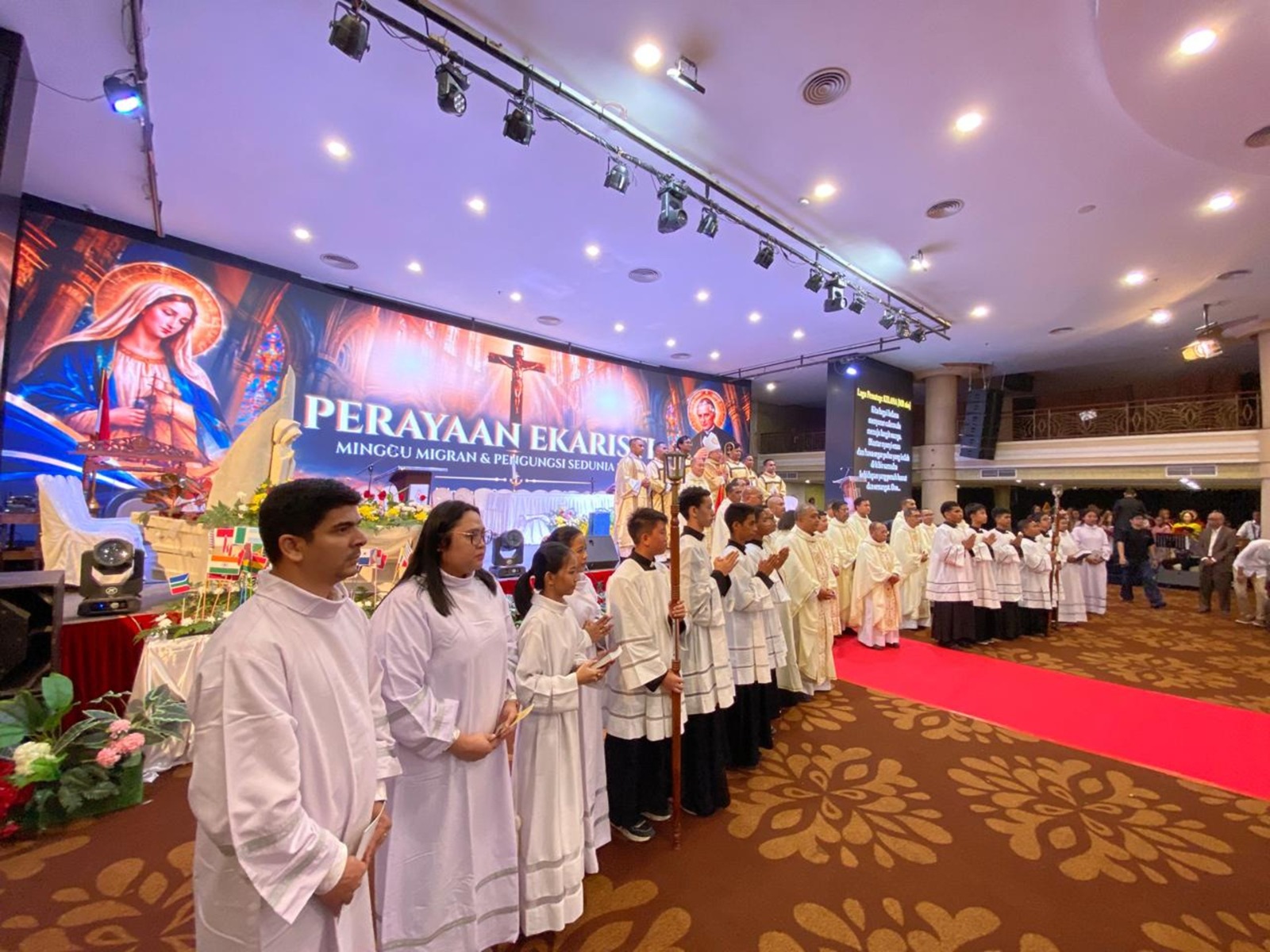
Volunteers who accompany migrant workers, seafarers and refugees play an important role in protecting human dignity amid growing risks of illegal recruitment, human trafficking and exploitation, Bishop Adrianus Sunarko, OFM, of the Diocese of Pangkalpinang said.
The bishop made the remarks during the Eucharistic celebration concluding the 2026 International Seminar for the World Day of Migrants and Refugees in Batam, Riau Islands, on Sept. 20.
The international seminar, held under the theme “From Vulnerability to Dignity: Making Migration Safe and Regular,” drew attention to the situation of migrant workers and maritime workers, particularly those vulnerable to irregular migration and exploitation.
Sunarko said ending the seminar with the Eucharist was significant because the celebration offered an opportunity to give thanks, particularly for people willing to accompany migrants and others living far from their homes.
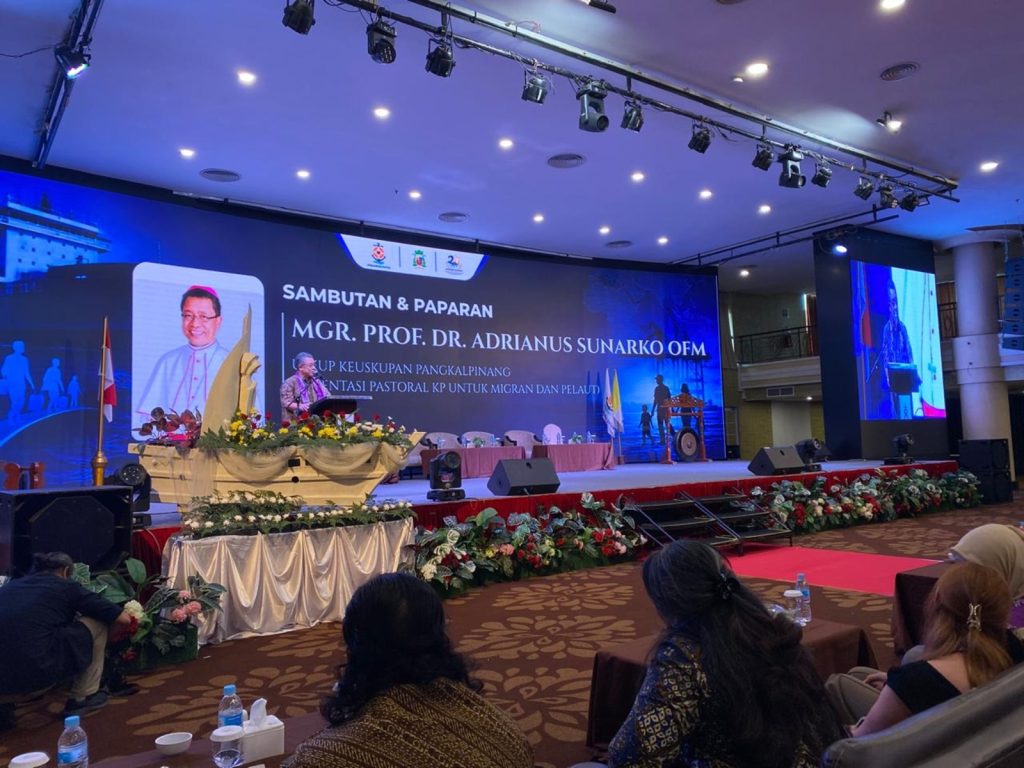
Photo supplied
He reflected on the Indonesian word relawan (volunteer), which comes from rela, meaning to willingly give oneself for others.
“A volunteer is someone who willingly gives part of his or her life for others,” he said, adding that the presence of people willing to give their time, energy and attention is something to be grateful for in the world of migrants.
Poverty and trafficking risks
Sunarko connected his reflection with the Gospel reading for Sunday, Sept. 20, the parable of the workers in the vineyard. He highlighted the generosity of the vineyard owner, who gave the same wage to workers who had arrived at different times.
“The vineyard owner was willing to give more than what was expected. Willingness and generosity are the message given to us,” he said.
The bishop then related the Gospel to migrant workers who face poverty and limited employment opportunities. People who remain unemployed and vulnerable, he warned, can become targets of human trafficking recruiters who promise employment.
“If he did not find work, perhaps he could be picked up by human-trafficking recruiters because they often target people living in poverty,” he said.
The issue is particularly relevant in the Riau Islands, a strategic area close to several Southeast Asian countries and crossed by international maritime routes.
During the seminar, representatives of the Riau Islands Regional Police and the Ministry of Migrant Workers Protection (P2MI) explained how the region’s long coastline, official ports and unofficial crossing routes can be exploited by illegal recruitment networks.
Potential migrant workers are also sometimes recruited through informal networks of friends, relatives or neighbors with promises of employment abroad. When migrants leave without proper documentation and through irregular channels, they become more vulnerable to exploitation and have limited access to legal protection.
Four areas of protection
The seminar emphasized a coordinated 4P approach: prevention, protection, prosecution and partnership.
Prevention requires education in migrant-source communities about safe and legal migration channels.
Protection means treating people affected by trafficking as victims who need assistance and support.
Prosecution must target not only recruiters but also the wider networks and masterminds behind trafficking, including the financial flows generated by the crimes.
Partnership requires cooperation among government agencies, police, immigration authorities, local communities and religious and humanitarian organizations.
The Church and humanitarian networks therefore have an important role in accompanying migrants and helping prevent exploitation.
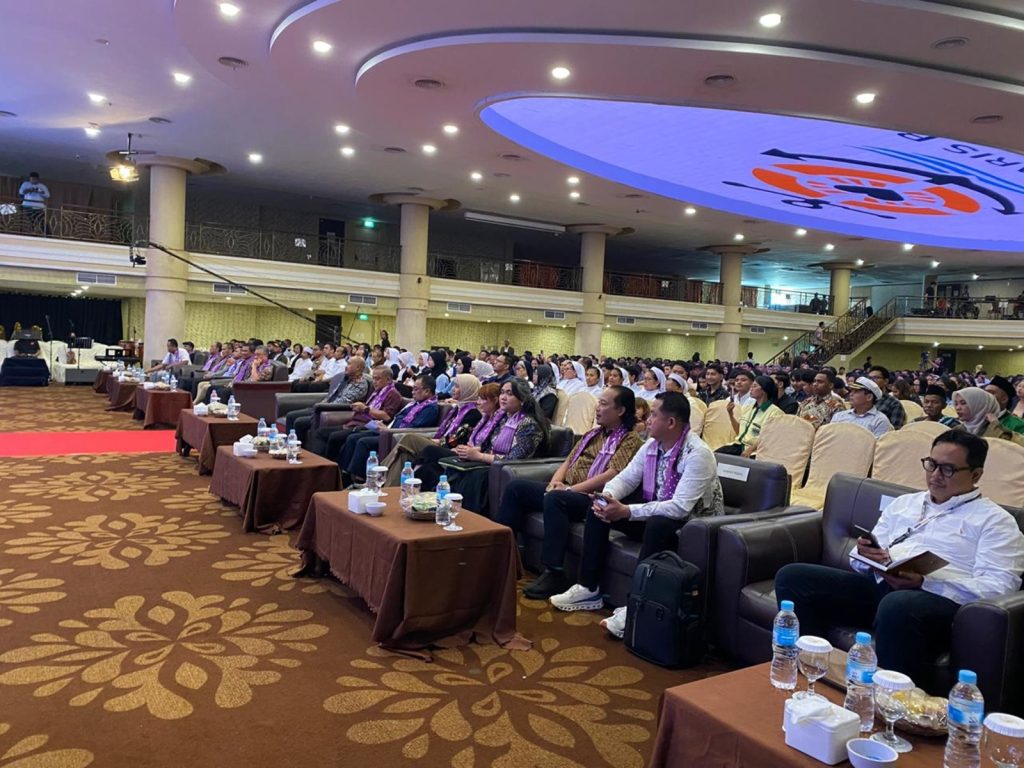
Photo supplied
“For your sake, I remain”
Sunarko also referred to St. Paul’s words in his Letter to the Philippians: “For to me, life is Christ and death is gain.”
He noted that Paul desired to be with Christ but was willing to remain because his presence was still needed by the Christian community.
For the bishop, this reflects a spirit of self-giving that can also inspire ministry among migrants.
“The important thing is not necessarily having the power to solve every problem, but being willing to be present,” he said.
The bishop encouraged Catholics to become volunteers through simple acts of service in everyday life.
“Hopefully, we will be given the opportunity, the experience and the courage to become volunteers—perhaps through simple acts in our everyday lives. It is there that we will find true joy,” he said.
Awareness, prayer and solidarity
In his closing message, Father Chrisanctus Paschalis Saturnus, who has been actively involved in migrant ministry on Batam Island, said the seminar and related activities had two main objectives: raising public awareness of the challenges faced by migrants, seafarers and refugees, and promoting prayer and solidarity for their safety and justice.
He invited Catholics and people of other faiths to pray according to their respective traditions for migrants, refugees and seafarers wherever they may be.
The seminar concluded with a call for sustained cooperation among government institutions, law enforcement agencies, religious organizations and civil society.
The goal, Father Saturnus stressed, is not merely to prevent unsafe migration, but to ensure that those who migrate can do so through safe and regular channels and are treated with dignity and protected from exploitation.