A Catholic Church official in northeast India has warned that the conflict in Manipur is deepening as violence spreads beyond the groups initially involved and divisions harden across the state.
“What began as a conflict between two groups has evolved into a multidimensional conflict, with no solution in sight,” said Father Felix Anthony, secretary for social communications of the Diocese of Miao in neighboring Arunachal Pradesh.
The current conflict erupted in May 2023 between the Meitei majority and the Kuki tribal minority. The Naga, another major ethnic group in Manipur, later became involved.
Anthony said the violence continues to affect civilians, particularly villagers and women.
“Manipur has been in turmoil for four years, with new outbreaks of violence reported almost every day. Most of the violence is directed against innocent villagers and women. The situation appears to be worsening by the day, with divisions and polarization deepening,” he told Fides News Agency.
About 260 people have been killed, hundreds of churches destroyed, and more than 60,000 people displaced within the state, according to Fides.
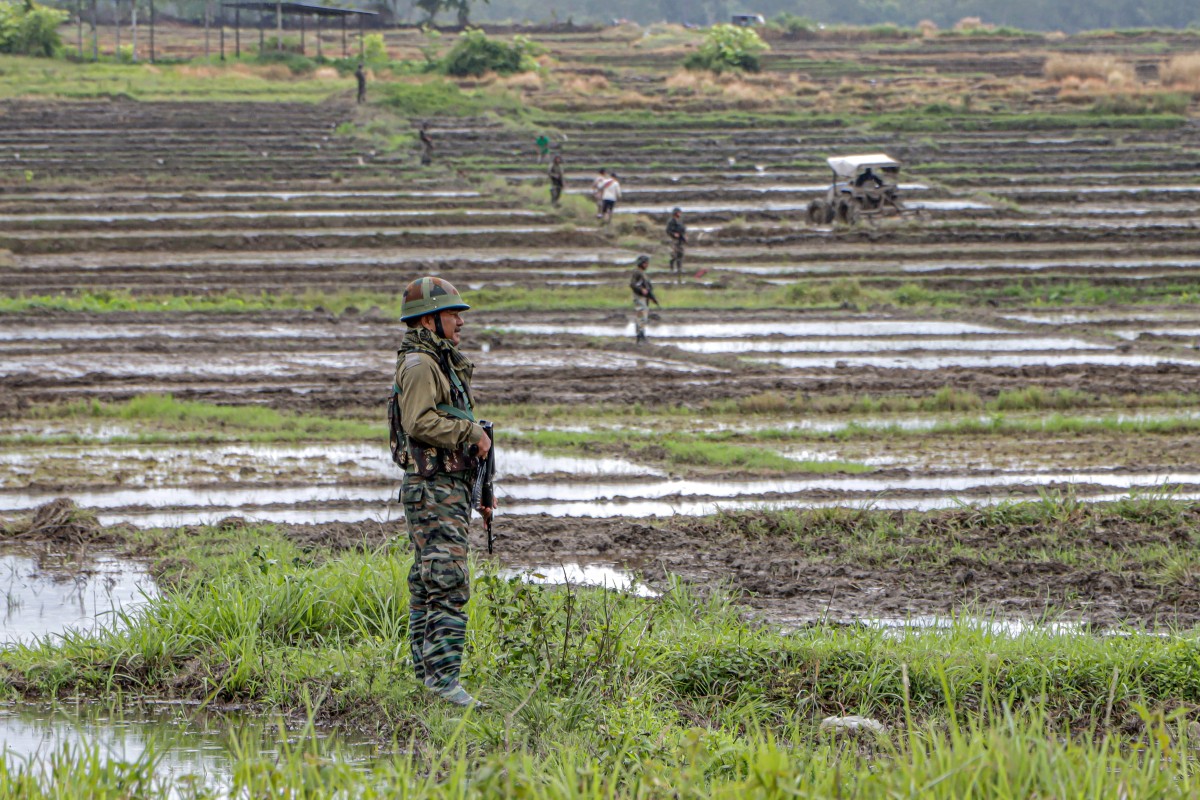
The conflict widened further in 2026, with armed clashes and ambushes involving Kuki and Naga communities. In the first half of October, shootings in the hill districts of Kamjong, Ukhrul and Kangpokpi left at least nine civilians dead.
Manipur Chief Minister Yumnam Khemchand Singh condemned the violence and ordered additional security forces deployed to sensitive areas.
Local rebel groups also called a general strike on Oct. 15, known as “National Black Day,” to protest what they describe as the 1949 annexation of Manipur to India.
The strike further disrupted the region, where more than 60,000 people remain internally displaced, many of them living in relief camps.
Church leaders in northeast India have continued humanitarian work, prayer initiatives and appeals for reconciliation as the crisis persists.
The Diocese of Miao maintains close pastoral and institutional ties with the Archdiocese of Imphal, which covers Manipur. Both are part of the Bishops’ Conference of Northeast India.
Priests, missionaries and religious sisters serving in Miao have also studied or worked in institutions in Manipur, while bishops in the region cooperate on pastoral, social and educational programs.
Through Seva Kendra, its social-service arm and local Caritas organization, the Miao diocese has collected and delivered humanitarian aid, medicines and essential supplies to camps for displaced people run by the Archdiocese of Imphal.
Anthony said prayer remains part of the Church’s response alongside concrete assistance.
“In this context, we want to raise our voices to God: prayer, alongside concrete solidarity, is a resource to which we can turn,” he said.
The Diocese of Miao recently organized an online prayer vigil for the feast of Our Lady of the Rosary, placing the conflict in Manipur and reconciliation among Kuki, Meitei and Naga communities among its main intentions.
Young people, priests, religious sisters, men and women joined the virtual Rosary, praying for peace in Manipur, Arunachal Pradesh, northeast India and the wider world.
Bishop George Pallipparambil of Miao, a Salesian who has repeatedly appealed for an end to the violence, urged Catholics to continue praying for peace.
“The Rosary is our powerful weapon against the forces of evil. We do not pray the Rosary only today, but every day, and we should recite it as often as possible, especially during this Month of the Rosary,” Pallipparambil said.
Bishop Dennis Panipitchai, auxiliary bishop of Miao, also urged Catholics to continue praying for peace in Manipur and Arunachal Pradesh.
“The Rosary is a powerful weapon for bringing peace to hearts,” he said, describing it as “a school in which Mary teaches us to contemplate Jesus.”
Archbishop Linus Neli of Imphal has appealed to leaders of the Meitei, Kuki, and Naga communities to stop the cycle of revenge and reach a peace agreement.
Civil society groups and religious leaders are also holding talks with the local government in an effort to open channels for dialogue and humanitarian access to communities affected by the conflict.