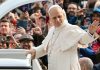
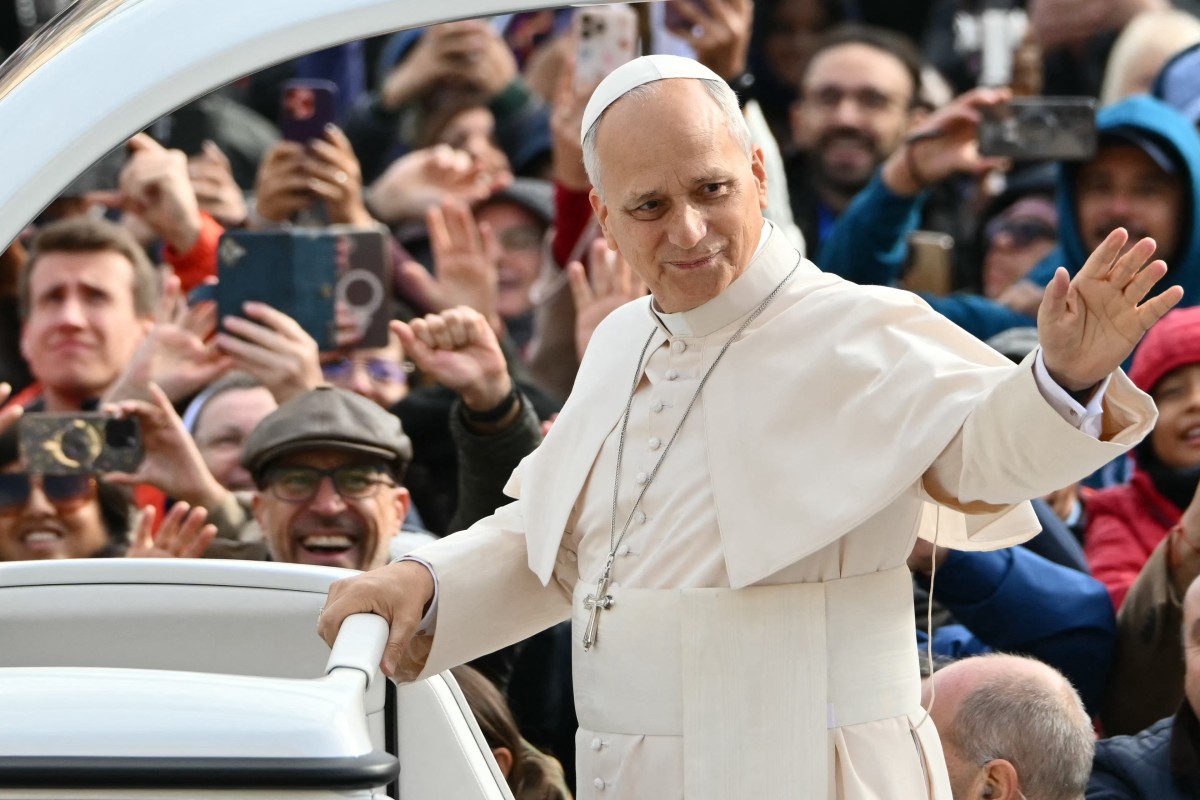
Engaging in economic and political life in accordance to Christian faith and the Social Doctrine of the Church can be a way to build peace, Pope Leo XIV said during the Wednesday General Audience in St. Peter’s Square on Nov. 4, 2026.
“Politics that tends to the wounds of peoples and of those who suffer injustice offers grounds for hope for the future of humanity,” the Pope highlighted.
“As Pope Francis recalled, ‘war is a failure of politics and of humanity, a shameful capitulation, a stinging defeat before the forces of evil.’”
Pope Leo continued the catechesis cycle on the Documents of the Second Vatican Council and meditated on the 1965 Pastoral Constitution Gaudium et Spes (meaning “joy and hope”) on the Church in the modern world.
Reflecting on Chapters III and IV of Part II of the Document, which focus on economic and social life and the political community, Pope Leo offered various “criteria for discernment” that can help Christians be engaged in these fields in a way that manifests the Catholic faith.
He also encouraged young people to follow the example of men and women “who have borne faithful witness in these fields” and urged Christian communities to form people in the Social Doctrine of the Church.
Commitment to eliminating discrimination
Looking at economic life, the Pope highlighted how the Council Fathers noted that the threat to world peace comes from imbalances linked to an economic development that is not equitable or respectful of creation, and this is even more the case today.
Gaudium et Spes warned that “technical progress alone is not enough,” and instead proposed the “Christian vision of economic development,” meaning to always “be at the service of humankind and under human control.”
“More relevant than ever are the appeals to commit to eliminating discrimination against the most vulnerable social groups and migrants,” the Pope continued, underlining the importance of this text.
Working conditions that endanger health and life are unacceptable
Pope Leo also reflected on work, which is at the heart of the economy and helps people participate in social life.
“Work must never be distorted to the detriment of people, the common good or creation,” he stressed.
“The real challenge,” he said, “is to offer everyone opportunities to make the most of their abilities: unemployment, exploitation and working conditions that endanger health and life itself are unacceptable.”
The Pope also underscored how workers have the right and duty to participate and discuss decisions concerning them, including through trade unions.
The universal destination of earthly goods
The Pope then recalled how the Council applies one of the fundamental principles of social teaching, the universal destination of earthly goods, to the financial sphere.
Gaudium et Spes explains that whoever makes decisions concerning investments or planning the economy, needs to ensure that individuals and communities can live a decent life and also that there is a balance between present-day consumption needs and the demands of the next generations.
Political community exists for common good
Turning instead to the political community, the Pope noted how Gaudium et Spes points to “several positive developments in the contemporary era,” such as a deeper understanding of the importance of human dignity, which has led to trying to create a “a politico-juridical order” that gives priority to protecting human rights.
“The political community exists for the sake of the common good,” the Pope insisted. It must be “structured and operate according to local and historical circumstances, but always with the good of the entire human family at heart.”
The Church and the political community can work together
In this regard, he underlined how the Church and political community are “autonomous and independent from each other,” but they “both, under different titles, are devoted to the personal and social vocation of the same men.”
“The more that both foster sounder cooperation between themselves with due consideration for the circumstances of time and place, the more effective will their service be exercised for the good of all,” the Pope urged.