
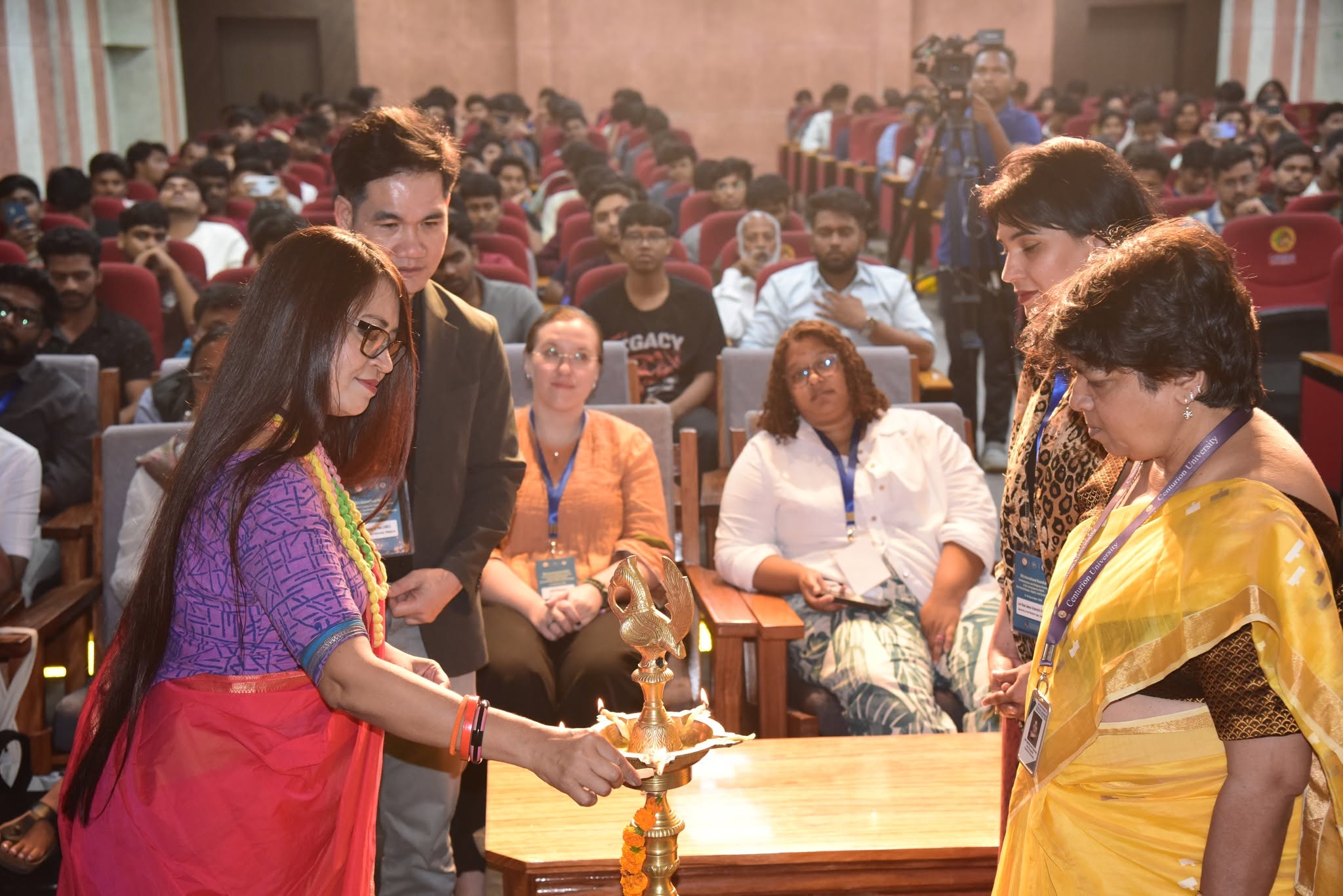
Scholars from Africa, Asia, and other regions called for ethical approaches to artificial intelligence and greater recognition of Indigenous knowledge systems during an international symposium in India from Nov. 13-16.
The gathering at Centurion University of Technology and Management (CUTM) in Bhubaneswar, Odisha, examined how religious traditions and decolonial thought could help protect human dignity amid technological advances, ecological crises and social inequality.
The four-day event combined the 16th International Roundtable on Communication and Religious Humanism with the 2nd Asia-Africa Dialogue.
It was organized by the Bangkok-based Asian Research Center for Religion and Social Communication (ARC) at Saint John’s University, the Desmond Tutu Centre for Religion and Social Justice at South Africa’s University of the Western Cape, India’s Institute of Knowledge Societies and CUTM.
“The gathering underscored the importance of South-South dialogue in addressing contemporary social, political, and intellectual challenges,” said Father Anthony Le Duc, SVD, executive director of ARC.
“Collaboration between African and Asian scholars can contribute to more inclusive, humane, and decolonized approaches to understanding religion, society, and human flourishing.”
The symposium brought together participants from India, South Africa, the Philippines, Thailand, Germany, France, Australia, Sri Lanka and the United States.
The conference opened Nov. 13 with remarks from CUTM Vice Chancellor Supriya Pattanayak, a traditional ritual and a student cultural performance.
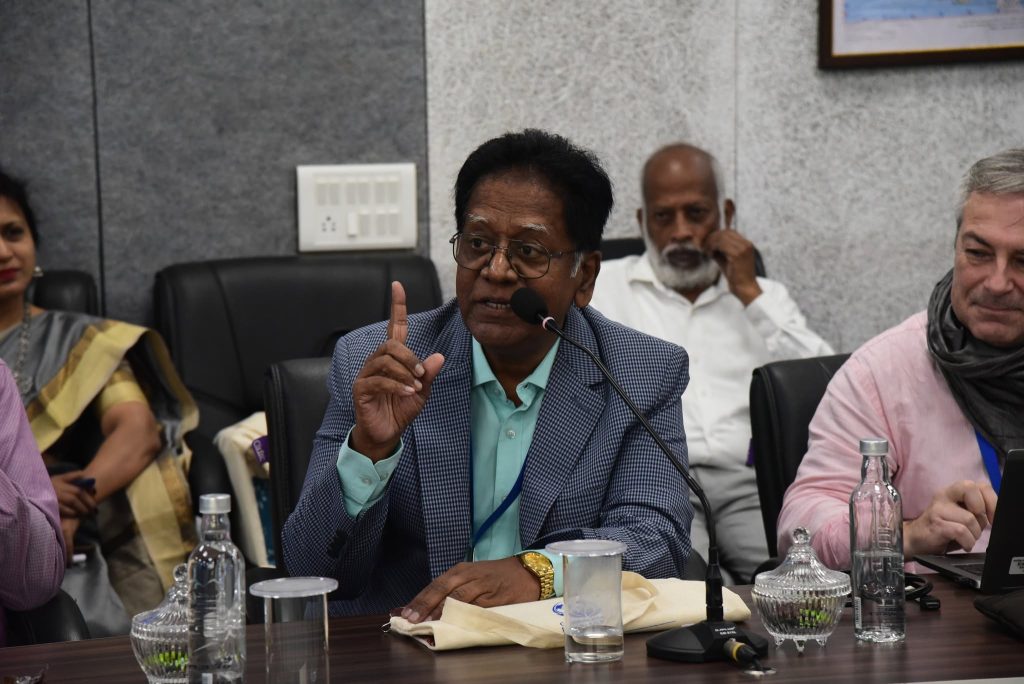
In his keynote address, Dev Nathan of the Institute for Human Development challenged participants to reconsider prevailing understandings of human dignity and knowledge through the philosophical traditions of Indigenous peoples.
An evening panel featuring Lee-Shae Scharnick-Udemans, Chandrabhanu Pattanayak and Father Le Duc discussed the responsibilities of scholars in addressing contemporary challenges, including the need for an ecological civilization.
During seven thematic sessions on Nov. 14 and 15, participants examined how artificial intelligence, algorithms and digital platforms are changing religious practices, shifting traditional sources of religious authority and influencing religious imagery.
Speakers discussed the role of philosophical and spiritual traditions in addressing algorithm-driven polarization and the commercialization of religious practices.
They also explored questions about human identity, transcendence and communication in an increasingly technology-driven society.
Environmental protection and sustainable development were among the major concerns raised during the discussions.
Drawing on ancient Indian epics, Buddhist teachings on mindfulness and dependent origination (paṭiccasamuppāda), and community-protected sacred groves, scholars called for approaches to environmental protection that recognize the relationship between human communities and the natural world.
Participants also discussed how religious traditions could contribute to the United Nations Sustainable Development Goals, emphasizing the importance of moral responsibility alongside government policies and institutional reforms.
Social justice and media representation were another focus of the gathering.
Delegates examined how religious narratives can reinforce or challenge structural violence, patriarchy and the exclusion of minority communities.
Presenters called for greater recognition of local languages and knowledge systems, as well as the participation of women, religious minorities, Indigenous peoples and persons with communicative differences in interpreting and shaping religious traditions.
The academic sessions were accompanied by a cultural performance by the Kolkata-based Buddhist Dance Theatre group Attodeep and the Lotus Communication Network, paying tribute to Emperor Ashoka and Odisha’s Buddhist heritage.
On Nov. 16, participants convened for the 2nd Asia-Africa Dialogue, which focused on strengthening intellectual cooperation among scholars from the Global South.
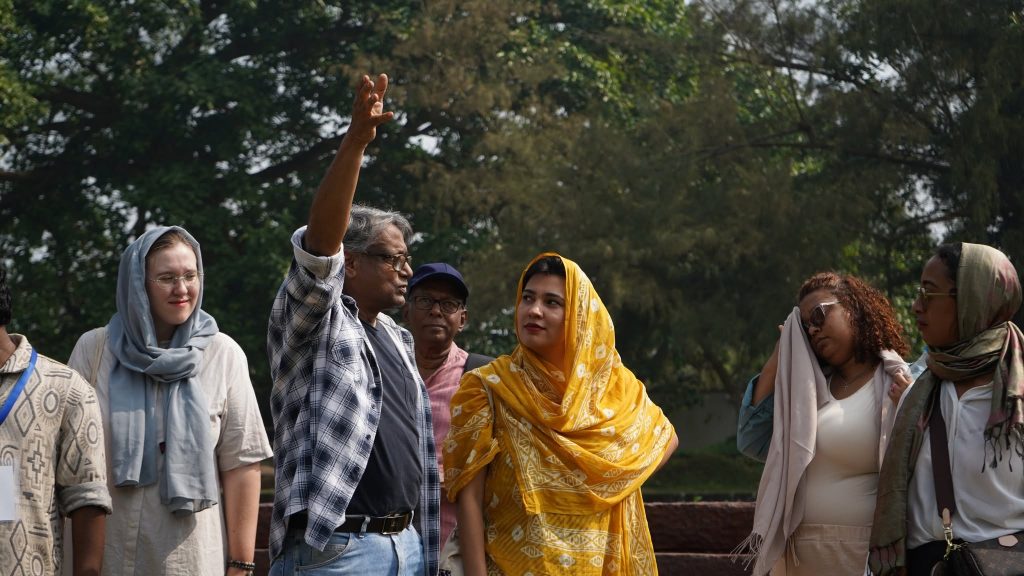
The program included a visit to the 13th-century Konark Sun Temple, a UNESCO World Heritage Site known for its elaborate stone carvings and historical significance.
During the dialogue, Tammy Wilks of the University of Cape Town and professor emeritus Gnana Patrick of the University of Madras led discussions on power, identity and the continuing influence of colonial systems on knowledge production.
Drawing on the experiences of stateless Kenyan-Nubian communities, Wilks examined how biometric surveillance and digital governance systems introduced across the Global South can reproduce patterns of exclusion associated with colonial rule.
She also highlighted the efforts of affected communities to resist exclusion from digital systems.
Patrick discussed the common experiences of African and Asian societies in confronting caste and racial discrimination, patriarchy and economic exploitation.
He urged scholars to challenge inherited Eurocentric frameworks and give greater recognition to Indigenous intellectual traditions, local languages and the experiences of marginalized communities.
“Meaningful dialogue remains a vital pathway toward building a more just, compassionate, and interconnected world,” Father Le Duc noted as the symposium drew to a close.