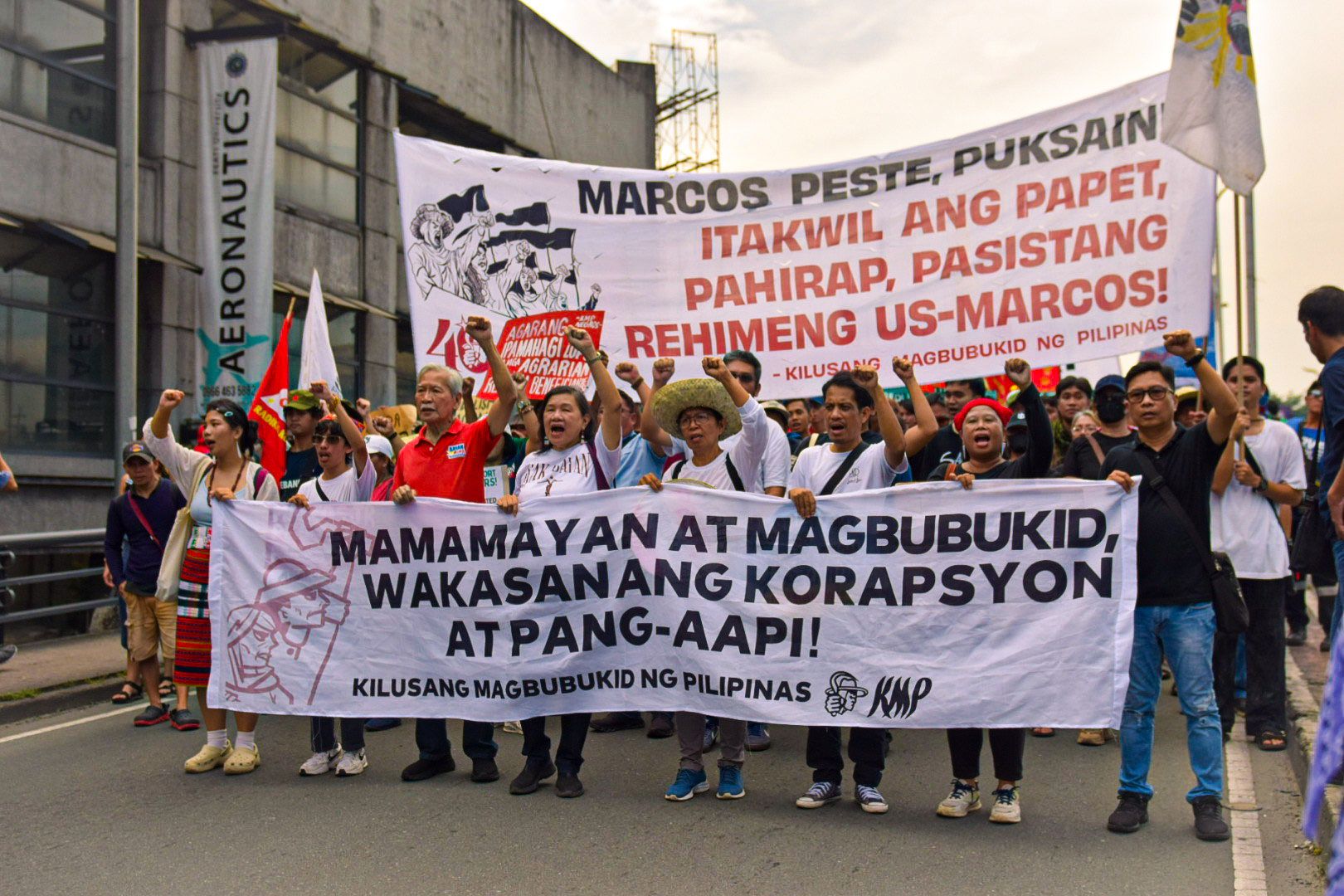
The Church People–Workers Solidarity (CWS) has condemned what it called the government’s failure to protect Filipino farmers from poverty and corruption as the Philippines marks Peasant Month this October.
“This is not a coincidence; it is a direct result of a system built on exploitation aggravated by landlessness, high prices of farm inputs, government neglect, and the devastating effect of the Rice Tariffication Law,” said Bishop Gerardo Alminaza of San Carlos, chairperson of CWS.
CWS said farmers remain among the poorest sectors in the country, with a 27 percent poverty rate in 2023—third highest nationwide.
“These statistics are a collective indictment of the state’s utter failure to protect our farmers whose labor feeds the entire nation,” it added.
The Church network framed the farmers’ plight as both a social and moral crisis. It said, “The Church’s call for justice for the poor stands with the nation’s impoverished farmers, whose struggle is a mirror of Christ’s suffering and a demand for divine justice.”
CWS said landlessness remains widespread despite decades of agrarian reform. It noted that 78.2 percent of agricultural workers still do not own the land they till and that the number of fully owned farm parcels fell from 3.6 million in 2012 to 2.4 million in 2022.
The group called the Comprehensive Agrarian Reform Program (CARP) “a fraud,” saying it was “reduced to a mere land sale, riddled with loopholes that only led to the re-consolidation of land in the hands of the landed elite.”
“When our farmers fight back for their rights, they are confronted with violence and state fascism,” the statement said.
CWS also criticized what it described as the government’s “obsession with a neoliberal, market-oriented land reform” that favors profit over people.
It pointed out that “only 19% of agricultural lands are irrigated” and that “only 26% of farm work is mechanized.” The group said the country remains “shamefully reliant on imported fertilizers, pesticides, machinery, seeds, and even food while our own farmers struggle to survive.”
The group connected the worsening rural crisis to large-scale corruption in infrastructure projects, citing the diversion of public funds through flood control scams and irregularities in farm-to-market road programs.
It said these projects often exist only on paper or are poorly built, with kickbacks allegedly flowing to officials and favored contractors.
“The present situation only shows that the government is rotten to the core. It cannot change its own!” the statement declared.
CWS called for “genuine agrarian reform,” “free land distribution to the tillers,” and the prosecution of corrupt officials and their cohorts.
“The working people—the workers who build our nation and the farmers who cultivate our lands—hold the power to dismantle injustice, end the oppression of landlessness and neoliberal policies and rampant corruption, and build a truly equitable society,” said Alminaza.