Thailand’s Parliament voted overwhelmingly on Friday to revive the long-delayed Clean Air Management Act, marking a major step in efforts to address the country’s worsening air pollution crisis.
The measure now heads to the Senate for final review, moving the country closer to recognizing clean air as a protected public right.
The vote came a day after a formal appeal from the Catholic Bishops’ Conference of Thailand (CBCT).
On May 14, Archbishop Francis Xavier Vira Arpondratana, president of the CBCT, submitted a petition to Parliament ahead of a joint legislative session.
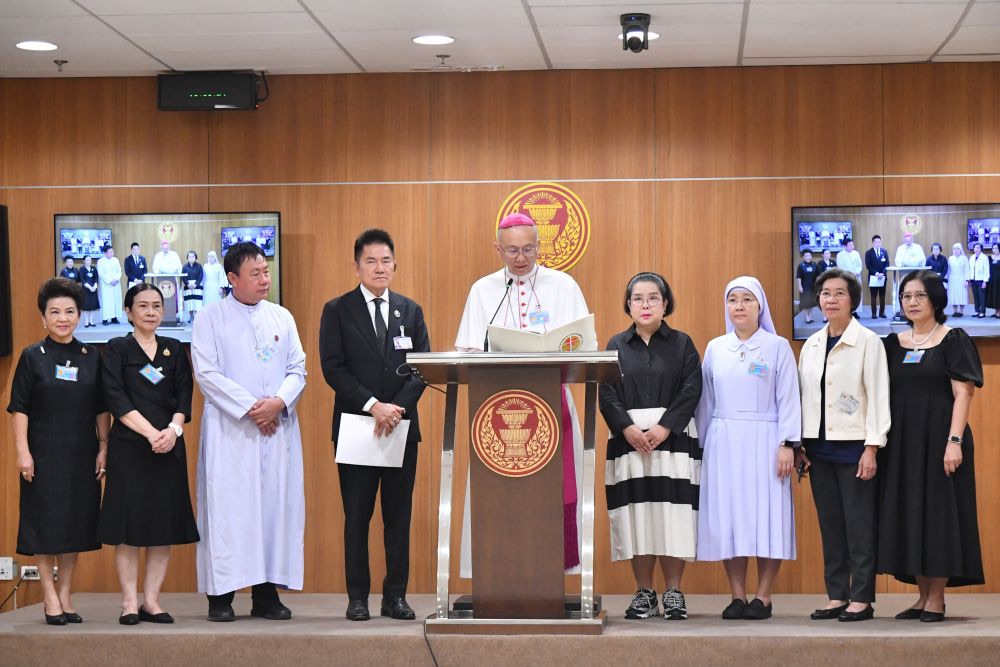
Photo credit: CBCT
The archbishop urged lawmakers to invoke Section 147 of the Constitution, which allows pending legislation from a previous administration to continue without restarting the entire legislative process.
The following day, lawmakers voted 611-3, with one abstention, to advance the bill.
In the petition, Archbishop Vira cited Pope Francis’ ecological encyclical Laudato Si’, describing clean air as a “common heritage of mankind” that belongs to everyone.
“Care for one another and care for our world is closely related to the changes in the air we breathe every day,” the archbishop wrote, saying the Church’s mission includes protecting both human dignity and public well-being.
Speaking to LiCAS News after the vote, Archbishop Vira welcomed the outcome.
“I am glad that the MPs approved this long-delayed clean air bill, which is intended to address the nation’s growing pollution crisis and enhance precautions against dangerous smog,” he said.
“We will follow up closely as it must now go to the Senate for scrutiny. If passed, it will be submitted to the Prime Minister and ultimately to His Majesty the King for royal endorsement.”
The proposed law comes as Thailand continues to face severe air pollution linked to vehicle emissions, industrial activity, and seasonal agricultural burning.
According to the World Health Organization, air pollution contributes to more than 32,000 premature deaths in Thailand each year, including illnesses affecting the heart and lungs.
Archbishop Vira said truly clean-air days have become rare in many parts of the country.
Chiang Mai and other northern provinces regularly experience dangerous PM2.5 levels during the dry season due to crop burning, while Bangkok faces recurring smog from traffic and industrial emissions.
“What a contrast to the COVID-19 pandemic,” the archbishop recalled. “With no travel, no flights, and no traffic, we experienced exceptionally clean air every day.”
Public support for stronger air quality protections gained momentum last year after a coalition of civil society groups gathered more than 20,000 signatures calling for urgent action on toxic smog.
The effort stalled after Parliament was dissolved in December, suspending all pending legislation.
The bill was later reintroduced by the new Cabinet, allowing lawmakers to resume deliberations.
Formally titled the Air Quality Management Act, the proposed measure seeks to protect public health and uphold the constitutional right to live in a safe environment under Section 57 of the Constitution.
Supporters say the law would establish a more comprehensive national air quality management system and strengthen accountability for polluters.
Archbishop Vira said legal reforms alone would not solve the crisis without public cooperation and political will.
He urged both citizens and corporations to take responsibility for environmental protection.
“Its ultimate effectiveness depends on actual enforcement and the genuine cooperation of all sectors,” he said, adding that social responsibility and mutual care must accompany the rule of law.