
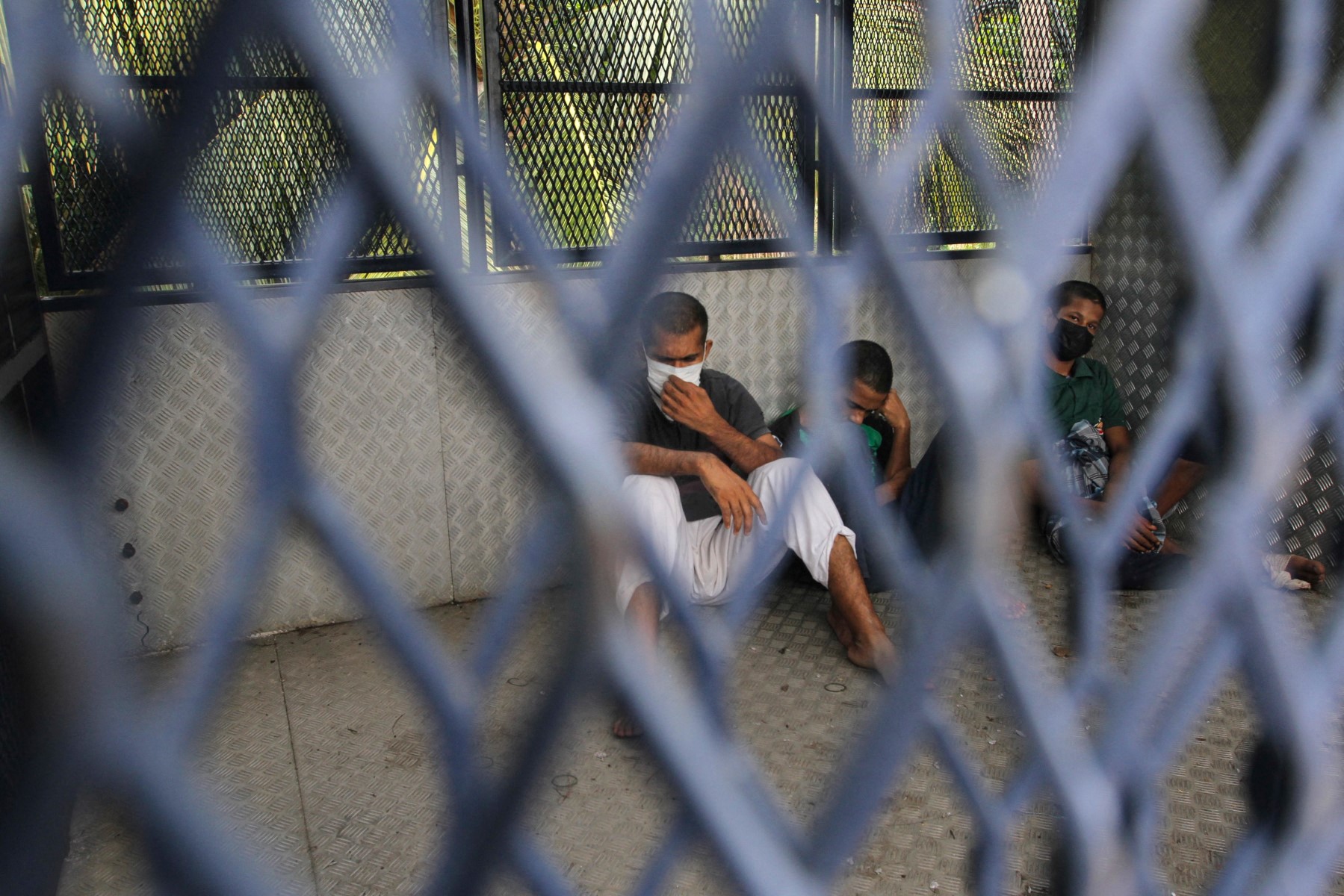
Malaysia began repatriating about 1,500 Myanmar nationals on Tuesday under a program described as voluntary, despite warnings from rights groups that detention conditions may have pressured migrants to agree to return and that some could face persecution or conflict in Myanmar.
The group is the first batch of 5,000 Myanmar citizens Kuala Lumpur said had agreed to return from immigration detention centers, according to Agence France-Presse.
Rights advocates have questioned whether those decisions were made freely, citing conditions inside detention facilities and the conflict in Myanmar.
Dozens of buses carrying the migrants arrived under police escort at the Majlis Perbandaran Manjung stadium near the Lumut naval base in northwestern Malaysia.
The migrants were to be processed at the stadium before being transported to the naval base and taken to Myanmar by ship.
A Myanmar security source, who requested anonymity because they were not authorized to speak to the media, said the vessels were expected to arrive at Thanlyin Navy Base, south of Yangon, around the end of the week.
Marine traffic websites showed Myanmar’s auxiliary support and hospital ship Than Lwin anchored outside the naval base.
Malaysia and Myanmar have not said how many Rohingya, if any, are among those being returned.
The Rohingya, a persecuted Muslim minority, make up about two-thirds of the 190,000 Myanmar refugees and asylum seekers in Malaysia, according to the United Nations.
Prime Minister Anwar Ibrahim announced in July that Myanmar had agreed to take back 5,000 members of the Rohingya community.
Myanmar earlier this month pledged “safe and dignified” returns for citizens displaced abroad after criticism from the United Nations and rights groups.
More than 160 civil society organizations last week called on the Malaysian government to “immediately halt the deportations,” pending consultations with civil society groups over conditions in Myanmar.
The groups also warned that “Malaysia’s engagement with the junta must not come at the expense of its own reputation and integrity.”
Anwar said he would invite Myanmar’s coup leader-turned-civilian president Min Aung Hlaing for an official visit to help speed up the repatriation process.
Malaysia’s Home Affairs Ministry said last month that 5,000 individuals would undergo voluntary repatriation under an agreement with the Myanmar government.
As of mid-August, 10,388 Myanmar nationals were being held at immigration detention depots, according to the ministry. Not all were considered refugees.
Malaysia is not a signatory to the 1951 Refugee Convention and does not formally recognize refugee status.
The repatriation plan was announced after Malaysian authorities detained more than 100 Rohingya who had gathered outside the U.N. refugee agency’s office in Kuala Lumpur.
They were seeking help after being threatened with eviction from an informal settlement in northern Penang state. They were later released after officials confirmed they held valid U.N. documentation.
AFP fact-checkers have reported that Rohingya refugees in Malaysia have been targeted by online disinformation campaigns that rights advocates say are fueling xenophobia and intimidation.
Hundreds of thousands of Rohingya fled Myanmar during a military crackdown in 2017. The offensive is the basis of a genocide case before the International Court of Justice.
More than 1.2 million Rohingya live across the border in Bangladesh, in the world’s largest refugee settlement, while previous repatriation efforts have made little progress.