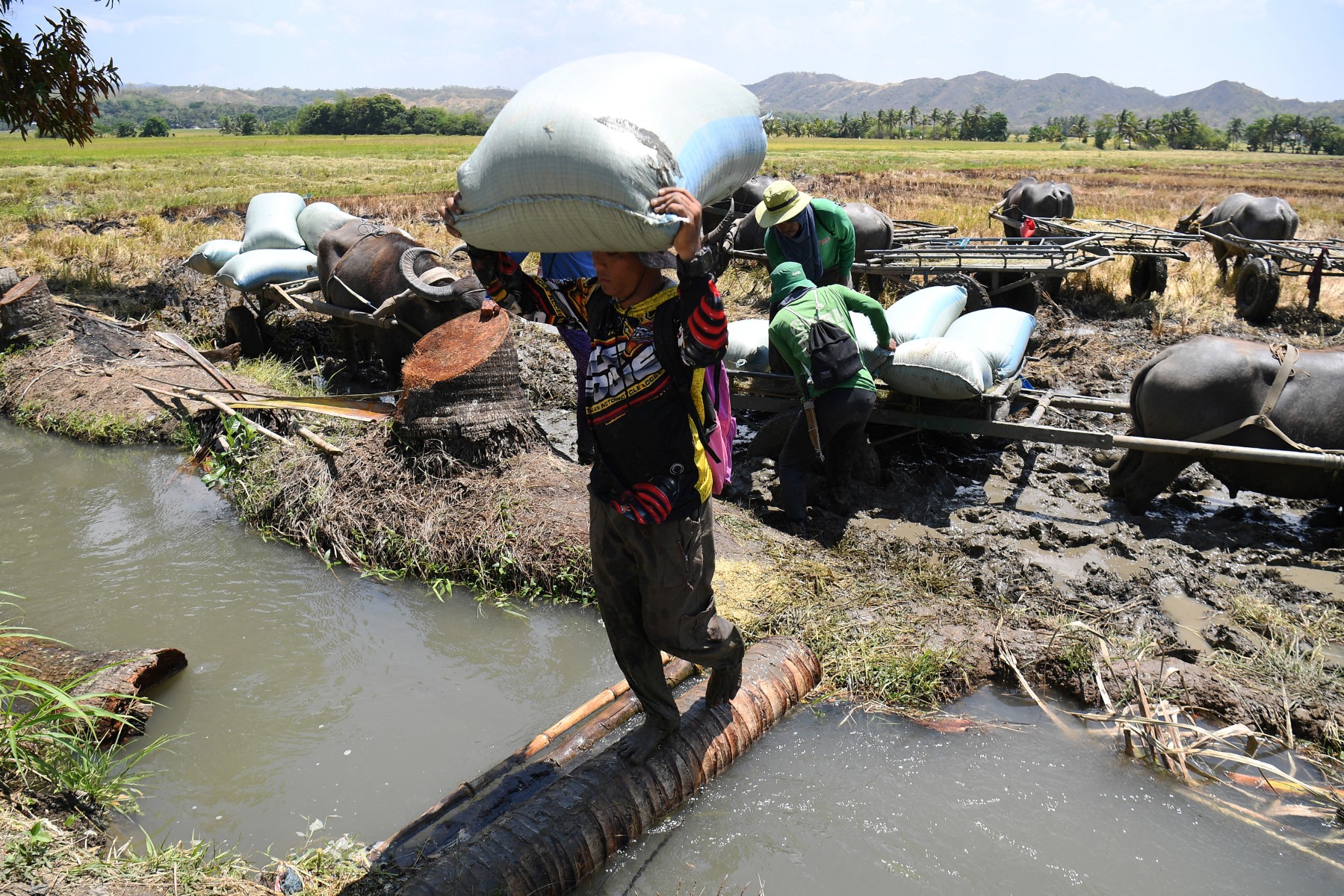
A Church labor group warned that the Philippine government’s lack of a comprehensive response to an impending super El Niño could endanger farmers’ livelihoods and the country’s food supply.
Church People-Workers Solidarity (CWS) issued the warning on Oct. 21, National Peasant Day, as it called for stronger support for farmers, protection of agricultural land, and genuine agrarian reform.
“And now, in the face of an impending super El Niño, the absence of a comprehensive government response jeopardizes not only our farmers’ livelihoods but also our national food supplies,” CWS said.
The group said farmers, farmworkers and Indigenous communities continue to face land insecurity, poverty, debt and inadequate public support despite their role in sustaining the country’s food supply.
“For decades, Philippine agriculture has not received the sustained, comprehensive support it needs,” CWS said.
It cited high production costs, limited irrigation and post-harvest facilities, inadequate access to machinery and credit, climate-related losses and weak bargaining power in the market.
CWS also raised concern over the country’s dependence on imported rice and said import policy, including the effects of the Rice Tariffication Law, should be assessed alongside domestic production, farmer incomes and consumer prices.
The group said some vegetable farmers have been forced to leave crops unharvested or discard produce during periods of oversupply because farmgate prices did not cover the costs of harvesting, packing and transport.
It cited reports from Benguet where prices had fallen to only a few pesos per kilo, pointing to what it described as the need for better storage, transport, market access, and fairer bargaining conditions.
CWS also pointed to landlessness and insecure tenure as continuing threats to farming communities.
Citing Philippine Statistics Authority data, CWS said the total area of agricultural farms fell from 9.97 million hectares in 1991 to 6.31 million hectares in 2022, a decline of 36.7%.
The group also cited PSA figures showing poverty incidence in 2023 at 27% among farmers and 32.4% among Indigenous Peoples.
“When small farmers are trapped in debt and cannot earn a decent livelihood, they may be pressured to lease or sell their land,” CWS said, adding that development “must not deepen this vulnerability.”
The group warned that productive farmland and ancestral lands could come under pressure from real estate, industrial, and other commercial projects.
It also raised concerns over plantation and energy projects in Negros, as well as proposed large-scale solar developments in Nueva Ecija and other parts of Central Luzon.
In Capas, Tarlac, CWS cited concerns raised by Aeta communities over the proposed Pax Silica hub in New Clark City, including its possible effects on homes, livelihoods, and ancestral-domain claims.
“Clean energy is necessary, but its development must respect land rights, protect food-producing areas, and include the communities most affected in decisions from the outset,” CWS said.
The group said projects affecting Indigenous communities should proceed only with respect for their rights, meaningful consultation and free, prior and informed consent where required.
CWS said it was not opposed to development, technological advancement, modern infrastructure or clean energy, but argued that projects should create lasting public value and protect local livelihoods.
It called on the government to advance agrarian reform, improve farm-to-market systems, protect productive agricultural land, uphold Indigenous Peoples’ rights and pursue industrial and energy development that protects food security and community rights.
“The Church’s prophetic mission calls us to stand with farmers and Indigenous communities in their pursuit of land, life, and justice,” CWS said.