
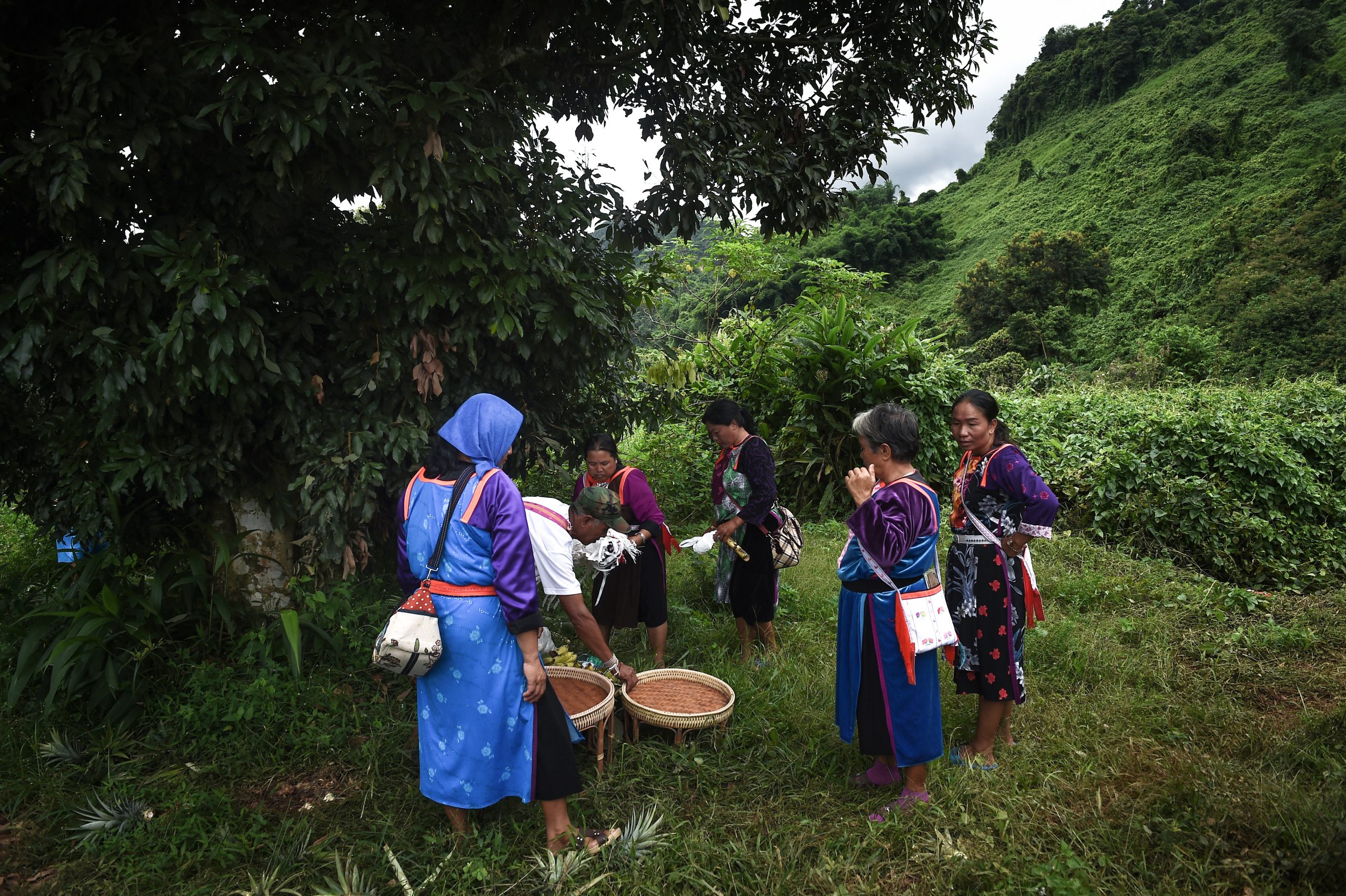
A new study has found that climate disinformation in Thailand is fueling discrimination and repression against Indigenous communities, framing them as threats to national interests while silencing their voices in environmental decision-making.
In its latest publication, Climate Disinformation in Thailand: Negating Indigenous Peoples’ Identity, the Bangkok-based Asia Centre said false narratives around climate change and deforestation have become “a new tool of oppression.”
“It not only distorts facts about climate change, including its causes, contributing factors, and necessary solutions, but it also actively perpetuates the negation of IPs’ identities,” the report said, referring to Indigenous Peoples.
The 2025 report, produced in partnership with International Media Support (IMS), forms part of a regional study on how disinformation undermines Indigenous rights in six Asian countries, including Cambodia, India, Indonesia, Malaysia, the Philippines, and Thailand.
Military policies, false narratives
According to the Asia Centre, climate disinformation in Thailand intensified after the 2014 military coup, which placed security agencies at the center of a nationalist “Forest Reclamation Policy.”
“False climate narratives have intensified,” the report said, adding that these narratives “disproportionately affect nature- and forest-dependent IPs, who make up nearly 14% (roughly 10 million) of the population and whose survival and livelihoods are tied to ancestral lands and natural resources.”
While some legal advances were made in 2025 to recognize Indigenous rights, “on the ground, the community continues to be disadvantaged,” it added.
One-sided reporting, greenwashing, scapegoating
The study identifies four dominant forms of climate disinformation circulating across Thai media and policy spaces:
– One-sided reporting, where the media “spotlights government and corporate initiatives while omitting their social and environmental harms.”
– Greenwashing, in which corporations “exaggerate or misrepresent their sustainability practices to obscure their ongoing environmentally destructive activities.”
– False climate solutions promoted as progress but which “fail to address the root causes of climate change while leaving IP communities socially and economically disadvantaged.”
– Scapegoating of IPs, where Indigenous peoples are “falsely portrayed as primary drivers of deforestation, legitimising displacement and marginalisation.”
Silenced voices, shrinking spaces
Asia Centre said climate disinformation in Thailand directly undermines the identity and survival of Indigenous communities through four main impacts: exclusion from decision-making, criminalization, forced evictions, and intimidation.
It said Indigenous Peoples’ right to Free, Prior and Informed Consent (FPIC) is often removed, “thereby negating their identities as owners and stewards of their land.”
The report noted that “the strategic misuse of ‘climate change’ laws” and the use of Strategic Lawsuits Against Public Participation, or SLAPPs, are being deployed to silence Indigenous and environmental advocates.
Conservation and development projects have also led to “deterritorialisation that severs spiritual, cultural and economic ties to ancestral lands which forms the core of IPs’ identities,” the report said, while “harassment, threats and attacks” continue to undermine their ability to resist destructive projects.
Call for rights-based climate action
To address the problem, Asia Centre urged the United Nations to “integrate climate disinformation into their human rights monitoring and climate action frameworks” and to guide Thailand in meeting its obligations.
It also called on the Thai government to “embed safeguards against climate disinformation into national climate and environmental policies, strengthen legal protections for IPs, ensure meaningful participation of IP communities in decision-making and improve transparency and accountability in environmental governance.”
Media organizations, the report added, should “prioritise constructive and investigative journalism on climate, environmental, and IP issues” and “amplify Indigenous perspectives through both national and international outlets.”
Technology companies were asked to “strengthen content moderation against climate disinformation” and to “invest in digital literacy and connectivity initiatives for rural and Indigenous communities.”
Indigenous groups, meanwhile, are encouraged to “build monitoring networks to identify and counter disinformation” and to use digital tools “to amplify their voices and safeguard knowledge.”
‘Central to effective climate action’
The Asia Centre concluded that protecting Indigenous identity is vital to Thailand’s climate response.
“Safeguarding Indigenous identities must be seen as central to effective climate action: recognising IPs not as ‘outsiders’ but as fellow Thais whose cultural knowledge and custodianship of ecosystems are indispensable in combating climate change,” the report said.
“Only by doing so,” it added, “can Thailand achieve climate policies that are sustainable and just.”