
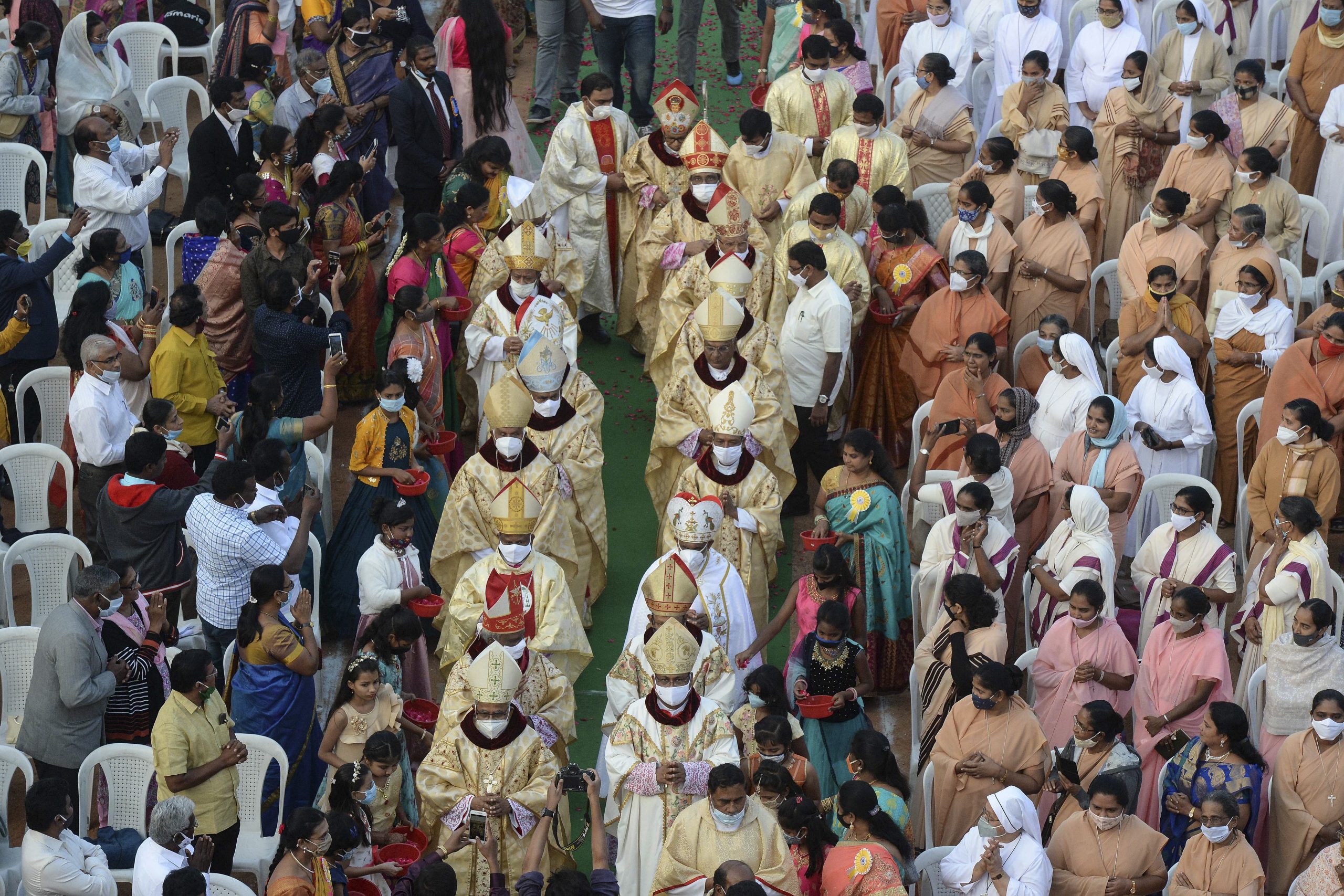
Catholic bishops in India’s Maharashtra state have opposed a newly passed religious law, warning it undermines constitutional protections and risks targeting minority communities.
In a joint statement released by the Western Region Catholic Bishops’ Council, the bishops expressed “our deep disappointment and strong protest” against the Maharashtra Religious Freedom Act, 2026, recently passed by the state legislature in western India.
“Far from protecting religious freedom, this law, in its present form, effectively undermines the right it claims to safeguard—namely, the freedom to choose and propagate one’s religion, as guaranteed under Articles 19, 25, and 29 of the Constitution of India,” the bishops said.
They said provisions of the law directly interfere with Church practices, particularly the Rite of Christian Initiation of Adults, a process through which adults prepare for baptism.
The bishops also criticized the lack of consultation with affected communities, calling it “equally disappointing that the ruling party, along with others, supported this legislation without adequate consultation with the communities most affected by it.”
Under the law, individuals intending to convert must notify authorities 60 days in advance, while officials are empowered to initiate inquiries into the “intent, purpose, or reason” for the proposed conversion.
Church leaders warned that the measure intrudes into personal belief and opens the door to abuse.
“This provision intrudes into the deeply personal domain of conscience and faith, opening the door to scrutiny, suspicion, and harassment,” the statement said.
They added that the law could be applied arbitrarily and may violate privacy protections recognized by India’s Supreme Court.
The bishops also raised concern that clergy and others involved in religious formation could face criminal charges if conversions are challenged.
“Even without wrongdoing, they may face severe and disproportionate penalties, including imprisonment for up to seven years and heavy fines,” the statement said.
They warned that the law could “risk criminalizing legitimate religious activity and imposing undue burdens on both individuals and religious institutions.”
The bishops said the legislation lacks neutrality and may deepen social divisions.
“Rather than fostering harmony, it risks increasing suspicion, division, and injustice,” they said, adding that the law “appears to disproportionately affect minority communities.”
The Catholic Church, they noted, has consistently opposed forced conversions and requires that adults freely choose baptism after proper preparation.
However, the bishops stressed that the current law allows even voluntary conversions to be challenged, raising the risk of false accusations and misuse.
Calling for action, the bishops urged authorities to withdraw or amend the measure.
“Therefore, we strongly oppose this law in its current form and demand its immediate withdrawal or substantial amendment,” they said.
They added: “Religious freedom is not a concession granted by the State; it is a fundamental right that the State is bound to respect, protect, and uphold.”