
Civilians in Lebanon say they feel “dehumanized” as Israeli airstrikes widen across Beirut, hitting residential areas and erasing any sense of safety, an aid worker said.
More than 100 bombs fell across the capital in a single night, according to Marielle Boutros, project coordinator for the Catholic charity Aid to the Church in Need (ACN), who said the strikes reached areas previously considered safe.
“Two days ago more than 100 bombs fell over Beirut. It was here and there, not just the south of the capital, it was around the whole city – you could hear the bombs from our office,” Boutros said.
The escalation follows a major wave of Israeli strikes on April 8 that killed at least 254 people and injured more than 1,000. The violence intensified after a fragile ceasefire between Hezbollah and Israel collapsed on Feb. 28, following a US-Israeli attack on Iran that killed its Supreme Leader Ayatollah Ali Khamenei.
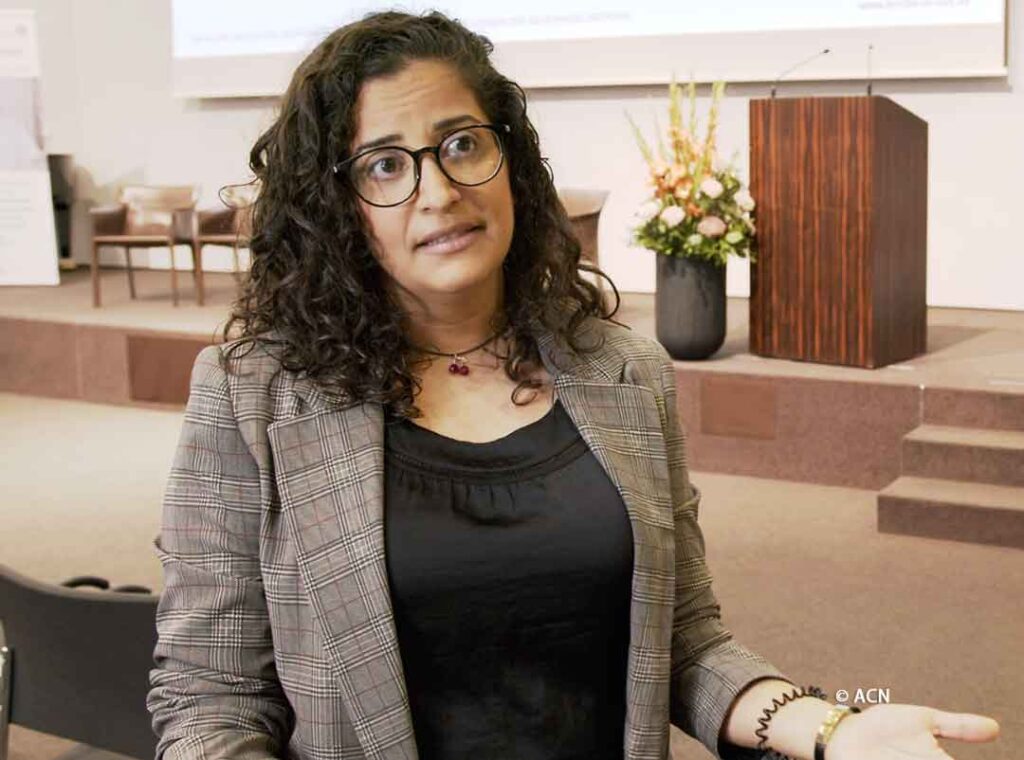
Photo by ACN
Since then, more than 1,800 people have been killed, including 120 children, and at least 3,000 injured.
Boutros said the widening scope of the attacks has shattered assumptions about safety, even inside homes.
“Some areas were not previously targeted so the people thought that they were safe but actually they were not. It was scary, it caused anger, it caused sadness especially when you hear a ceasefire is happening elsewhere. It was really tragic,” she said.
She described a cycle of fear and grief as civilians struggle to cope.
“You feel you are being dehumanised. You call your relatives, and you are relieved that they are okay, then you have 200 dead and nearly 2,000 injured. You don’t feel safe. Some of the victims were in their houses, in a secure and comforting place, and they were bombed,” Boutros said.
“We have this pressure to continue our daily life because you cannot afford not to because of the economic crisis,” she added.
Israeli operations have also displaced communities in southern Lebanon, with large areas evacuated as part of efforts to secure border zones. On March 31, the Lebanese Army withdrew from the predominantly Christian villages of Rmeich and Ein Ebel, which are expected to fall within an Israeli buffer zone.
Aid groups warn the conflict is deepening beyond immediate casualties, disrupting essential services.
ACN continues to provide food, medical assistance, fuel for displaced families in church centers, and psychological support for children.
The conflict has also disrupted education in southern Lebanon.
“Right now the schools in South Lebanon are not operating. Some of them are operating online and teachers need to be paid. This is a real emergency. We cannot afford to stop education again,” Boutros said.