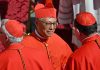
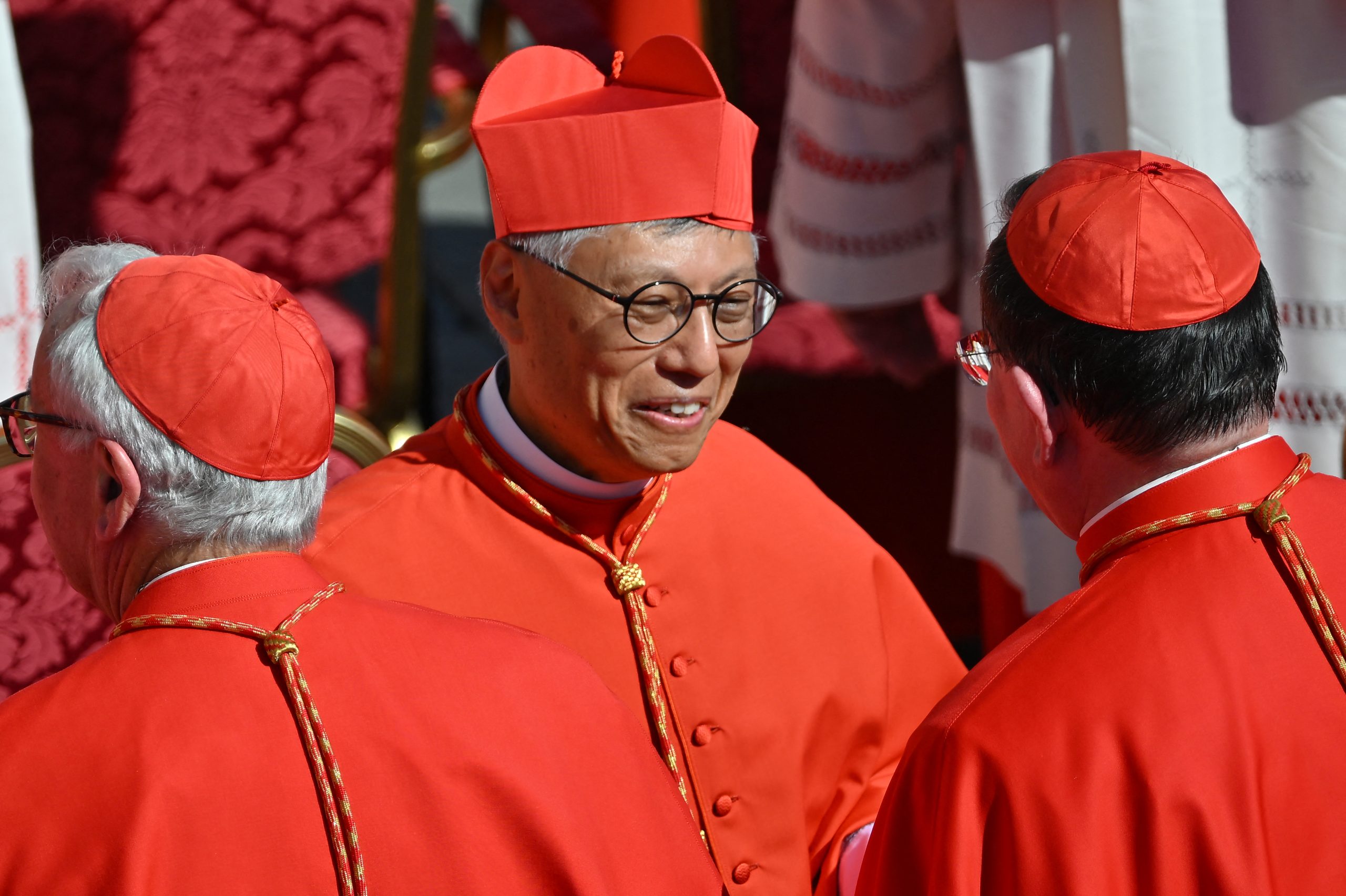
Cardinal Stephen Chow warned that growing political polarization is causing many people to view Church efforts to promote dialogue and unity across Greater China through ideological lenses, undermining initiatives aimed at strengthening communion among Catholic communities.
In a reflection published by Sunday Examiner, the official news service of the Church in Hong Kong, the prelate said political perspectives increasingly shape how people interpret events and relationships, including pastoral initiatives intended to foster understanding among Catholics in mainland China, Hong Kong, Macau, and Taiwan.
“What I have seen in this part of the world is a growing pan-political consciousness of our realities, meaning that political lenses are used to view, understand, and interpret developments and changes in our societies and regions,” Chow said.
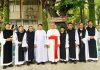
The cardinal pointed to reactions surrounding a recent gathering of bishops from Taiwan, Macau, and Hong Kong, where Church leaders met to pray and exchange pastoral experiences and challenges.
“Sadly, some netizens, through their political lens, viewed and analysed this well-intentioned fraternal visit and speculated whether I was sent by the Mainland Government to recruit bishops in Taiwan, and they debated which name should come first or last,” he said.
“While I understand there may be cultural protocols for the ordering of names, the arguments, however, appeared to be more politically motivated,” he added.
Chow said similar reactions have accompanied official visits by Church representatives from Hong Kong to mainland China. Relations among mainland China, Hong Kong, and Taiwan remain politically sensitive, and Church engagement across these jurisdictions is often viewed through broader geopolitical tensions.
According to the cardinal, the purpose of such visits is not political accommodation but the strengthening of relationships within the Church.
“For us, these visits meant building bridges of understanding, communication, and connection—a fraternal expression within the Church for mutual understanding, communion, and unity,” he said.
“Again, unity is not about uniformity. As Churches located in different contexts in China, we have diverse local concerns but share the same concern for evangelisation,” Chow said. “We carry out context-specific missions, but share one Mission: to proclaim the life-giving and merciful love of Christ.”
The cardinal acknowledged that some observers have interpreted these efforts differently.
“Instead, we were perceived as ‘kowtowing’ to Beijing and being too sympathetic towards the government,” he wrote.
Chow defended continued engagement and dialogue, saying the Church’s concern “has always been and will continue to be bridging divides, promoting communion and unity and enhancing our capacity for further dialogue with the government and other entities as a synodal Church.”
“Ultimately, it is about the well-being of Christians and people in Mainland China,” he added.
The reflection situates these concerns within a broader context of global uncertainty. Chow cited economic instability, aging populations, technological change, artificial intelligence, geopolitical rivalries, nationalism, and ongoing wars as factors contributing to widespread anxiety and social division.
He warned that political agendas and unresolved grievances can deepen those divisions and obscure opportunities for reconciliation.
“But if we insist on not forgiving, but capitalising on our own hurts or political agendas, we are, in fact, detaining ourselves in the prison of hurt and bitterness,” he said.
Chow urged Christians to examine whether ideological biases and political anxieties have become obstacles to justice, dialogue, and hope.
“Can Christian justice not be better served when we are internally ‘free’ from the biases of hurt, anxiety and vengeance, as well as being ‘hopeful in love’?” he asked.