
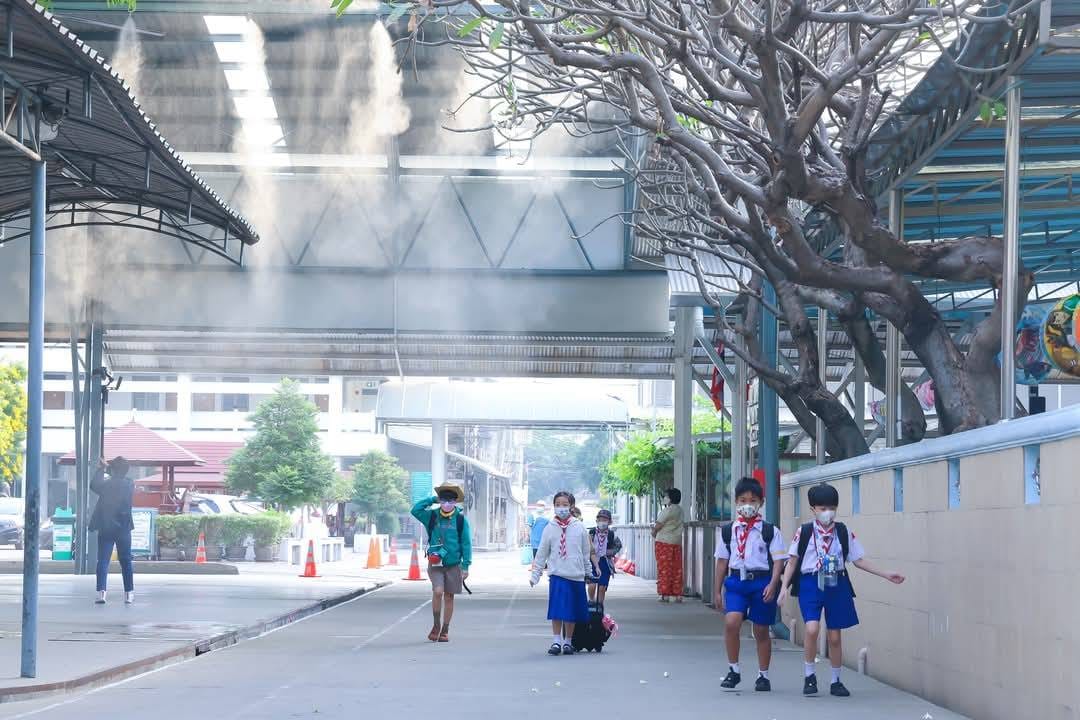
A student-led listening program in three Catholic schools in Thailand is giving young people greater responsibility in designing and carrying out activities for their peers, while bringing the Church’s call to synodality into the classroom.
The “Joyful Listening” program was presented during an online forum on Sept. 22, drawing educators, medical professionals, church leaders and participants from Pattaya.
The initiative is a partnership between the Volunteer Spirit Bank under the Thai Health Promotion Foundation and the Catholic Education Council of Thailand.
Introduced to Catholic institutions in late 2025, the program developed through monthly peer-to-peer exchanges among educators from three Bangkok-area schools: Sacred Heart Convent School, Sacred Heart School Don Mueang (Praharuthai Donmueng School), and Sacred Heart School Nonthaburi.
Students eventually took responsibility for designing, managing and carrying out listening-focused activities for their peers, with minimal costs and without relying on central school funds.
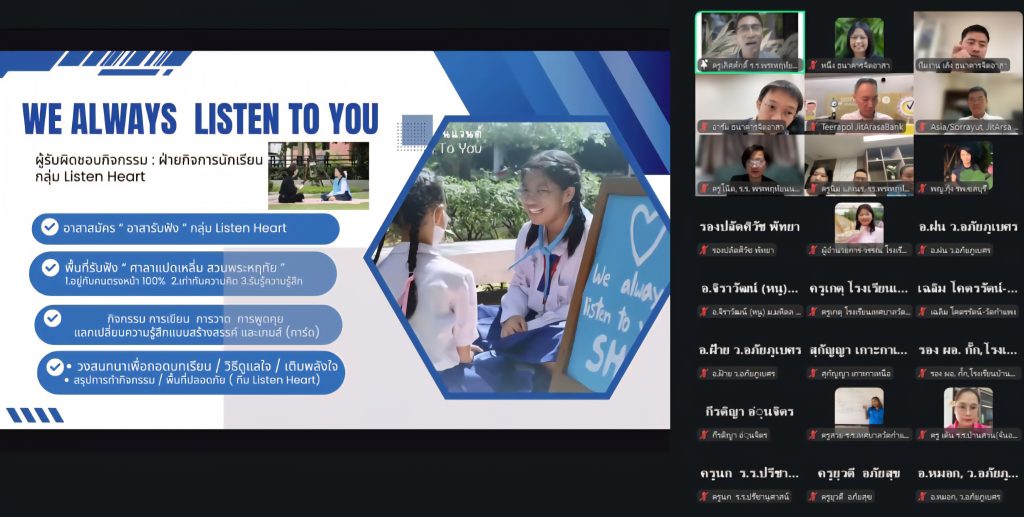
Media personality and civic observer Sorrayut Ratanap, known widely as Asia, said the Sept. 22 presentation showed how the program combined simple organization with meaningful participation.
“Who would have thought an evening Zoom meeting could be a simple yet incredibly powerful and amazing event,” Sorrayut noted.
Half of the session was devoted to open dialogue and questions and answers.
Sorrayut linked the students’ participation to Roger Hart’s “ladder of children’s participation,” which describes different levels of young people’s involvement in decision-making.
“Educational scholars often reference Roger Hart’s seminal ‘ladder of children’s participation,’ which outlines the journey from tokenistic involvement—where youth merely carry signs without understanding the cause—to full autonomy,” he said.
“The activities presented by the Sacred Heart schools demonstrated students operating at the very top rungs of that ladder.”
The students also kept activities inexpensive by repurposing discarded materials and leftover sports day equipment to create community spaces, combining listening activities with environmental awareness.
Sorrayut contrasted the approach with programs that depend on larger budgets and more complex structures.
He said, “Even those operating outside the formal system often adopt the conventional mindset… that demands thinking big, making things complex, doing too much, and spending heavily.”
According to Sorrayut, “Their approach is fun, simple, and inexpensive. It creates a desire to keep the activity going; the moment a teacher announces the invitation at the morning assembly, students immediately step up to take ownership.”
For the religious leaders involved in the schools, the program also reflects the Catholic Church’s emphasis on synodality through listening, participation and discernment.
Sr. Chavala Vechayant, SHB, Superior of Praharuthai Donmueng School and Head of the Catholic Education Council of Thailand’s Academic Affairs Section, said the initiative grew from informal meetings among teachers held every third Tuesday.
As students recognized the value of being heard, their participation expanded.
“A key highlight of this initiative is that the students themselves initiated and executed the activities, with support from teachers and administrators,” Sr. Chavala explained to LiCAS News.
She added, “This has yielded positive results at each school, fostering a growing culture of attentive listening.”
The three schools’ experience showed how structured opportunities for listening can give students greater responsibility in activities affecting their school communities while supporting the Church’s emphasis on participation and synodality.