The most dangerous myth about peace is that it is the absence of noise.
Across much of Asia, quiet can be engineered. Silence can be enforced. Entire communities can be erased from public consciousness without a single gunshot.
Catholic communicators learn early that conflict is not always loud. It often unfolds through fear, distortion, and the steady erosion of dignity.
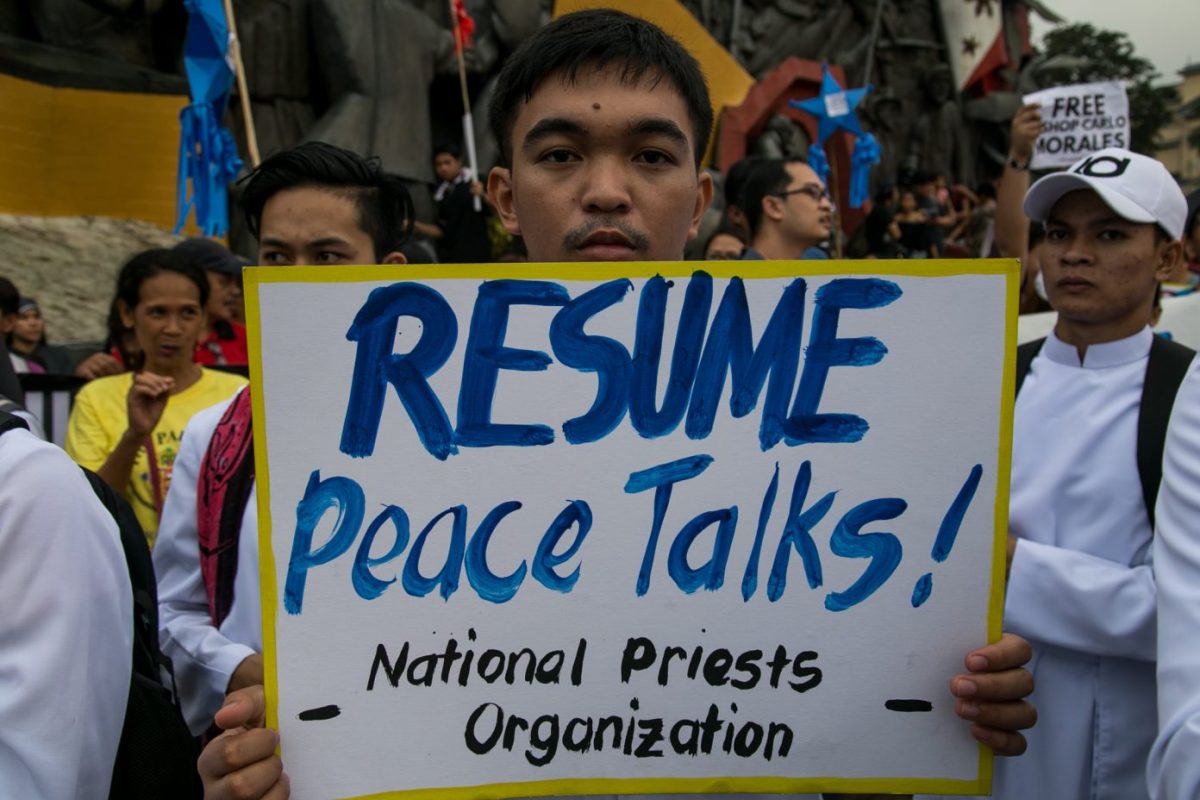
In the Philippines, this reality is familiar. Communities know how easily labels become threats, how truth-telling is treated as disruption, and how the language of order can be used to narrow civic space.
Across the region, the pattern repeats in different forms. In Myanmar, war has displaced millions and reduced survival to a daily act of courage.
In parts of South and Southeast Asia, ethnic and religious minorities carry histories of exclusion that rarely reach national platforms. In many countries, the promise of development is invoked to justify displacement, while the promise of security is used to silence dissent.
Peace, in this landscape, is not a slogan. It is a practice. It is the patient work of protecting life, restoring relationships, and resisting systems that thrive on fear and forgetting.
Catholic communication can serve that work, or it can quietly undermine it.
When done poorly, Catholic communication becomes an echo chamber. It repeats official assurances without discernment. It spiritualizes suffering without naming its causes. It prioritizes harmony over truth and comfort over conversion. In doing so, it risks mistaking silence for peace and stability for justice.
But when Catholic communication is rooted in truth and conscience, it becomes a form of peacemaking. Not because it avoids difficult realities, but because it insists that peace cannot exist without justice.
Pilgrims and witnesses in contested spaces
The Jubilee Year calls the Church to walk as Pilgrims of Hope, not as spectators to history. For Catholic communicators, this pilgrimage unfolds in contested spaces, where narratives are shaped by power and memory is fragile.
To be a pilgrim is to move with people, not above them. To be Witnesses of Hope and Peace is not to deny suffering, but to refuse its normalization.
Catholic communication accompanies communities whose lives are shaped by poverty, displacement, ecological loss, and political violence, and insists that their experiences belong at the center of the story.
This requires a discipline of language. Words can soften reality and make injustice palatable. They can also clarify, correct, and insist that every person retains dignity, even when they are poor, Indigenous, imprisoned, displaced, or politically inconvenient.
In societies marked by deep inequality, neutrality can become distortion. Catholic communication is not called to partisanship, but it is called to honesty that names power, exclusion, and harm.
Peace is not served by pretending that all voices carry equal weight when some speak from safety and others from fear.
The unarmed and disarming peace of the Gospel
The Church’s vision of peace stands in sharp contrast to dominant political logics. In his first Message for the World Day of Peace, Pope Leo XIV describes a peace that is “unarmed and disarming”, resisting violence not through force but through moral clarity, dialogue, and the conversion of hearts.
This peace, the Pope reminds the Church, is not passive. It is active and unsettling in its refusal to accept fear as the currency of public life. In a world where militarization is framed as prudence and war as inevitability, the unarmed peace of Christ exposes the illusion of security built on domination and force.
The Pope warns that when peace is no longer lived, cultivated, and protected, aggression spreads into domestic and public life. Confrontation becomes normal. Preparation for war is treated as common sense, while disarmament is dismissed as naïve. In such a climate, even religious language can be conscripted to justify violence.
Catholic communicators are tested here. To speak of peace without examining the structures that deny it is not service. It is reduction. Communication that avoids naming injustice in the name of calm risks becoming complicit in violence that is slow, structural, and socially acceptable.
An unarmed peace demands unarmed language. Language that refuses to kill reputations. Language that does not strip people of their humanity. Language that resists fear even when fear is politically useful.
Ecology, conflict, and the credibility of peace
In Asia, Catholic communication cannot speak credibly about peace without confronting ecological injustice.
Environmental destruction is already a driver of displacement, hunger, and conflict. It destroys livelihoods long before it destroys homes. It turns coastlines into evacuation routes and farmlands into debt traps. It sharpens tensions where grievances have been ignored for generations.
In the Philippines, when fisherfolk return with empty nets, peace has already been broken. When Indigenous communities defend ancestral lands from extractive projects, the issue is not simply development. It is survival, consent, and identity. When families are forced to evacuate year after year due to stronger storms, the violence is quiet but persistent.
Catholic social teaching offers a language that holds these realities together. Integral ecology insists that the Cry of the Poor and the Cry of the Earth are inseparable. In this region, that insight describes daily life.
A peace that ignores ecological destruction is fragile. It delays conflict rather than preventing it.
Credibility, courage, and hope
When the Church speaks of peace, its credibility is tested not by eloquence but by proximity. It is tested in communities affected by militarization, environmental harm, and political repression. It is tested in how Church institutions accompany the displaced, defend the vulnerable, and speak when silence feels safer.
Catholic communicators share in this test.
Their task is not to polish messages, but to mediate truth responsibly between the Church and the world. This includes asking difficult questions. What does peace require in concrete policies? What does dialogue mean when power is unequal? What does development mean when it displaces the poor? What does order mean when it is achieved by shrinking civic space?
Asking these questions does not weaken the Church’s witness. It safeguards it.
Keeping hope credible
The Philippine public has grown wary of appeals to unity that demand silence about injustice. It knows, through experience, that reconciliation without truth deepens wounds.
This is where Catholic communication matters most.
By keeping memory alive. By naming harm without hatred. By refusing to let the poor and marginalized disappear from public attention. By resisting narratives that normalize violence, whether sudden or structural.
In a region where propaganda travels easily, communicating verified truth is already countercultural. In a society where the poor are often treated as background, centering their lives is a moral choice. In a time when despair feels realistic, offering grounded hope becomes an act of faith.
Peace does not begin when conflict ends. It begins when truth can be spoken without fear, when dignity is non-negotiable, and when creation is defended as part of the common good.
Catholic communication cannot create that peace alone. But as Pilgrims of Hope and Witnesses of Hope and Peace, Catholic communicators can help clear space for it, resist false harmony, and invite society to choose the unarmed and disarming peace that the Gospel proposes.
Mark Saludes is the managing editor of LiCAS News. He is a Manila-based journalist reporting on human rights, social justice, environmental issues, and the role of faith communities across Asia.