
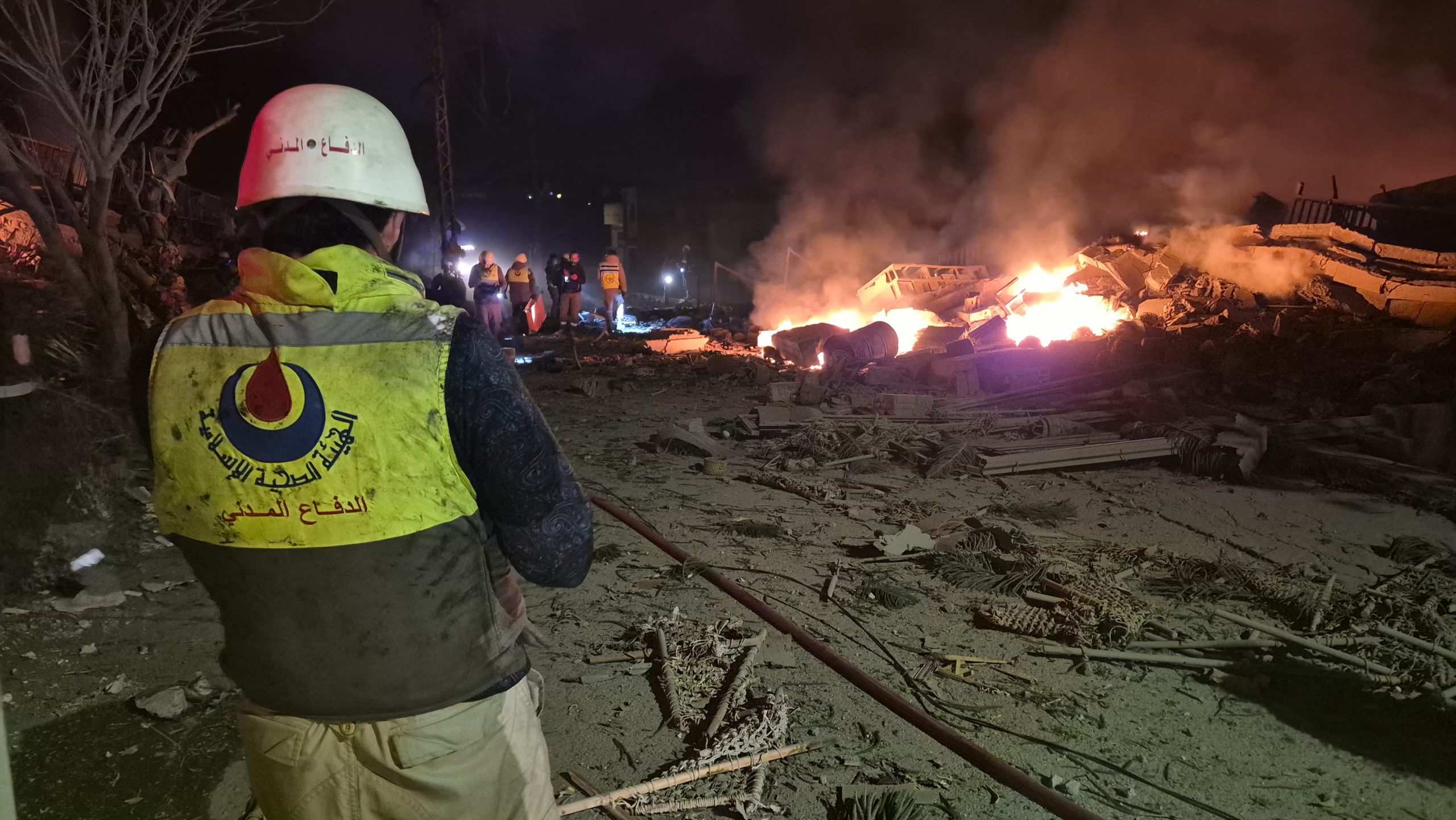
Israeli airstrikes in Lebanon killed hundreds and overwhelmed hospitals this week, as a ceasefire elsewhere in the region failed to halt the violence.
Air raids on April 8 struck multiple areas, including densely populated districts in Beirut, killing more than 300 people and wounding over 1,000, according to Lebanese health authorities and international agencies.
The escalation came a day after a two-week ceasefire between the United States, Israel, and Iran was announced, but Israeli officials said the truce did not apply to operations against Hezbollah in Lebanon.
The renewed bombardment has underscored the limits of the ceasefire, which excludes Lebanon and has done little to stem escalating hostilities along the Israel-Hezbollah front.
The World Health Organization described the attacks as “one of the deadliest single days in the current escalation of violence,” citing an interim assessment of “over 200 deaths and over 1,000 injuries,” including women and children.
“In just 10 minutes, yesterday afternoon, explosions struck multiple locations, including densely populated civilian areas in the capital, Beirut,” said WHO Representative in Lebanon Dr. Abdinasir Abubakar, describing scenes of panic as civilians were caught off guard.
“I could see in my window, actually, 10 different strikes in front of me, and buildings collapsing,” he said, calling the situation “horrific, very sad, is alarming.”
Hospitals across the country have been pushed to the brink, with emergency services overwhelmed and supplies rapidly depleted.
“We have already consumed most of the available stocks in the last 40 days, but more so, what happened in the last 24 hours,” Abubakar said.
The crisis has been compounded by attacks on healthcare workers and facilities, limiting access to care. “When you kill healthcare workers and first responders…the end point is that you don’t have first responders and ambulances,” he warned.
The strikes have triggered fresh displacement, with families fleeing southern Lebanon and parts of Beirut, while others remain trapped in areas cut off by ongoing bombardment.
Israel has said its campaign targeting Hezbollah will continue, with Prime Minister Benjamin Netanyahu warning that Israeli forces would keep striking “wherever necessary.”
Hezbollah has responded with rocket and drone attacks, raising fears of a broader regional escalation.
Despite the ceasefire between Washington and Tehran, tensions remain high. Talks between Israel and Lebanon are expected to take place in Washington in the coming days, even as fighting continues on the ground.
Amid the escalating violence, Church officials have joined calls for an end to hostilities and a return to dialogue.
“There has never been an attack like this,” Archbishop Paolo Borgia told Vatican News, describing strikes that came “in 10 minutes… almost simultaneous,” involving “a very large number of Israeli warplanes.”
From Beirut, he said the city remains under strain. “There is heavy traffic, the city is congested, there are sirens and ambulances in the center—Beirut is in turmoil.”
He warned that continued fighting “only increases divisions, while spreading death and destruction,” and stressed that “it is strongly desirable that there be a ceasefire here and the start of negotiations to stabilize Lebanon in relation to Israel.”
Echoing the appeal of Pope Leo XIV, Borgia urged parties to pursue “avenues for dialogue” that can “support the country’s authorities in implementing lasting solutions to the serious crisis currently unfolding, for the common good of all the Lebanese people.”









